By Maryam Shah ISLAMABAD, Dec 20 (APP):On International Human Solidarity Day, political observers, human rights advocates and Kashmiri representatives on Saturday warned that India’s policies in the Indian illegally occupied Jammu and Kashmir (IIOJ&K) amounted to a systematic, state driven assault on the region’s identity, faith, population structure and political future, carried out since August 2019 through legal, administrative and military actions, raising urgent concerns about global accountability, international law, …
A nation silenced in Kashmir while the world watches
By Maryam Shah
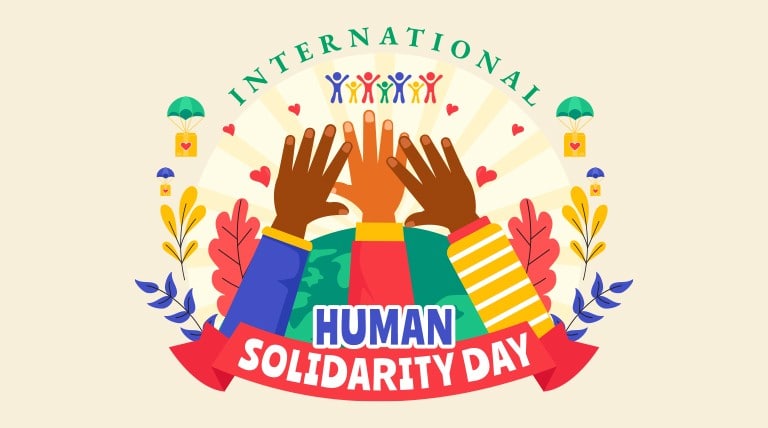
ISLAMABAD, Dec 20 (APP):On International Human Solidarity Day, political observers, human rights advocates and Kashmiri representatives on Saturday warned that India’s policies in the Indian illegally occupied Jammu and Kashmir (IIOJ&K) amounted to a systematic, state driven assault on the region’s identity, faith, population structure and political future, carried out since August 2019 through legal, administrative and military actions, raising urgent concerns about global accountability, international law, and the credibility of the world’s human rights system.
International Human Solidarity Day is meant to reaffirm a universal principle” injustice anywhere challenges the conscience of humanity everywhere”. This year, its observance has once again focused attention on Kashmir, where despite unprecedented digital access and global connectivity, a sustained campaign against an entire population continues with little effective international response. Human rights defenders say Kashmir today represents one of the clearest failures of collective global responsibility in modern times.
Analysts stressed that what was unfolding in the IIOJ&K is not routine governance or short term security management. It reflects a coordinated and deliberate state policy designed to reshape the region’s political and social reality. India’s actions extend beyond military control into demographic change, ideological influence, suppression of dissent and the steady erosion of internationally recognized rights.
At the center of this approach lies demographic change, described by experts as the most dangerous and irreversible aspect of the crisis. Since the removal of the region’s special constitutional status, major changes to land ownership, domicile, and employment laws have enabled the settlement of non local populations while steadily weakening the rights of indigenous Kashmiris. Observers warn that these measures are intended to alter the population balance and permanently undermine the Kashmiri demand for self determination.
The experts emphasize that this was not a conflict fought only with weapons. It is a silent structural campaign that transforms societies from within. Demographic change, they noted, is not temporary repression but a long term strategy that reshapes political outcomes without public consent or participation.
Alongside population changes in Indian occupied Kashmir, restrictions on religious freedom have intensified. Mosques face frequent closures, congregational prayers are limited, and major religious gatherings including Friday prayers and Eid celebrations are often curtailed under security justifications.
At the same time, critics point to the growing visibility of Hindutva ideology through official narratives, public symbolism, and administrative decisions.
Rights advocates argued that this imbalance is deliberate. It reflects an effort to weaken the Muslim identity of Kashmir while promoting a state supported ideological framework. According to rights assessments, this goes beyond intolerance and represents ideological control enforced through policy and power.
Equally concerning is the systematic suppression of media and civil society. Kashmir has become one of the most restricted environments for journalism anywhere in the world. Independent reporters operate under constant pressure, facing surveillance, questioning, arrests, and legal cases. Media outlets struggle under censorship and administrative restrictions that limit their ability to report freely.
Repeated internet shutdowns, among the longest recorded globally, have further isolated the region. Media watchdogs state that these shutdowns are not isolated security measures but part of a broader effort to control information, restrict documentation of abuses, and promote a narrative of normal conditions that does not reflect reality on the ground.
On a daily basis, life in Kashmir unfolds under heavy military presence. Routine cordon and search operations, night raids, detentions, enforced disappearances, and collective punishments have embedded fear deeply into society. Mental health experts warn of long lasting psychological effects, particularly on young people growing up amid uncertainty and constant surveillance.
Observers describe this environment as a form of psychological pressure designed not only to prevent resistance but to normalize silence. The objective, they argue, is not simply territorial control but the gradual exhaustion of public will.
Lack of accountability makes the situation more troubling in an era of abundant evidence. Satellite imagery, digital records, legal documents, and eyewitness testimonies are widely available. Despite this, international responses remain limited. Legal experts note that when violations face no consequences, they gradually become accepted practice.
Human Rights activists emphasize that responsibility does not lie solely with governments or international bodies. Media professionals, academic institutions, political actors and civil society groups worldwide share a moral duty to document events accurately and raise their voices. Silence or artificial neutrality, they warned, only strengthens injustice.
History, analysts caution, does not forgive indifference. Nations face moments when delay determines destiny. Kashmir, they argue, stands at such a moment where unity must replace division, clarity must replace ambiguity, and voice must replace fear.
The message echoed on International Human Solidarity Day is clear. The Kashmir crisis is no longer a distant political dispute. It has become an existential struggle involving identity, faith, and survival. Calls continue for independent international investigations, accountability for population changes and rights violations, restoration of civil freedoms, and concrete steps toward honoring the Kashmiri people’s right to self determination.
Global community’s silence today is not neutrality. It is complicity. In a digital age where injustice is visible in real time, history will judge not only the actions of the powerful but also the choices of those who remained silent.