The 78th Kashmir Accession Day was observed across the country on Sunday to commemorate the historic resolution adopted by the All Jammu and Kashmir Muslim Conference on July 19, 1947, calling for the accession of the princely state of Jammu and Kashmir to Pakistan.
78th Kashmir Accession Day to Pakistan observed across the country marking 1947’s historic resolution
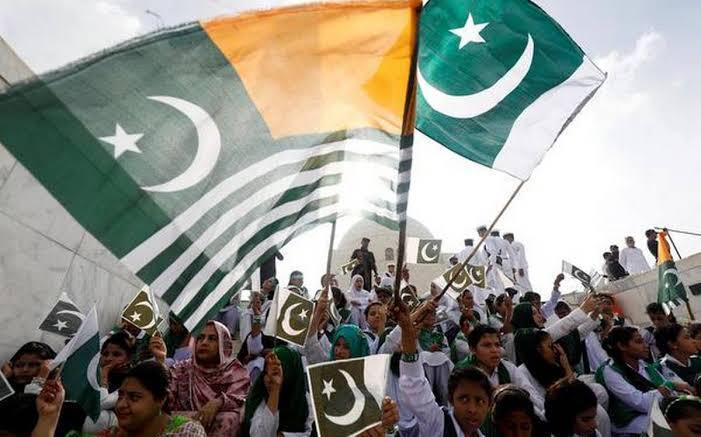
ISLAMABAD, Jul 19 (APP): The 78th Kashmir Accession Day to Pakistan was observed across the country on Sunday to commemorate the historic resolution adopted by the All Jammu and Kashmir Muslim Conference on July 19, 1947, calling for the accession of the princely state of Jammu and Kashmir to Pakistan.
The day was observed across Pakistan, Azad Jammu and Kashmir (AJK), and also among the Kashmiri diaspora who reiterated their stance on the occasion.
Various activities were held, including public rallies, seminars, conferences, and public gatherings.
The cities and towns were decorated with Pakistani and Kashmiri flags, while political parties, civil society organizations, and student groups organized events reaffirming their commitment to the 1947 resolution and the implementation of United Nations resolutions on Jammu and Kashmir.
The commemorative events emphasized the significance of the 1947 resolution and called for a peaceful settlement of the Kashmir dispute in accordance with the aspirations of the people and relevant United Nations resolutions.
In 1947, the historic resolution was unanimously passed during a meeting held at the residence of Sardar Muhammad Ibrahim Khan in Srinagar.
The ‘Ilhaq-e-Pakistan’ Resolution, the convention argues that Jammu and Kashmir’s Muslim-majority population, geographical contiguity, shared cultural, linguistic, ethnic, and economic ties with Pakistan, and the rivers flowing into Punjab made accession to Pakistan imperative.
The resolution also expressed confidence in Quaid-e-Azam Muhammad Ali Jinnah and urged the then ruler, Maharaja Hari Singh, to announce accession to Pakistan before the creation of Pakistan on August 14, 1947.
Pakistan maintains that the final status of Jammu and Kashmir should be determined through the will of the Kashmiri people in accordance with relevant United Nations Security Council resolutions, including Resolution 47 (1948), which called for a free and impartial plebiscite to determine the future of the territory. Pakistan also refers to subsequent UNCIP resolutions of 1948 and 1949 as part of the internationally recognized framework for resolving the dispute.
The observance comes amid continuing differences between Pakistan and India over the status of Jammu and Kashmir.
Pakistan has repeatedly expressed concern over the situation in Indian-administered Jammu and Kashmir following the revocation of Article 370 of the Indian Constitution in August 2019, alleging increased restrictions, detentions, and demographic changes in the region. India maintains that the constitutional changes are its internal matter and says they were aimed at improving governance and development.
The international human rights organizations, including Amnesty International, Human Rights Watch, and reports issued by the Office of the United Nations High Commissioner for Human Rights, have documented allegations of human rights violations in Indian-administered Jammu and Kashmir, including restrictions on civil liberties, arbitrary detentions, and excessive use of force. India has rejected many of these allegations, maintaining that its security measures are necessary to combat militancy and preserve law and order.
Pakistan also cites statements by historical figures, including Mahatma Gandhi and Jawaharlal Nehru, supporting the principle that the people of Jammu and Kashmir should determine their own future through a democratic process.
References have also been made to comments by international personalities such as Bertrand Russell, Nelson Mandela, Bill Clinton, and former UN High Commissioner for Human Rights Mary Robinson, who have called for a peaceful resolution of the Kashmir dispute and highlighted concerns regarding the human rights situation.