The threats to Netflix over Pakistani drama series follows a broader pattern of digital and cultural censorship in India. In April 2025, the Modi government banned 16 Pakistani YouTube channels with more than 63 million subscribers combined, building on the shutdown of 35 Pakistani channels at once in 2022.
1.4 bln nation panicked by one Pakistani drama: Netflix boycott threats expose India’s cultural fear
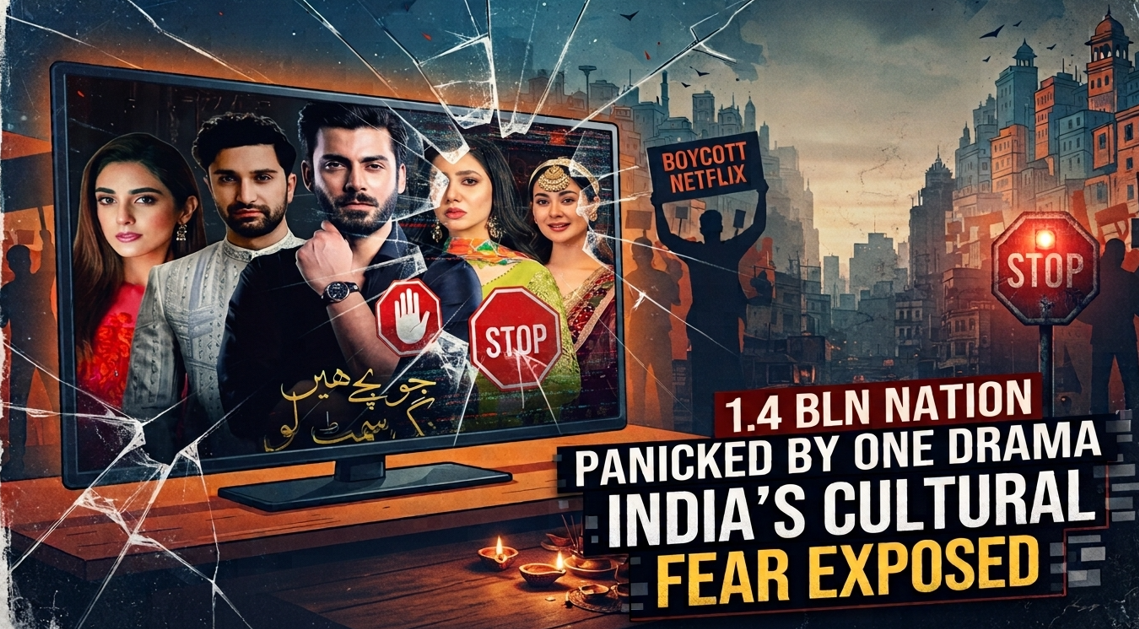
ISLAMABAD, Nov 27 (APP): India’s self-appointed culture police are on the move again as the All Indian Cine Workers Association gives Netflix a December 4 deadline to remove Pakistani series “Jo Bachay Hain Sang Samait Lo” under threat of a nationwide boycott, protests outside Netflix offices and a subscription cancellation campaign.
Far from a spontaneous reaction, the threat forms another link in an organised, state-backed campaign aimed at silencing voices, faces, and stories linked to Pakistan, driven by growing anxiety in Indian media over Pakistani family dramas winning over viewers while stale, recycled Indian content loses appeal.
Netflix India earned revenue of ₹3,769 crore and a net profit of ₹85 crore in FY2025, a 63% jump on the previous year, while Netflix’s Indian production unit posted revenue of ₹4,207 crore with its profit doubling to ₹181 crore.
According to an analyst, attempting to hold hostage a platform generating billions over a single Pakistani drama amounts to commercial blackmail rather than legitimate business competition.
The latest coercion follows a broader pattern of digital and cultural censorship in India. In April 2025, the Modi government banned 16 Pakistani YouTube channels with more than 63 million subscribers combined, building on the shutdown of 35 Pakistani channels at once in 2022.
Entertainment networks including ARY Digital, Har Pal Geo, and Hum TV were subsequently targeted, and the Instagram accounts of more than 20 prominent Pakistani artists were blocked. Even non-political family dramas such as Parizaad were cast as threats to India’s “national security.”
The AICWA has repeatedly resorted to intimidation and hostility against Pakistani talent, labelling an actor a “terrorist” and declaring over the mere presence of a Pakistani actress that a film would not be allowed to release in India.
Across decades, Indian prejudice has persisted alongside admiration for Pakistani art—targeting figures ranging from Atif Aslam, Rahat Fateh Ali Khan, Mahira Khan, and Fawad Khan to legends and stars including Mehdi Hassan, Ghulam Ali, Nusrat Fateh Ali Khan, Ali Zafar, and Saba Qamar.
Netflix itself has faced repeated mob pressure in India from “IC 814” to “Maharaj”, underscoring a climate where threats replace dialogue and boycotts replace tolerance.
This pattern unfolds alongside Indian media’s credibility crisis, including its May 2025 embarrassment over fabricated claims such as the “destruction of Karachi port,” and a wave of propaganda films that have drawn global ridicule while leaving Indian audiences weary of formulaic offerings.
Pakistani dramas and performers continue to stand out for superior quality, storytelling, and acting. When a country of 1.4 billion people claiming superpower status is rattled by a single drama serial, its vulnerability is unmistakable.
Art transcends borders and requires no permission from New Delhi; India’s unease reflects the collapse of its false narrative as Pakistani storytellers hold the upper hand.