PESHAWAR, Apr 10 (APP):Islamabad has become a peace capital as the world leaders and international media backed Pakistan efforts on crucial high-stakes talks between US and Iran imperative for durable peace in the Middle East. Emerged at the center of global attention, Pakistan prepares to host high-stakes talks between adversaries, with international media closely tracking its evolving diplomatic role in a fragile and rapidly shifting geopolitical landscape in the region. …
Islamabad becomes peace capital as world backs Pakistan’s efforts on US-Iran mediation

PESHAWAR, Apr 10 (APP):Islamabad has become a peace capital as the world leaders and international media backed Pakistan efforts on crucial high-stakes talks between US and Iran imperative for durable peace in the Middle East.
Emerged at the center of global attention, Pakistan prepares to host high-stakes talks between adversaries, with international media closely tracking its evolving diplomatic role in a fragile and rapidly shifting geopolitical landscape in the region.
Islamabad is all set to host rare direct negotiations between United States and Iran, aimed at sustaining a delicate two- week ceasefire and preventing further security escalation in the Middle East.
The development has drawn an intense global media attention, with major international and national outlets focusing their coverage on Pakistan’s capital as top leadership from both countries prepares to engage in crucial dialogue.
The development has placed Pakistan in an unprecedented position as a global mediator between two long-standing adversaries, highlighting its growing diplomatic relevance at a time of heightened regional tensions.
Professor Dr. Mirza Jan, former Chairman of the Department of Journalism and Mass Communication at Gomal University, said that Pakistan’s efforts have already contributed to bringing both sides back to the negotiating table, providing a golden opportunity to Tehran and Washington to reach a potential peace accord.
He said that Islamabad’s unique diplomatic ties with both Washington and Tehran have enabled it to act as a bridge, enabling both countries to hold direct talks for resolution of their issues.
Dr. Mirza Jan emphasized that the talks, taking place under tight security in Islamabad, carry significant global implications, particularly for regional peace, economic stability and energy markets.
He added that key issues likely to dominate discussions include the Iranian nuclear program, security in the Strait of Hormuz, sanctions on Iran and broader ceasefire arrangements.
Dr Mirza Jan expressed the hope that both sides will show flexibility and politcal acumen imperative for reaching a consensus Islamabad peace accord.
Pakistan has gained international recognition for facilitating dialogue and all responsibilities will be on leadership of both countries about final outcome.
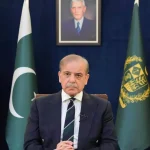
Dr. Mirza Jan revealed that several world leaders have contacted Prime Minister Muhammad Shehbaz Sharif, acknowledging his constructive role in brokering a much-needed ceasefire between the two adversaries.
Professor Dr Syed Shahjehan, former Chairman Journalism Department at University of Peshawar said that Pakistan emerged as a top diplomatic leader as the country due to its neutrality and strong ties with both countries.
He said Pakistan also hosted the quadrilateral talks in Islamabad and announced a seven-point peace plan, which followed an almost identical five-point plan in Beijing.
While praising Prime Minister Shehbaz Sharif’s leadership, he said that Pakistani premier has earnestly requested the US to extend its deadline for the bombing of Iran for two weeks, and also requested Iran to open the Strait of Hormuz for the corresponding period as a goodwill gesture.
As the world acknowledged Pakistan’s crucial mediatory role in de-escalation, Prime Minister Shehbaz Sharif’s request to the conflicting countries became the centre of international focus just before President Trump’s deadline expired, who also renewed his threat that “a whole civilisation of Iran will die on Tuesday night.
Despite ongoing challenges, he said global media coverage has widely acknowledged Pakistan’s emergence as a grest diplomatic player.
He said Pakistan momentous diplomatic role has silenced Indian leadership and Indian media frustration was seen by everyone.
Analysts believed that the success or failure of these talks could significantly shape the future of the Middle East’s geopolitical landscape.
As the world watches closely, Islamabad’s role underscores a broader shift in international diplomacy, where regional actors like Pakistan are increasingly stepping forward to mediate conflicts with far-reaching global consequences.