For more than a decade, the Belt and Road Initiative (BRI) has been measured in railways, ports, highways and power plants. Now, some of its partners are asking what those links can make possible next.
From railways to AI: Belt and Road partners look for the next stage of growth
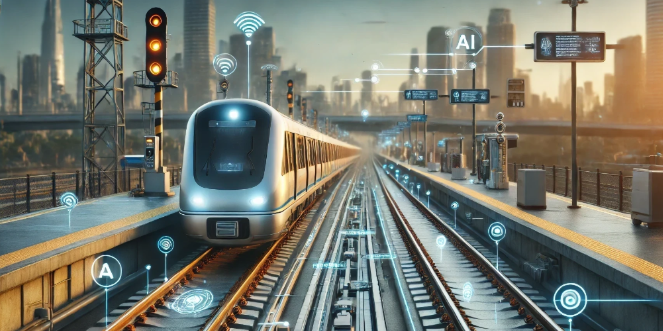
BEIJING, Jun 24 (APP):For more than a decade, the Belt and Road Initiative (BRI) has been measured in railways, ports, highways and power plants. Now, some of its partners are asking what those links can make possible next.
At a BRI investment forum in Beijing on Tuesday, officials and business representatives from Malaysia, Laos and Serbia talked not only about moving goods faster or building more infrastructure, but also about artificial intelligence, semiconductor supply chains, data centres, smart logistics and digital trade.
The message was clear: connectivity is becoming a foundation for new growth.
China has spent years helping build physical links that connect developing economies to regional and global markets. The next stage is about using those links to support higher-value industries — from chip packaging and AI infrastructure to cold-chain logistics, digital customs and regional supply chains, CEN reported.
Malaysia offered one of the clearest examples. Low Kian Chuan, chairman of the Malaysia-China Business Council, said cooperation with China could expand from railways, industrial parks and logistics into semiconductors, data centres, electric vehicles and renewable energy. He described the opportunity as a mix of “China’s technology, Asean manufacturing and global markets”.
Zhang Guolin, a director of the same council, presented Malaysia as a semiconductor and AI infrastructure hub. He said Malaysia accounts for about 13 per cent of global assembly, testing and packaging capacity, and pointed to Nvidia’s cooperation with Malaysia’s YTL on AI data centres.
Malaysia’s case shows how Belt and Road cooperation can connect with broader regional and global supply chains. China is not the only player in that ecosystem, but its technology, manufacturing capacity and market links can help partner countries strengthen their role in emerging industries.
Laos faces a different opportunity. The China-Laos Railway, one of Belt and Road’s most visible projects in Southeast Asia, gave the landlocked country a modern transport artery into China and the wider region.
But Oudet Souvannavong, president of the Lao National Chamber of Commerce and Industry, said the next stage should not be judged only by how fast cargo crosses borders. It should be judged by whether the entire chain works — from production and processing to logistics, digital coordination, finance and delivery.
For Laos, the railway is not the end goal. It is the foundation for something larger: agricultural processing, cold-chain logistics, digital customs, smart warehousing and regional supply chains.
Serbia shows another side of the shift. Marko Cadež, president of the Serbian Chamber of Commerce, said the country wanted deeper cooperation with China in AI, robotics, electric vehicles and digital technology.
He said Serbia already had two major supercomputers, expected a third by the end of the year, and aimed to become Southeast Europe’s largest supercomputing cluster, with an AI factory and standalone 5G network.
The second stage will not be simple. AI data centres need reliable power, water and data rules. Digital trade needs customs alignment and trusted cross-border data flows. Semiconductor ecosystems need talent and supply-chain depth.
China has shown it can build abroad at scale. The next opportunity is to work with partner countries to turn those physical links into platforms for production, data and digital trade.
The first decade of Belt and Road was about building the links. The next test is whether those links can carry data, capital and higher-value industries — not just goods.