Iftikhar Ali UNITED NATIONS, Nov 18 (APP):Pakistan has told an informal meeting of the United Nations Security Council that food crises spill far beyond conflict zones to hit developing, import-dependent countries, urging practical steps for steady food and fertilizer access alongside climate-resilient agriculture. Speaking in a debate on Food Diplomacy and Conflict-Induced Food Insecurity, Ambassador Syed Haider Shah, permanent representative of Pakistan to the UN, highlighted a dangerous feedback loop …
At UN, Pakistan warns food crises hit import-reliant nations far beyond conflict zones
Iftikhar Ali
UNITED NATIONS, Nov 18 (APP):Pakistan has told an informal meeting of the United Nations Security Council that food crises spill far beyond conflict zones to hit developing, import-dependent countries, urging practical steps for steady food and fertilizer access alongside climate-resilient agriculture.
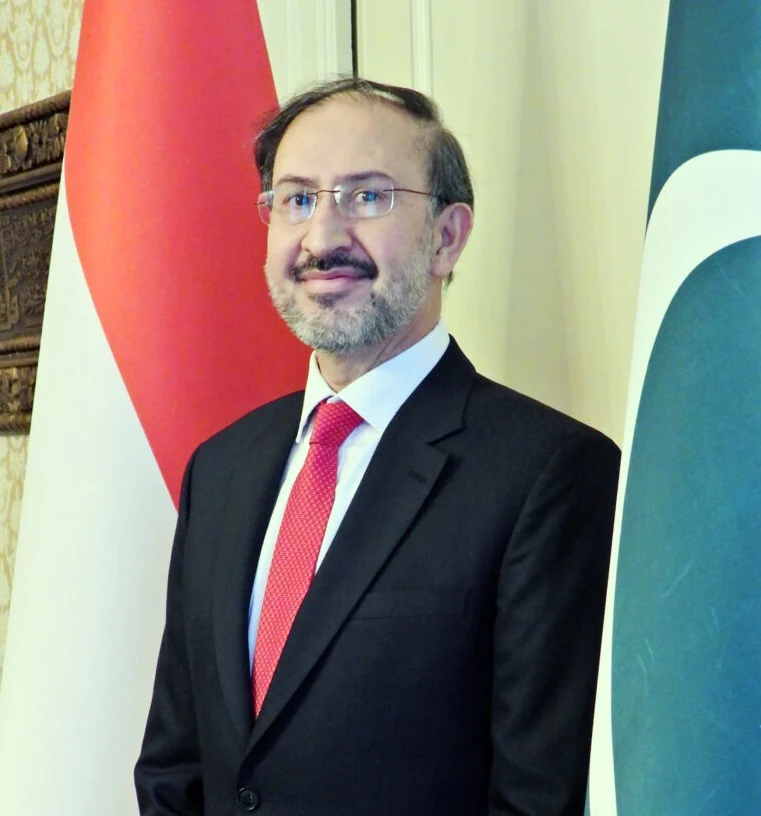
Speaking in a debate on Food Diplomacy and Conflict-Induced Food Insecurity, Ambassador Syed Haider Shah, permanent representative of Pakistan to the UN, highlighted a dangerous feedback loop in which armed conflicts, including foreign occupation, drive mass hunger, while hunger and economic desperation fuel renewed or protracted instability.
“The challenge before us is therefore not merely to respond to food crises, but to prevent them, and to address the underlying conditions that give rise to them,” he added.
Wednesday’s 15-member Council’s meeting was convened by Greece under Arria-Formula format named after a former Venezuelan Ambassador to the UN, Diego Arriva.
Arria-Formula meetings are informal that enable Security Council members to have a frank and private exchange of views on relevant subjects.
The meeting brought together Council members and other UN member states, alongside experts and practitioners from international organizations, academia, the private sector, and civil society.
Building on UN Security Council Resolution 2417 (2018), discussions explored treating food systems as strategic assets with geopolitical implications, using early-warning data and cross-sectoral cooperation, and protecting humanitarian access and civilian survival infrastructure.
In his remarks, Ambassador Haider Shah argued that the international community must move beyond merely responding to food emergencies to preventing food crises and tackling their root causes.
While supporting food diplomacy to foster dialogue, anticipate risks, and build cooperation, the Pakistani envoy emphasized that its value should be judged by tangible results rather than creating new mechanisms.
Food insecurity, he said, extends well beyond active conflict zones, hitting developing countries, especially those reliant on food and energy imports, the hardest.
“The suffering in Gaza, Sudan, Yemen, South Sudan and other conflict-affected regions is a stark reminder of the human cost of this failure.”
In this regard, Ambassador Haider Shah called for stronger cooperation to keep food and fertilizer supplies reliable, prevent trade disruptions, and ensure fair access to essential agricultural inputs.
Addressing systemic hunger requires joint action by governments, the UN, international financial institutions, and other stakeholders, he said.
“All parties in conflicts must allow and facilitate rapid and unimpeded humanitarian assistance, consistent with international humanitarian law.”
Citing Pakistan’s own experience with climate-driven floods, he stressed building climate-resilient agriculture, protecting smallholder farmers’ livelihoods, and backing these efforts with adequate financing, technology transfer, and capacity building.
“Such engagement must also be accompanied by adequate financing, technology transfer and capacity-building,” the Pakistani envoy said.
In conclusion, Ambassador Shah underscored that sustainable food security could not exist without peace.
“While food diplomacy can help foster cooperation, it cannot substitute for the actual resolution of conflicts,” the Pakistani envoy said, stressing that lasting food security required peaceful settlement of disputes, in accordance with the UN Charter and international law.