
UNITED NATIONS, Nov 16 (APP):As climate finance and debt relief dominated COP31 talks in Antalya, Turkiye, UN Secretary-General Antonio Guterres has warned that tripling adaptation funding would still cover less than a third of vulnerable nations' needs, intensifying pressure on wealthy economies and fossil fuel polluters to close an estimated $840 billion annual shortfall. This statement came as pressure increased on wealthy nations and major polluters to contribute their fair …
At COP31, UN chief warns tripled adaptation aid still falls far short of vulnerable nations’ needs
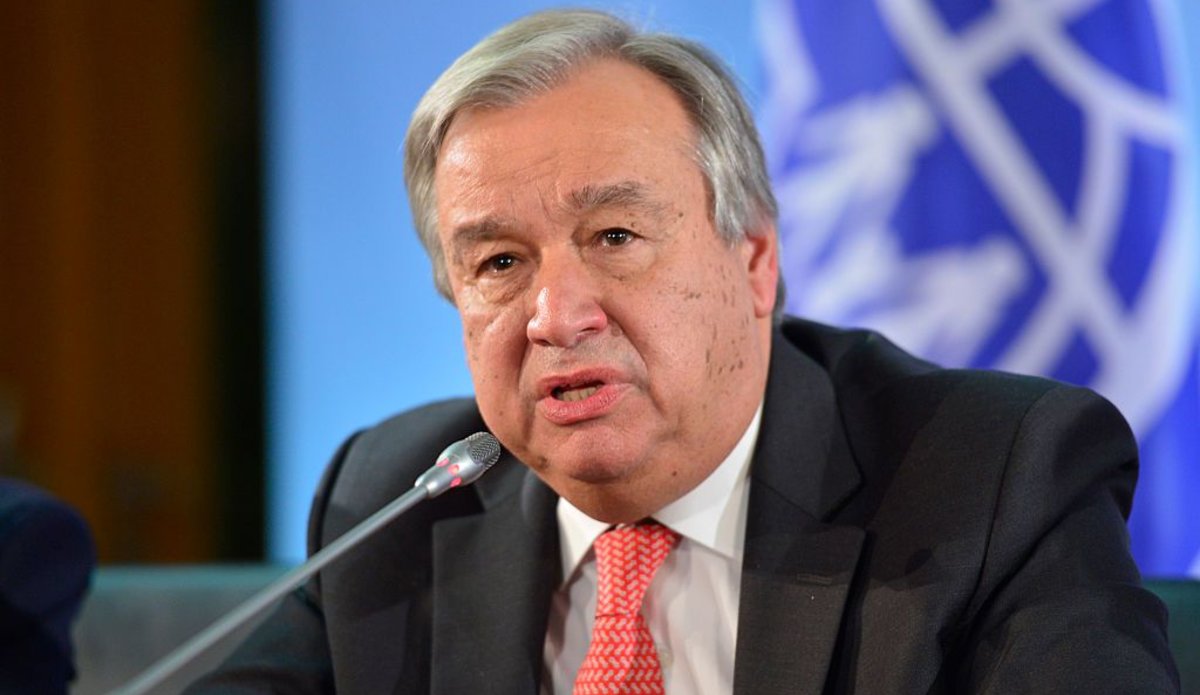
UNITED NATIONS, Nov 16 (APP):As climate finance and debt relief dominated COP31 talks in Antalya, Turkiye, UN Secretary-General Antonio Guterres has warned that tripling adaptation funding would still cover less than a third of vulnerable nations’ needs, intensifying pressure on wealthy economies and fossil fuel polluters to close an estimated $840 billion annual shortfall.
This statement came as pressure increased on wealthy nations and major polluters to contribute their fair share.
Along the corridors and waterways of the COP31 venue in Antalya, protesters from across the globe gathered to demand climate justice, according to media reports. Some fought back tears, while others wept openly, recounting the lives and livelihoods already lost to climate change.
Developing nations require an estimated $305 billion per year by 2035 for adaptation alone, yet current trends leave annual climate finance tracking roughly $840 billion below the broader $1.3 trillion target.
Meanwhile, development finance agencies from Britain, Norway and Canada unveiled a $10 billion package to back climate projects across emerging markets.
In remarks at his last press conference at COP31, the UN chief called for fundamental reforms to the international financial system, arguing that climate disasters were reversing decades of development progress and pushing vulnerable countries further into debt.
Guterres warned that even tripling adaptation finance would cover less than 30% of global needs and urged international climate funds to simplify access to financial assistance. He also called for a faster transition away from fossil fuels, arguing that governments could not credibly support the 1.5°C target while continuing to expand fossil fuel production.
Financial discussions made important, but very limited progress. However, concerns remain about the wider funding gap: developed countries are expected to help mobilize at least $300 billion annually for developing nations by 2035, within a broader $1.3 trillion target, but current financing trends are expected to produce an annual shortfall of $840 billion against that larger objective.
Negotiations over the future of the Mitigation Work Programme (MWP), which aims to accelerate emissions reductions and the implementation of climate commitments, revealed significant divisions.
Although most countries supported its continuation, they differed over its mandate, duration and institutional arrangements.
Developing countries, including China, India and members of the African and Arab Groups, insisted that the programme must retain its existing safeguards, ensuring that discussions remain voluntary and do not impose new mitigation targets or undermine national sovereignty. They also argued that developed countries must provide greater financial and technological support to make climate action possible.
In contrast, the European Union, United Kingdom and several other countries called for stronger links between the MWP and the Global Stocktake (GST), arguing that the programme, a Central part of the Paris Agreement, should help translate global climate assessments into more effective national action. Some also supported establishing a permanent mitigation committee to oversee the MWP.
Further disagreements concerned whether the programme should continue beyond 2030 and how frequently its dialogues should take place. These differences left the future structure and direction of the programme unresolved.
Similar concerns echoed through Friday’s finance discussions, as the UN Secretary-General warned that climate disasters were erasing decades of development gains and pushing vulnerable countries deeper into debt.
“Even tripling adaptation finance would meet less than 30 per cent of what is needed,” he told reporters at his final COP press conference as Secretary-General before leaving office at the end of the year.
The consequences, he argued, extend far beyond the environment.
“You cannot build peace on a burning planet,” he said. “You cannot eradicate poverty when climate disasters keep throwing people back into it.”
Climate action, he insisted, must remain central to the UN’s work, requiring a faster transition away from fossil fuels and a challenge to the “powerful interests” standing in the way.
“The future of our planet cannot be negotiated on the terms of those profiting from its destruction.”
But finding the money to protect vulnerable countries is another battle. The UN chief revealed that he had met with the heads of international climate funds earlier on Friday, urging them to cut through the bureaucracy that makes financial assistance so difficult to access, particularly for countries with limited resources.
He also questioned the fairness of a global financial system designed after the Second World War, when many developing countries had little say in shaping it.
Changing that system, he argued, could also help unlock more funding. A dollar invested in the capital of a development bank, for example, could generate eight to ten dollars in financing, while greater use of guarantees could attract private investment.
At a ministerial meeting, UN climate chief Simon Stiell described the consequences of leaving things as they are.
“Many developing countries are trapped in a downward loop of debt, disaster, and devastating capital costs,” he said. “Climate finance must help countries break free.”
Under existing agreements, developed countries are expected to lead efforts to mobilize at least $300 billion a year for developing nations by 2035, as part of a broader $1.3 trillion goal.
But an assessment highlighted at COP31 suggests that, on current trends, annual climate finance could fall $840 billion short of that larger target.
Fresh efforts to close the gap emerged on Friday. Development finance institutions from Britain, Norway and Canada announced plans to mobilize $10 billion for climate projects in emerging markets by 2030.
For millions of farmers, climate finance can mean the difference between adapting to a changing climate and losing everything when disaster strikes.
Kaveh Zahedi, from the UN Food and Agriculture Organization (FAO), told UN News that only around five per cent of climate-related development finance goes to agriculture, and that share is declining.
Yet investing in adaptation can help farmers restore degraded land, use water more efficiently and grow crops better able to withstand droughts and floods, as increasingly unpredictable weather and El Niño are threatening food production.
“The biggest risk is not investing in agriculture,” he warned. “Because then you’re risking food insecurity. You’re risking an increase in hunger.”
Activists hold banners reading “Debt Cancellation” and “Reparations” at a COP-31 event, while a Black man wearing a keffiyeh speaks into a megaphone in an outdoor plaza.© harvest may be months
An innovative insurance scheme is helping farmers recover without waiting for lengthy damage assessments.
Known as parametric insurance, it provides payouts when predefined conditions, such as wind speed or rainfall, are reached.
Sinja Buri, from the United Nations University Institute for Environment and Human Security, explained why speed matters.
“The longer it takes for him to receive support, the longer it will take to recover. And the costs will even be higher,” she said.
The programme operates across eight Pacific countries, with tens of thousands of people benefiting so far.
But tackling climate change is not just about spending money.
“Climate action is a good investment and it is profitable,” Hunter Lovins, founder of the NGO Natural Capitalism Solutions, told UN News.
With fuel prices soaring in the United States, Ms. Lovins pointed to her own electric car, charged by solar panels at home, as an example of how renewable energy can cut costs and reduce dependence on volatile oil prices.
She has also seen its benefits during a disaster. When floods cut off her community in Colorado and left neighbours without electricity for more than a week, her home solar-powered home remained. Neighbours even brought their frozen food to her freezer.
“This is real security in your community,” she said.
Ms. Lovins now helps organize community-led climate initiatives with more than 1,000 organizers across 57 countries, encouraging people to adopt solutions without waiting for governments.
“You don’t have to wait on a government. Let’s do it.”
Elsewhere at COP31, the spirit of the protests found its way into a plenary hall, where civil society representatives had gathered to bid farewell to Guterres at his last climate summit as UN Secretary-General.
For nearly a decade, they said, he had been their “champion”, “the best spokesperson they could have wished for”. And they wanted him to know it.
There was a “Make Polluters Pay” award, an emotional standing ovation and even an invitation to return to a future COP wearing an NGO badge, this time as one of them.
The gathering soon took on the familiar sounds of a climate demonstration. Cries of “Make polluters pay!” echoed around the room, joined by another chant: “SG! SG! SG!”
Guterres, visibly moved by the reception, returned to the issue that had dominated the day. Fossil fuel companies, he argued, should be taxed on their extraordinary profits to help those suffering from a crisis they did little to cause.
“We face lobbies. We face powers that are putting pressure on governments,” he warned, urging activists to keep up the pressure of their own.
As the UN chief prepared to leave his final COP, it was pointed that the message ringing through the hall was clear. The battle for climate justice will go on, and Guterres “will not stop fighting”.

