UN chief announces global scientific panel on AI, including Pakistan’s Bilal Mateen, to serve ‘all of humanity’
UN chief announces global scientific panel on AI, including Pakistan’s Bilal Mateen, to serve ‘all of humanity’
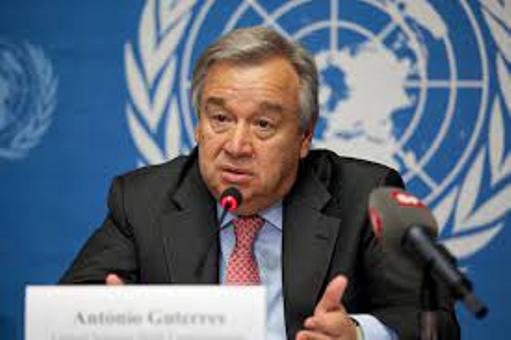
UNITED NATIONS, Feb 05 (APP): UN Secretary-General Antonio Guterres Wednesday announced the launch of a 40-member Independent International Scientific Panel on Artificial Intelligence (AI), which includes Pakistani expert Bilal Mateen, describing it as a global effort “to serve all of humanity” amid rapid technological change.
The UN chief told reporters at UN Headquarters in New York that the panel “is a direct response to the mandate given by Member States in the Pact for the Future to strengthen multilateral solutions for emerging technologies that are reshaping every aspect of our lives.”
“It will be the first global, fully independent scientific body dedicated to helping close the AI knowledge gap and assess the real impacts of AI across economies and societies,” he added.
Guterres highlighted the speed of AI development, saying, “AI is moving at the speed of light. No country can see the full picture alone. We need shared understandings to build effective guardrails, unlock innovation for the common good, and foster cooperation.”
Following an open global call that drew more than 2,600 applications, he recommended 40 experts to the UN General Assembly with deep expertise across machine learning, data governance, public health, cybersecurity, childhood development and human rights.
“All members will serve in their personal capacity, independent of any government, company, or institution,” he said.
The panel is expected to deliver its first report in time for the Global Dialogue on AI Governance in July, he said.
“AI is transforming our world. The question is whether we will shape this transformation together, or allow it to shape us,” the UN chief said, emphasizing the need for “common ground, and a practical basis for cooperation based on science and solidarity.”
Guterres sent the list of the 40 names to the General Assembly to be appointed for a period of three years.
Dr Mateen, who is among the 40 experts from around the world, is a physician-academic and technology leader whose expertise lies at the intersection of AI, data science, and global public health. He serves as the inaugural Chief AI Officer at PATH, a global health organization, where he focuses on the ethical and inclusive application of AI to improve health outcomes.