Fakhar-e-Alam PESHAWAR, Sept 20 (APP)::As the sun dips behind the Koh-e-Sufaid mountains of Khyber, 70-year-old Jamsheed Ali wheels his son to the edge of a dusty playground on River Kabul's bank for recreation. Children run after a worn-out football at Dheri Ishaq village Nowshera where their bare feet sending clouds of dust amid laughter. Parents watch from the sidelines, occasionally calling out …
The cost of missing polio vaccination: A father’s regret, a family’s loss
Fakhar-e-Alam
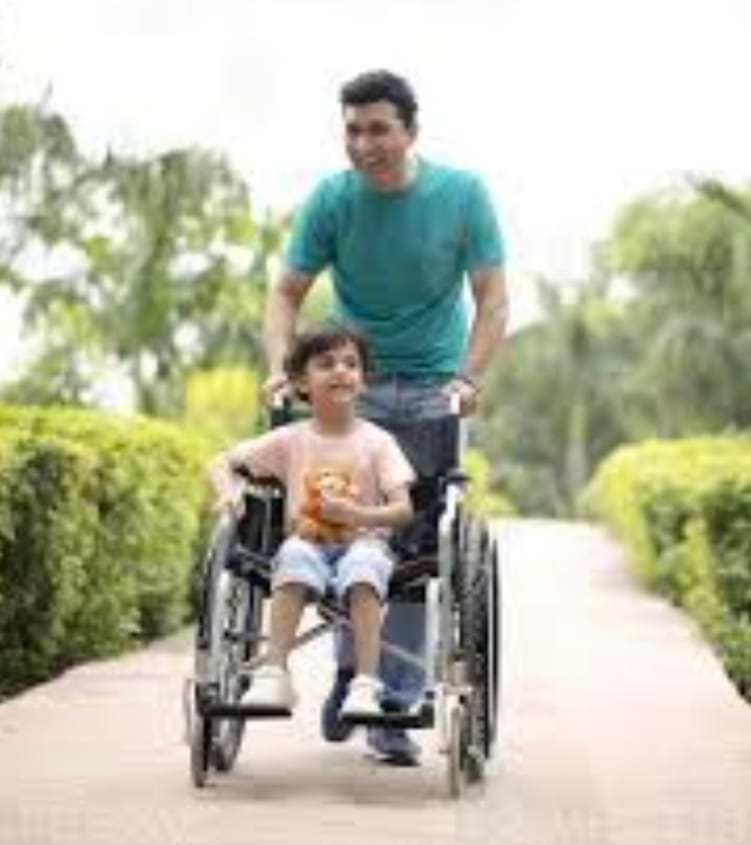
PESHAWAR, Sept 20 (APP)::As the sun dips behind the Koh-e-Sufaid mountains of Khyber, 70-year-old Jamsheed Ali wheels his son to the edge of a dusty playground on River Kabul’s bank for recreation.
Children run after a worn-out football at Dheri Ishaq village Nowshera where their bare feet sending clouds of dust amid laughter.
Parents watch from the sidelines, occasionally calling out to their children to remain careful amid rise and fall while chasing football.
Among them sits an ill fated Abid Ali, his hands stretched forward and his eyes fixed on the football game wanting to join in.
Sometimes, when the ball rolls close, he leans forward from his wheelchair, reaching for it like the other children. But without the strength in her legs to steady himself, he sometimes loses his balance and falls from wheelchair.
His father lifts him, settles him back into the wheelchair and watches silently as the game continues amid laughter by young players.
For Jamsheed, each fall is a painful reminder of a decision he wishes he could undo and vaccinated his son.
“At just four years old, Abid’ s life changed forever and so did ours,” he says, his voice trembling.
It began with fever and pain in his limbs and within days, the little boy could no longer stand after doctors diagnosed him with polio that paralyzed both of his legs forever..
“I didn’t vaccinate him,” Jamsheed says quietly. “We believed the rumors and the lies about the polio vaccine. That guilt follows me every single day.”
He pauses and grips the handles of his son’s wheelchair, saying when he falls, it feels like my heart falls with him.”
Abid’ s story is deeply personal, but it reflects a wider public-health challenge confronting parts of Khyber Pakhtunkhwa, particularly its southern districts.
Earlier this month, the country has recorded its fourth polio case of 2026 in Bannu district. According to the polio eradication authorities, the affected child belonged to Nurar Union Council in Miryan tehsil of Bannu. Three of this year’s four cases are from Bannu division.
The country recorded its first case of 2026 in a four-year-old child from Sujawal district of Sindh in early March. Two further cases were reported in Khyber Pakhtunkhwa in May, one each from Bannu and North Waziristan.
The figures are considerably lower than previous years, but health officials said the continued detection of the virus showed that the threat has not disappeared and persistent efforts require to eradicate it.
However, polio cases were significantly reduced in Pakistan where only four cases reported this year against 31 cases of wild polio-virus type 1 including 19 in Khyber Pakhtunkhwa in 2025.
“Polio is a highly contagious and irreversible disease, and vaccination is the only viable remedy,” says Dr Riaz Malik, head of the children’ s department at Government Pabbi Hospital Nowshera.
“It can silently attack and permanently destroy a child’s future within days,” he said, adding oral polio vaccine is safe and remains one of the most important tools for protecting children from paralysis.
For families such as Abid’ s, the consequences of missing vaccination are not measured in statistics but are measured in childhood paralyzed forever.
In remote communities where literacy is low and access to reliable health information can be limited, rumors, negative propaganda, myths and misinformation against polio vaccine have largely contributed to positive cases especially in Bannu, health workers said.
Jamshed knows that reality better than most as he remembers his son before polio was running, playing and moving freely but now he pushes his wheelchair with immense regret.
“I talk to parents now,” he reiterated. “I tell them my story. I beg them not to make the same mistake and vaccinate children. Don’t believe in false rumors, myths and do not wait until it’s too late.”
His regret has become a warning he carries from one household to another.
“If my story can save even one child,” he says softly, “then maybe my regret will mean something.”
Despite the setbacks, health authorities said Pakistan is making substantial progress towards eliminating polio in near future due to success of vaccination campaigns.
To eradicate polio, Khyber Pakhtunkhwa Government has launched its anti-polio campaign, targeting 7.3 million children across the province from September 21 to 27, 2026.
About 35,000 vaccination teams, supported by security personnel and officials from relevant departments, are taking part in the week-long campaign.
Provincial health minister Khaleeq ur Rehman and Chief Secretary Shahab Ali Shah inaugurated the campaign at Police Services Hospital in Peshawar, urging parents to cooperate with vaccination teams and ensure that every eligible child receives anti polio drops.
He also called on social media users to help counter misinformation surrounding vaccination and create awareness against polio.
Chief Secretary Shahab Ali Shah said the polio cases reported in the province this year had emerged from areas where security challenges restricted access to children.
The provincial government, he said, had conducted three special vaccination campaigns during the past three months in Upper South Waziristan, Lower South Waziristan, North Waziristan and Bannu to improve coverage in hard-to-reach areas.
The government has also announced measures to strengthen health services in affected areas, including the recruitment and deployment of 2,400 doctors, procurement of medicines and outsourcing the management of 72 hospitals in remote areas.
Officials said patients at those hospitals will continue to receive free treatment and anti polio vaccine.
The chief secretary also stressed the importance of coordination between routine immunization programmes and supplementary anti polio campaigns, particularly in communities affected by migration and insecurity.
Polio teams have been deployed at registration points in areas experiencing population movement because of winter conditions or security operations, with the aim of ensuring that no child is missed.
At the national level, officials pointed to a sharp decline in polio cases over the past three years courtesy to Federal Govt anti polio campaigns.
Prime Minister’s focal person for polio eradication Ayesha Raza Farooq recently told journalists that only four cases had been reported nationwide up to September 16, 2026, compared with 31 in 2025 and 74 in 2024, saying time was near when Pakistan will be declared polio free.
She said environmental surveillance had also detected a substantial reduction in positive samples, falling from 417 in 2025 to 124 between January and July 2026.
She said the recent immunization campaigns recorded coverage of 98 percent in February, 99 percent in April and 98 percent in May this year.
But officials said the remaining virus reservoirs especially in Bannu and adjoining vulnerable areas require continued vigilance and vaccination of all children under five years of age.
A sub-national immunization drive scheduled for September 21-27, 2026 aims to vaccinate 31 million children under five in 115 high-risk districts across Pakistan.
The campaign is being synchronized with Afghanistan, with particular attention being given to zero-dose children, including those among nomadic and migrant populations.
Pakistan and Afghanistan remain the only countries where wild polio-virus continues to circulate endemically, making the border region a single epidemiological block for eradication efforts.
Ayesha Raza said an inclusive strategy had also been developed to address vaccination gaps in southern Khyber Pakhtunkhwa.
She said the federal government remained focused on detecting the virus early, responding rapidly to cases and reaching children who had previously been missed.
The government has also increased remuneration for around 400,000 front-line workers, most of them women, by approximately 28 percent.
These workers continue to travel from door to door, often through difficult terrain and challenging security environments especially in erstwhile FATA, to administer a few drops that can mean the difference between protection and permanent paralysis.
Globally, polio remains a concern for many due to endemic nature. Pakistan and Afghanistan are the last countries where the virus remains endemic, while surveillance continues to identify evidence of circulation in some areas of Bannu district of Khyber Pakthunkhwa.
For Abid Ali, however, those statistics are distant from the reality of his daily life as he can’t walk.
As the evening shadows lengthen over Dheri Ishaq village, he watches the children play until the game ends and laughter slowly fades.
Poor Jamshed turns his son wheelchair towards home amid lifelong regret. He pushes slowly along the dusty path, his son beside him and his regret of not vaccinating him still weighing heavily on his shoulders.
But he is no longer silent about it as he wants other parents to hear what he learned too late.
“I cannot change what happened to my son,” he says. “But perhaps I can help make sure it does not happen to another child to crippled for life.”