
Recently, Pakistan has experienced a remarkable security turnaround, a crucial shift from prolonged instability toward gradual stability.
Pakistan’s security turnaround: Positive momentum driven by counter-terrorism and cooperation: Prof Cheng
BEIJING, Apr 3 (APP):: Recently, Pakistan has experienced a remarkable security turnaround, a crucial shift from prolonged instability toward gradual stability. As a core hub of the China-Pakistan Economic Corridor (CPEC) and a key partner in the Belt and Road Initiative(BRI), Pakistan’s improving security landscape not only safeguards its own national development but also reinforces regional peace and deepens Sino-Pakistani cooperation—all fueled by resolute counter-terrorism efforts and enhanced domestic and international collaboration.
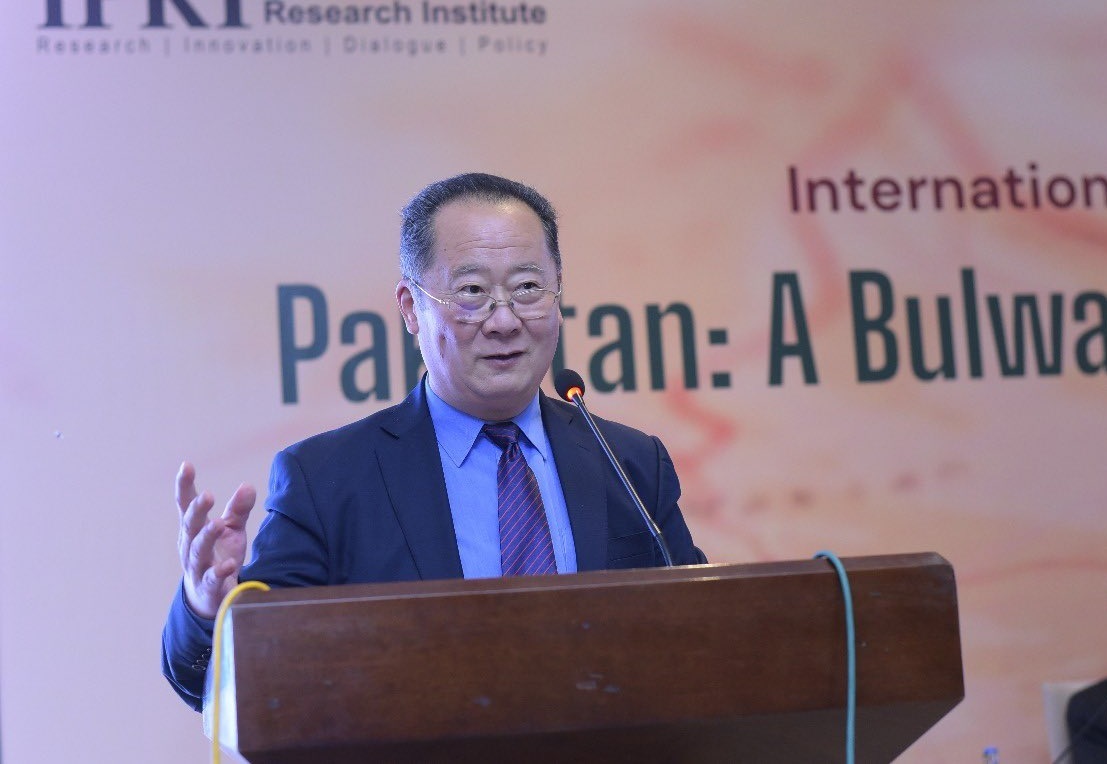
This was stated by Prof Cheng Xizhong, Senior Research Fellow at the Charhar Institute, a non-governmental Chinese think-tank on diplomacy and international studies based in Beijing.
He remarked that the most notable progress stems from Pakistan’s unprecedented achievements in counter-terrorism. In 2025 alone, the Pakistani military launched over 75,000 intelligence-driven anti-terror operations, neutralizing 2,597 terrorists across the country, according to a press conference by Inter-Services Public Relations (ISPR) on January 6, 2026. In early 2026, large-scale clearance operations in Baluchistan dealt a crippling blow to terrorist organizations, killing 216 terrorists in a single campaign and severely undermining their command structure, as announced by ISPR on February 5, 2026. These decisive actions have significantly reduced the frequency and severity of terrorist attacks, particularly in once-troubled regions such as Balochistan and Khyber Pakhtunkhwa.
Prof Cheng said that strengthened domestic governance and deepened international cooperation have further consolidated this security momentum. Domestically, Pakistan has established a comprehensive anti-terror framework integrating military strikes, intelligence sharing and social governance, while bridging political divides to forge a national consensus on safeguarding security. Internationally, Sino-Pakistani cooperation plays a pivotal role: frequent high-level exchanges and intensified anti-terror collaboration have jointly enhanced Pakistan’s security capabilities.
While challenges—such as residual terrorist elements and geopolitical spillovers—persist, the positive trajectory of Pakistan’s security situation is undeniable. This improvement has restored domestic confidence, attracted increased foreign investment, and laid a solid foundation for economic recovery. With sustained counter-terrorism efforts and strengthened bilateral and multilateral cooperation, Pakistan’s security environment will continue to improve, unlocking broader prospects for its own development and greater stability across the region, he concluded.