
BEIJING , Jan 26 (APP):Pakistan's cotton yarn exports to China recorded solid growth in 2025, exceeding $451 million, underscoring the resilience and long-term maturity of bilateral textile trade under the China–Pakistan economic partnership. According to data from China's General Administration of Customs (GACC), exports of uncombed single cotton yarn (cotton =85%, yarn =714.29 decitex) under HS code 52051100 alone reached $233.57 million in 2025, up from $222.73 million in 2024 …
Pakistan’s Cotton Yarn Exports to China Surpass $451 Million in 2025
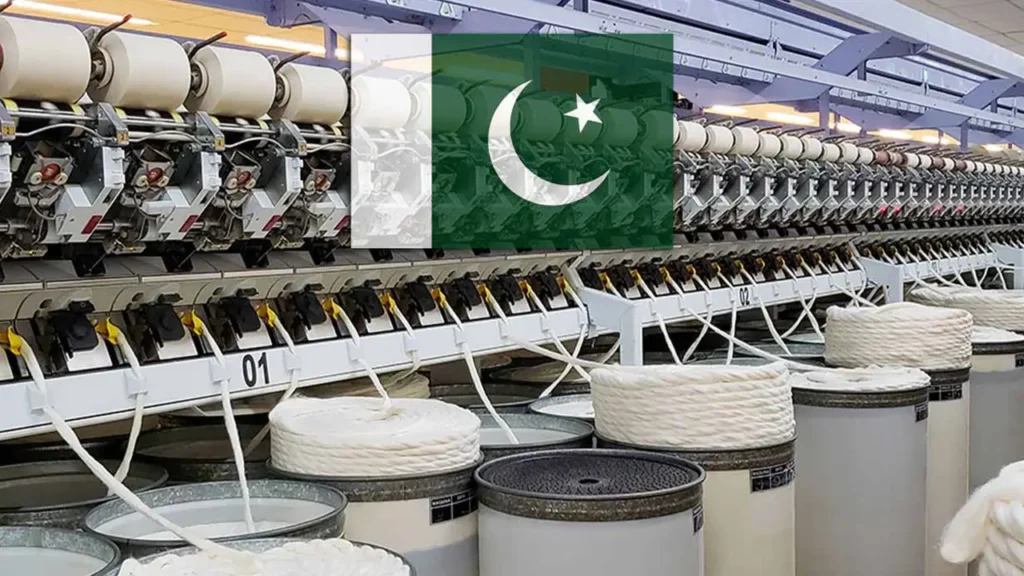
BEIJING , Jan 26 (APP):Pakistan’s cotton yarn exports to China recorded solid growth in 2025, exceeding $451 million, underscoring the resilience and long-term maturity of bilateral textile trade under the China–Pakistan economic partnership.
According to data from China’s General Administration of Customs (GACC), exports of uncombed single cotton yarn (cotton =85%, yarn =714.29 decitex) under HS code 52051100 alone reached $233.57 million in 2025, up from $222.73 million in 2024 an increase of $10.83 million, or about 4.9 percent year-on-year.
Another major category, uncombed single cotton yarn under HS code 52051200, generated $212.56 million in exports to China during 2025, highlighting the depth and diversity of Pakistan’s yarn shipments, CEN reported.
Chinese Customs data further showed that in 2025, Viet Nam remained the largest supplier of uncombed single cotton yarn under HS 52051100 to China, exporting $341.99 million, followed by Pakistan with $233.57 million, firmly positioning Pakistan as the second-largest supplier in this category.
Malaysia and Bangladesh accounted for comparatively smaller shares, exporting $17.28 million and $12.70 million, respectively, underscoring Pakistan’s strong competitiveness among regional cotton-yarn suppliers in the Chinese market.
Provincial import data indicate that Fujian Province remained the largest destination for Pakistani cotton yarn under HS 52051100, importing yarn worth $107.47 million, followed by Guangdong Province at $72.06 million and Beijing at $18.15 million.
Other key destinations included Zhejiang, Jiangsu, Anhui, Hunan, Shandong and the Xinjiang Uygur Autonomous Region, reflecting the broad integration of Pakistani yarn into China’s textile and garment manufacturing hubs. Trade was conducted through multiple regimes, including ordinary trade, bonded entrepot trade, processing with imported materials and customs warehousing, pointing to increasingly sophisticated supply-chain arrangements.
Speaking to China Economic Net, Sajjad Mazahir, Director of Marketing at Keywin Trading Ltd., said Pakistan’s cotton yarn shipments to China have evolved from short-term demand cycles into stable, long-term supply-chain relationships.
“On one end, it provides Chinese customers with a consistent supply of good-quality textile raw materials at competitive prices, and on the other, it offers Pakistani suppliers a reliable market to earn precious foreign exchange,” he said.
Mazahir added that China’s garment export industry benefited significantly from Pakistani-origin textile raw materials in 2025, particularly as U.S. trade tariffs made it more challenging for China’s domestic supply chains to produce tariff-free exports.
Despite operating in one of the most difficult environments in recent years marked by lower cotton output due to heavy rains and floods, higher energy costs and global economic pressures Pakistani spinners managed to regain market share from mid-2025 onward. Monthly cotton yarn exports averaging $35–40 million were described as “a pleasant surprise” under such constraints.
Industry experts caution, however, that Pakistan’s textile exports to China remain below their full potential, as shipments are still heavily concentrated in raw materials. Structural challenges, including inconsistent cotton supply, high energy and financing costs, and limited adaptation to China’s rapidly expanding web-based and AI-driven procurement models, continue to constrain value addition.