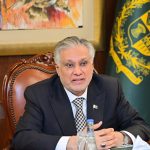
UNITED NATIONS, Sep 26 (APP):With 117 million people forcibly displaced worldwide, a top Pakistani official has called on the UN Security Council to address the root causes of displacement by placing conflict prevention and resolution at the heart of its work. "The Council must act to prevent new conflicts, resolve protracted disputes, and promote mediation and the peaceful settlement of disputes in accordance with the UN Charter and international law," …
Pakistan urges UN Security Council to target root causes of global displacement crisis

UNITED NATIONS, Sep 26 (APP):With 117 million people forcibly displaced worldwide, a top Pakistani official has called on the UN Security Council to address the root causes of displacement by placing conflict prevention and resolution at the heart of its work.
“The Council must act to prevent new conflicts, resolve protracted disputes, and promote mediation and the peaceful settlement of disputes in accordance with the UN Charter and international law,” Nabeel Munir, acting Foreign Secretary, told the 15-member Council on Friday.
‘Protracted crises continue to generate displacement, even as new humanitarian emergencies emerge,” he said.
Nabeel Munir spoke after the head of the Office of the United Nations High Commissioner for Refugees (UNHCR) warned in his first Security Council address since his election to the post in December 2025 that displacement was rapidly outpacing solutions.
“As displacement increases, international solidarity is under strain,” the official said, noting that Pakistan “knows this reality first-hand”. For more than four decades, he said, Pakistan has hosted millions of Afghans, extending protection and hospitality despite considerable economic challenges.
Resettlement must become more predictable and credible, Munir said, encouraging developed countries to establish multiyear programmes.
Voluntary repatriation and sustainable reintegration must receive greater international support, he said, adding return must be voluntary, safe, and dignified, and backed by adequately funded programmes.
“Our shared objective must be a world where fewer people are forced to flee, and where those displaced can return home in safety, dignity and peace,” the Pakistani official added
Briefing the Council, UNHCR head Barham Salih said, “Today, more than 117 million people have been forced to flee their homes by conflict, violence, persecution and other threats to their safety,” said, pointing out that, with conflicts multiplying or becoming protracted, and political solutions elusive, “millions of people who fled what they hoped would be a temporary crisis find themselves displaced for years, sometimes for generations”.
“When peace fails, people move,” he said, repeating his appeal to the Council to use its political influence to end conflicts and sustain peace processes.
“A ceasefire that holds can allow a family to remain at home. A peace agreement can allow refugees to return,” he said, adding that, while humanitarian organizations deal every day with the consequences of conflict, “humanitarians cannot create peace”.