UNITED NATIONS, Oct 22 (APP):With humanity’s survival increasingly tied to orbital infrastructure, Pakistan has warned that space weaponization has moved from theoretical doctrine to active deployment, making a legally binding treaty on the Prevention of an Arms Race in Outer Space (PAROS) more critical than ever. "We must pursue a comprehensive approach that can preserve outer space as a domain free from conflict for future generations," Pakistani delegate Husham Ahmed …
Pakistan pushes for legally binding space treaty to prevent outer space arms race
UNITED NATIONS, Oct 22 (APP):With humanity’s survival increasingly tied to orbital infrastructure, Pakistan has warned that space weaponization has moved from theoretical doctrine to active deployment, making a legally binding treaty on the Prevention of an Arms Race in Outer Space (PAROS) more critical than ever.
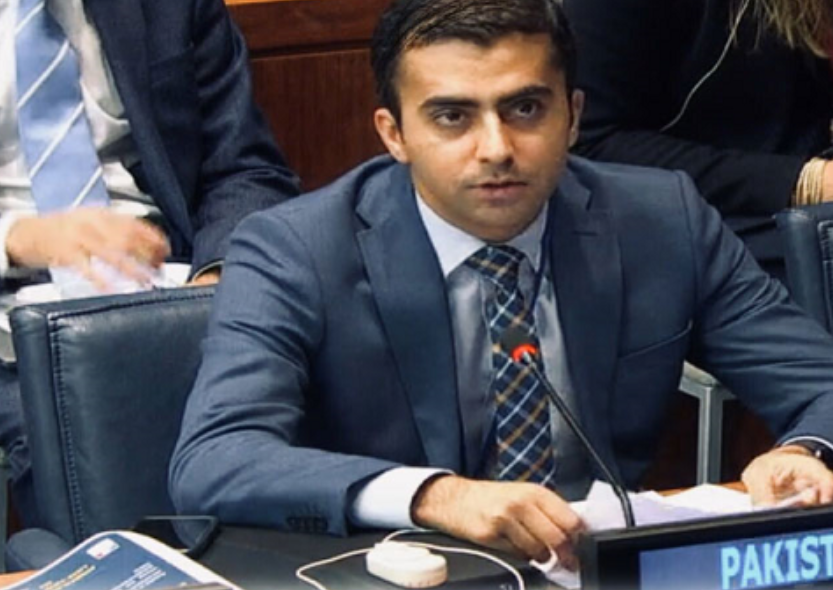
“We must pursue a comprehensive approach that can preserve outer space as a domain free from conflict for future generations,” Pakistani delegate Husham Ahmed told the UN General Assembly’s First Committee (Disarmament and International Security) in its thematic debate on Thursday, pointing out that weapons in orbit were officially acknowledged last month — for the first time.
He cautioned that integrating missile defence with space-based systems undermines global strategic stability, warning that such deployments risk triggering countermeasures and destabilizing international security through an unsustainable arms race.
While the window to prevent the weaponization of outer space has not closed, the Pakistani delegate said, recent announcements have narrowed it and made it far harder to hold ajar, which is precisely why the international community must act now before deployments harden into irreversible facts.
In this regard, Husham Ahmed highlighted the urgent need to establish formal international frameworks to prevent the militarization of space, warning that non-binding guidelines are no longer sufficient to secure the global commons.
The Pakistani delegate emphasized that while transparency and voluntary Open-Ended Working Group (OEWG) guidelines are helpful stepping stones, they cannot substitute for a formal treaty. He reiterated Pakistan’s concrete proposals outlining basic obligations for a potential, legally-binding PAROS treaty.
“The OEWG on PAROS in all its aspects offers a unique platform to bridge differences, where useful discussions are taking place,” Husham Ahmed pointed out.
“We must build on these discussions to lay the foundation for both legally and non-legally binding measures.”