Pakistan has urged parties to the peace processes for the volatile eastern region of the Democratic Republic of Congo (DRC) to maintain momentum and fully implement their commitments to address the protracted conflict.
Pakistan pushes for early Implementation of Eastern DR Congo peace accords to end conflict
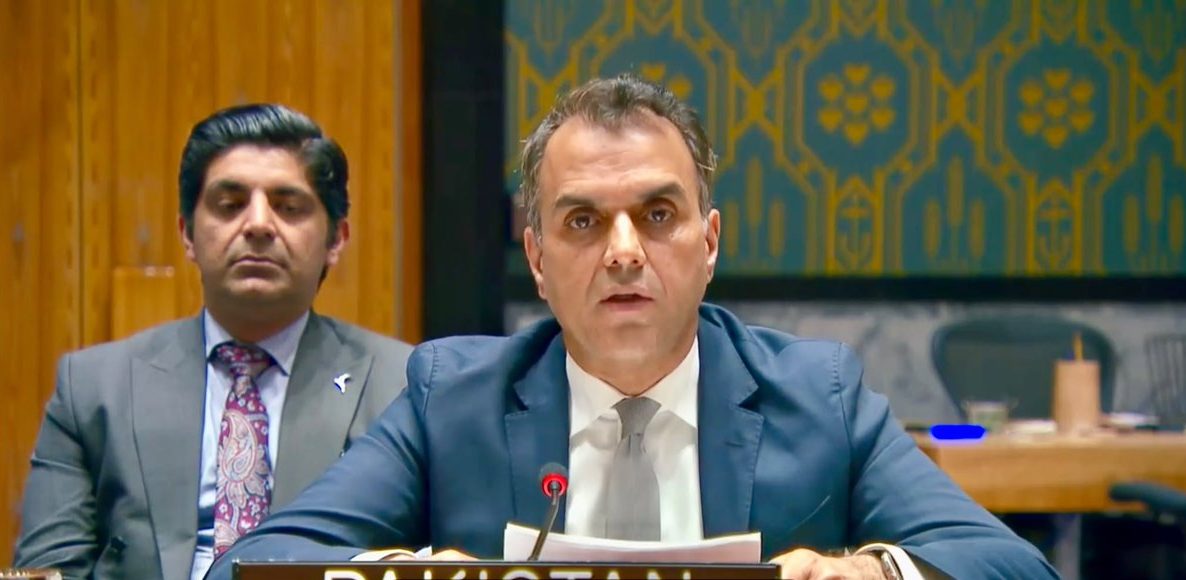
UNITED NATIONS, Jun 28 (APP): Pakistan has urged parties to the peace processes for the volatile eastern region of the Democratic Republic of Congo (DRC) to maintain momentum and fully implement their commitments to address the protracted conflict.
“We call on all parties to honour their commitments, fully implement (Security Council) resolution 2773, and create the conditions necessary for a credible, verifiable and lasting ceasefire,” Ambassador Usman Jadoon, deputy permanent representative of Pakistan to the United Nations, told the UN Security Council.
Speaking in a debate on the situation in the Democratic Republic of Congo, he said the continued territorial expansion and consolidation of control by M23 (rebel group), the increasing use of armed drones, and the worsening humanitarian situation underscore the u need to translate political commitments into tangible improvements into improved security and stability.
The DRC’s mineral-rich eastern part has seen several years of offensive by the M23 rebel group, with support from Rwandan forces.
In February 2025, the Council called on that group to immediately cease hostilities and also called on the Rwanda Defence Force to cease their support. A year ago, a peace agreement was signed in Washington, D.C., between the Democratic Republic of the Congo and Rwanda.
Other diplomatic initiatives include the Doha framework, as well as African Union mediation efforts. In December 2025, the Council renewed the mandate of the United Nations Organization Stabilization Mission in the Democratic Republic of the Congo (MONUSCO) for a year so that it can support the implementation of the country’s permanent ceasefire with Rwanda.
In his remarks, Ambassador Jadoon said Pakistan supports “a pragmatic and phased approach” towards MONUSCO’s future role in supporting ceasefire arrangements.
The Mission “remains the only impartial international presence with the institutional experience, logistical reach and operational capabilities required to support stabilization efforts and the protection of civilians”, he pointed out.
Once conditions permit, the Pakistan envoy added, the Mission can play a constructive role in supporting monitoring and verification arrangements.
At the same time, Ambassador Jadoon cautioned, any such role must be guided by the realities on the ground.
“Freedom of movement, unhindered access, cooperation of the parties and above all, the safety and security of peacekeepers are indispensable prerequisites for success,” he said, stressing that the Council must ensure that the expectations placed on MONUSCO are realistic and matched by the capabilities and resources made available to the Mission.
Pakistan, he said, pays tribute to the men and women of MONUSCO serving under exceptionally difficult circumstances, including in areas affected by the ongoing Ebola outbreak.
“Their professionalism, dedication and sacrifice remain indispensable to the protection of civilians and the pursuit of lasting peace.”
In conclusion, Ambassador Jadoon reaffirmed Pakistan’s its strong support for the sovereignty, unity and territorial integrity of the DRC.
James Swan, Special Representative of the Secretary-General for the Democratic Republic of the Congo and Head of MONUSCO, noted sustained diplomatic engagement by the United States, Qatar and the African Union.
In this regard, Swan drew attention to the Expanded Joint Verification Mechanism Plus, which is responsible for monitoring and verifying ceasefire commitments, according to the Memorandum of Understanding signed by the Government and the M23 with the International Conference on the Great Lakes region.
MONUSCO is supporting the operationalization of that Mechanism, he said, calling for its swift deployment.
Civilians continue to bear the brunt of the armed conflict, Swan said, also noting the prevalence of human rights violations across the country, including conflict-related sexual violence.
The Mission has intensified its patrols and the deployment of mobile operating bases. It is supporting local and provincial peace mechanisms in Ituri, as well as security sector reform efforts led by the Democratic Republic of the Congo’s Government.