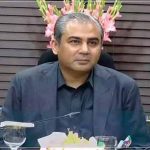
Iftikhar Ali UNITED NATIONS, Oct 03 (APP):Denouncing ongoing foreign occupations, Pakistan has called on the United Nations to implement its long-standing resolutions guaranteeing the right of self-determination to the people of Kashmir and Palestine. "International law cannot be invoked vigorously in one situation and disregarded in another," Ambassador Usman Jadoon, deputy permanent representative of Pakistan to the United Nations, told the General Assembly's Third Committee, which deals with social, humanitarian …
Pakistan condemns foreign occupations, renews call for UN action on Kashmir and Palestine
Iftikhar Ali
UNITED NATIONS, Oct 03 (APP):Denouncing ongoing foreign occupations, Pakistan has called on the United Nations to implement its long-standing resolutions guaranteeing the right of self-determination to the people of Kashmir and Palestine.
“International law cannot be invoked vigorously in one situation and disregarded in another,” Ambassador Usman Jadoon, deputy permanent representative of Pakistan to the United Nations, told the General Assembly’s Third Committee, which deals with social, humanitarian and cultural issues.
The Pakistani envoy spoke as the Committee began a general debate in which speakers focused on the threats to human rights and warned of poverty and climate pressures affecting social development.
“For nearly eight decades,” Ambassador Jadoon said, “Kashmiris have awaited implementation of Security Council resolutions providing for the final disposition of the State of Jammu and Kashmir through a free and impartial plebiscite under UN auspices.”
Since 5 August 2019, when India illegally annexed Jammu and Kashmir, repression and restrictions have intensified on fundamental freedoms as also attempts to alter the demographic and political character of the occupied territory.
“Arbitrary detention, enforced disappearances, restrictions on expression and peaceful assembly, and demographic engineering cannot become acceptable merely because they persist over time,” Ambassador Jadoon said, adding, “Rights delayed for generations do not become rights denied.”
Ambassador Jadoon’s remarks drew a predictable response from an Indian delegate who, while exercising his rights of reply, insisted that the Kashmir dispute was India’s “internal matter”, a claim that a Pakistani representative swiftly countered, saying that the State was an internationally recognised disputed territory, whose final status remains to be determined in accordance with the wishes of the Kashmiri people, as enshrined in numerous UN resolutions.
In his remarks, Ambassador Jadoon also drew attention to the suffering of the Palestinian people, particularly in Gaza, saying it remains a “defining test of our collective conscience.”
Civilians, he said, must be protected; humanitarian assistance must reach those in need without impediment; international law must be upheld; and accountability must be ensured.
“Above all, the Palestinian people must finally realize their inalienable right to self-determination,” the Pakistani envoy added.
On human rights, Ambassador Jadoon said that the developing countries confront shrinking fiscal space, unsustainable debt, climate shocks and widening technological divides, with the international financial architecture often perpetuating rather than correcting these inequalities.
The right to development must occupy its rightful place on the human rights agenda, he said, pointing out that it is an inalienable human right and an essential condition for the realization of all other rights.
Pakistan, he said, remains “deeply concerned” by the normalization of Islamophobia—manifested through hate speech, discrimination, desecration of sacred symbols and attacks against Muslims and their places of worship, saying the designation of 15 March as the International Day to Combat Islamophobia and the appointment of the Secretary-General’s Special Envoy were important achievements.
“We must now translate recognition into sustained action, including comprehensive measures at the United Nations to combat Islamophobia and promote mutual respect and peaceful coexistence.”
Technological transformation, including artificial intelligence, he said, were capable of dramatically expanding access to education, healthcare, and opportunity, but emphasized that technology must remain human-centred, inclusive, and accessible, and developing countries must be equal participants in shaping and benefiting from it.
“Pakistan’s own national vision remains anchored in human dignity, social justice, equality, and inclusion; internationally, we will continue to favour dialogue over confrontation and cooperation over politicization.”
Pakistan, Ambassador Jadoon said, will continue to work for a world where dignity is not determined by power, justice is not conditioned by politics, development is not a privilege, and no people are left waiting indefinitely for rights already promised to them.
In her right of reply to Pakistani envoy’s speech, Indian delegate Bhavika Mangalanandan, claimed that Kashmir was an integral part of India and accused Pakistan of being involved in terrorism, as also mistreating its minorities.
Pakistani representative Sarfraz Ahmed Gohar, hit back, saying, “Jammu and Kashmir never was, neither is, nor will ever be a so-called inalienable part of India.”
In this regard, Gohar, a first secretary in the Pakistan Mission to the UN, called on India to comply with its international obligations in order to settle the dispute in accordance with the Security Council resolutions, and to stop suppressing the rights and freedoms of people in the occupied territory under its illegal control.
Alongside Indian state terrorism in occupied Jammu and Kashmir, he said discrimination and violence against religious minorities including Muslims, Christians, Sikhs and other vulnerable communities have also become “rampant and systemic.”
“Incidents of religiously motivated violence, hate speech, discriminatory practices and attacks on places of worship are commona occurrence in India today. Centuries old mosques are being razed to the ground under state patronage,” Gohar said, calling India a serial violator of international law and a gross abuser of human rights.
“In Pakistan, a thriving democracy that embraces diversity and plurality, all our citizens, including minorities, enjoy all their constitutionally guaranteed rights and freedoms,” the Pakistani representative said, highlighting the “stark contrast to the appalling situation in Indian state and society that has been consumed by Hindutva extremism, bigotry, hegemonic designs and plain hubris.”
India, Gohar said, was a perpetrator of state terrorism in occupied Jammu and Kashmir, and a state sponsor of terrorism that is taking the lives of Pakistani law enforcement personnel and citizens.
“India is actively aiding, abetting and financing terrorist groups against Pakistan. Indian terrorism has even reached North American shores,” the committee was told.
At the same time, he said Pakistan remained committed to dialogue, diplomacy and peaceful settlement of disputes in accordance with the principles enshrined in the Charter of the United Nations.
“India would be well advised to also follow that path in the interest of regional peace, security and stability, and the prosperity and well-being of the over 1.5 billion humanity that resides in South Asia,” the Pakistani representative added.