
BEIJING, Dec 30 (APP):The Indian film Battle of Galwan, which claims to be based on the 2020 clashes between Indian and Chinese troops in the Galwan region and is scheduled for release in April 2026, had its trailer released by lead actor Salman Khan on December 27, sparking online controversy. Salman Khan, best known to Chinese audiences as the lead actor in Bajrangi Bhaijaan, is often teased by Chinese netizens …
Bollywood film ‘Battle of Galwan’ sparks controversy for distorting facts; Chinese expert says no ‘over-the-top’ drama can affect a nation’s sacred territory
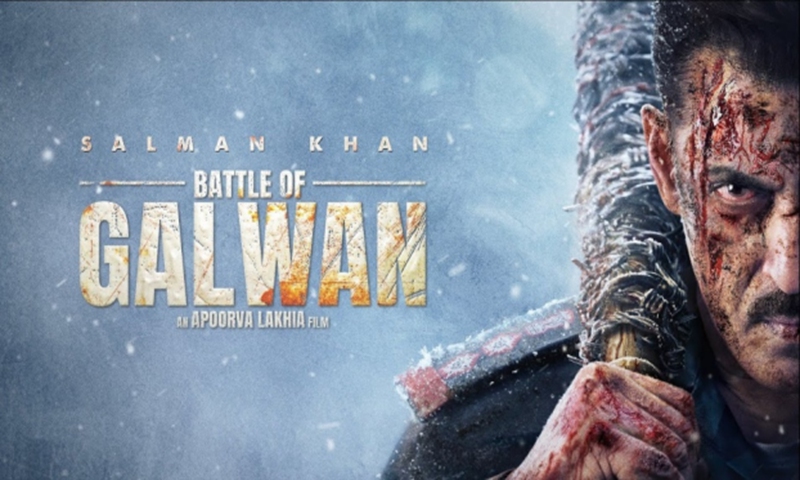
BEIJING, Dec 30 (APP):The Indian film Battle of Galwan, which claims to be based on the 2020 clashes between Indian and Chinese troops in the Galwan region and is scheduled for release in April 2026, had its trailer released by lead actor Salman Khan on December 27, sparking online controversy.
Salman Khan, best known to Chinese audiences as the lead actor in Bajrangi Bhaijaan, is often teased by Chinese netizens for playing roles that appear too invincible, with plots too simplistic, and visual effects so exaggerated that make the drama seem unreal.
In the film, Salman Khan plays Colonel Bikkumalla Santosh Babu, a role that Indian media claimed captured Bollywood’s attention for his so-called pivotal role in the 2020 Galwan Valley clash.
A Chinese expert said that Bollywood films at most provide an entertainment-driven, emotionally charged portrayal, but no amount of cinematic exaggeration can rewrite the history or shake the PLA’s determination to defend China’s sovereign territory, Global Times reported.
According to the Indian media, the teaser begins with Salman’s voice delivering a speech as he prepares his soldiers on how to fight the “enemy.” The clip then shows him walking toward the “enemy,” with his soldiers standing alongside him. Next, he is seen holding on to a stick as the “enemy” charged toward them. The video ends with Salman’s character hitting a person with the stick.
However, some netizens compared it with a scene from Game of Thrones and questioned whether the film had copied the scene.
The film has also drawn other controversies online, with users pointing to issues such as the appearance and costumes of extras, actors’ hairstyles that do not match their military roles or the extreme cold implied in the storyline, and, most importantly, a portrayal of events that does not align with the facts.
Some local media, including India Today, have hyped the film as being based on the events that took place between Indian and Chinese troops in the Galwan region on June 15, 2020, claiming that about 200 Indian soldiers bravely defended their territory against a force of 1,200 Chinese soldiers.
However, Chinese netizens have pushed back against such narratives. A Weibo user under the handle “Qingning Riyue v” commented that the Indian ‘over-the-top’ film seriously contradict the facts.
Another Weibo user, “Situka 98,” mocked the film and the related media hype, saying, “When history falls short, Bollywood steps in.”
Four Chinese officers and soldiers sacrificed their lives, and one was heavily injured during the incident. They have been awarded by the Central Military Commission. A total of 20 Indian soldiers died in the skirmishes.
Song Zhongping, a Chinese military expert, told the Global Times that India’s use of films, especially Bollywood productions, to stir nationalistic sentiment is unsurprising, reflecting a deeply rooted cultural and political tradition.
He said that no matter how films dramatize or embellish events, they cannot change the core facts of the Galwan Valley incident: India crossed the border first, and the PLA defended China’s territory in accordance with the law. The bravery shown by officers such as Qi Fabao and the fallen soldier Chen Hongjun carries both symbolic and practical significance, showing that a new generation of Chinese troops will never retreat when faced with threats to national sovereignty and territorial integrity, reflecting the enduring spirit of the PLA as a people’s army.
“In extreme highland conditions, Chinese soldiers consistently uphold their duties and confront challenges, giving the public confidence. The incident resonates strongly in Chinese society, highlighting the practical recognition of national will and military spirit,” said Song.
The film’s theme and timing are inappropriate, as it presents only a one-sided Indian narrative and stokes antagonistic sentiment, at a time when China-India relations have only recently shown hard-won signs of easing, Lan Jianxue, director of the Department of Asia-Pacific Studies at the China Institute of International Studies, told the Global Times.
“No matter how ‘over-the-top’ a drama may be, a nation’s sacred territory will never be affected by a film,” Song added.