For generations, communities living along Pakistan’s southern coastline have largely depended on the Indus River for their survival.
Where river meets sea: Sindh’s coastal communities fear water crisis amid IWT violations by India
By Fakhar-e-Alam
PESHAWAR, Jul 15 (APP): For generations, communities living along Pakistan’s southern coastline have largely depended on the Indus River for their survival.
Its freshwater has nourished fertile fields, sustained mangrove forests, supported fisheries, protected wildlife and villages from the advancing Arabian Sea especially in coastal areas of Sindh province.
Today, environmental experts warned that this lifeline is under growing threat, leaving millions of people in Sindh’s coastal belt at risk of food and water crisis due to Indus Water Treaty (IWT) illegal abyance by the fascist Modi regime.
Prolonged violations of IWT by India, experts said, are not only raising diplomatic and political concerns but also threatening Pakistan’s coastal ecosystem.
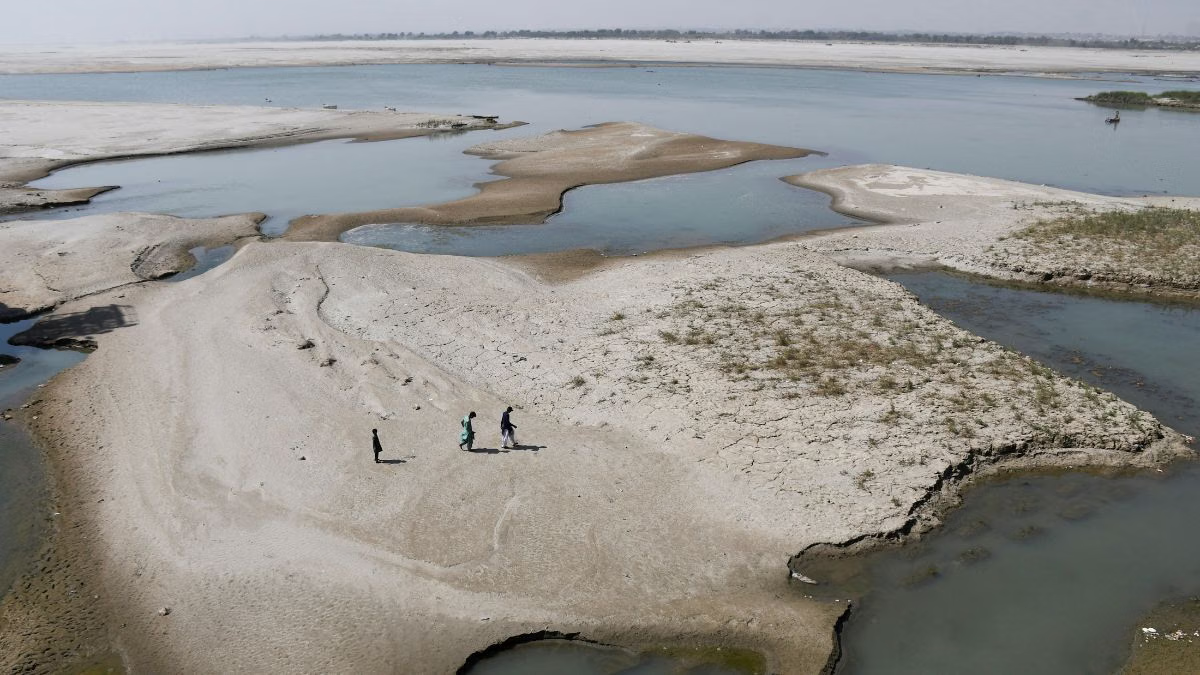
The reduced freshwater flows into the lower Indus could accelerate seawater intrusion, destroy farmland, damage fisheries, erode biodiversity and weaken food security in many of the country’s most vulnerable districts in Sindh.
The coastal districts of Thatta, Sujawal, Badin and Malir are already witnessing the effects of shrinking freshwater supplies.
Environmentalists feared that if freshwater flows continue to decline, the 210-kilometre-long Indus Delta that is already under pressure from climate change and rising sea levels could face even greater land subsidence, salinity, erosion and ecological degradation.
The Indus delta stretches across about 600,000 hectares, while Pakistan’s mangrove forests cover nearly 240,000 hectares, most of them in Sindh are under heightening risk due to treaty violations continued since April last year.
These mangroves serve as a natural shield against cyclones and coastal erosion while providing breeding grounds for fish, wildlife and bees population by supporting livelihoods worth millions of rupees every year.
Former conservator of forests Dr. Gulzar Rehman said the consequences of declining river flows extend far beyond the environment and water security.
“Freshwater releases downstream of the Kotri Barrage are essential to check seawater intrusion and sustain the Indus Delta ecosystem,” he told APP.
He warned that lower waterflows would severely affect agriculture, livestock, forests and aquatic biodiversity, while shrinking habitats for wildlife, including the endangered Indus River Dolphin.
Quoting findings of the Pakistan Council of Research in Water Resources study, Dr. Gulzar Rehman said nearly 2.2 million acres of fertile land are become unproductive because of seawater intrusion.
He also referred to research by the National Institute of Oceanography (NIO), which found that reduced freshwater flows have accelerated coastal erosion and resulted in the loss of more than 10,000 hectares of mangrove forests.
The study further revealed that almost 80 percent of shallow groundwater sources in the Indus Delta contain saline water exceeding the World Health Organization’s recommended safe limit.
According to Dr. Rehman, coastal areas including Keti Bandar, Ghora Bari, Mirpur Sakro, Kharo Chhan, Shah Bandar and Jati face increasing risks from the encroaching Arabian Sea, threatening to transform productive farmland into saline wasteland.
Badin, he said, is already struggling with seawater intrusion through coastal creeks and the Left Bank Outfall Drain (LBOD), affecting agriculture, freshwater supplies and fisheries. Malir, bordering Karachi’s coastal mangrove ecosystem, also remains vulnerable to tidal flooding and saltwater seepage.
“The drastic reduction in freshwater and sediment reaching the sea has left the delta’s soft silt-and-clay coastline highly vulnerable to erosion and advancing tides,” Dr. Rehman observed.
Director Fisheries Department Khyber Pakhtunkhwa Muhammad Zubair said the significance of the IWT extends well beyond irrigation and water security.
“The treaty also safeguards biodiversity, forests and aquatic ecosystems,” he said, warning that declining river flows would intensify seawater intrusion and damage mangrove forests, fisheries and pollinator populations, including wild bees that depend on freshwater-supported vegetation.
“Mangrove forests require adequate freshwater inflows to maintain ecological balance and sustain the marine food chain. Any prolonged disruption in river flows will have cascading effects on fisheries, biodiversity and the livelihoods of coastal communities,” he added.
He said the growing salinity has already reduced agricultural productivity in districts such as Thatta and Badin, where fertile land is steadily becoming barren, placing immense pressure on small farmers and fishing families.
Environmental and water experts stressed that maintaining adequate environmental flows below Kotri Barrage is essential for preserving the Indus Delta, protecting biodiversity, strengthening coastal resilience against climate change and ensuring long-term food and water security for millions of people living along Sindh’s coastline.
Chairman of the International Relations Department at the University of Peshawar, Professor Dr Hussain Shaheed Soharwardi, said the issue carries diplomatic and humanitarian dimensions as well.
He said that, as an upper riparian country, India has a responsibility to respect international commitments governing shared water resources, arguing that restricting river flows raises serious concerns under international law and human rights principles.
For the people of Sindh’s coastal belt, however, the debate is about much more than treaties and diplomacy. It is about whether their fields will remain fertile, their fishing nets will stay full and their children will inherit land protected by the river that has sustained generations.
As freshwater diminishes and the sea continues to advance, experts feared that the battle to save the Indus Delta is becoming a battle for their future.
They urged international community and World Bank to step in by forcing Indian govt to take it’s illegal decision back and allow smoth flow of water under the treaty for prosperity of millions of people.