Along the winding banks of the Indus, Chenab and Jhelum rivers, vast stretches of bela forests have survived for centuries by following nature’s rhythm.
When rivers overflow disrupted, the forests fall silent: Pakistan’s Bela forests at risk amid IWT violations by India
By Fakhar-e-Alam
PESHAWAR, Jul 12 (APP): Along the winding banks of the Indus, Chenab and Jhelum rivers, vast stretches of bela forests have survived for centuries by following nature’s rhythm.
Every monsoon, overflowing rivers spread life-giving water across the floodplains, nourishing these forests, replenishing wildlife habitats and sustaining countless communities.
Today, forestry experts feared that if rhythm of western rivers were disrupted then bela forests will likely to disappear especially in Sindh and Punjab provinces due to IWT prolonged violations by India.
Environmentalists and forest specialists have expressed deep concern that prolonged violations of the Indus Waters Treaty (IWT) by India could reduce natural river flows that are essential for the survival of Pakistan’s riverine or bela forests particularly in Sindh and Punjab.
Commonly known as Kacho forests, these naturally occurring forests grow along riverbanks and floodplains. Unlike irrigated plantations, they depend almost entirely on seasonal flooding rather than artificial watering systems.
Former Conservator of Forests Khyber Pakhtunkhwa, Touheed Khan, said the annual overflow of western rivers are the lifeline of these forests.
“Bela forests require natural floodwaters for regeneration and growth. If the disruption in river flows continues for a prolonged period, these forests are likely to suffer,” he said while talking to APP.
Sindh is home to Pakistan’s largest concentration of bela forests, spread over approximately 241,198 hectares along the Indus River. They stretch across districts including Thatta, Hyderabad, Dadu, Larkana, Naushahro Feroze, Shaheed Benazirabad, Khairpur, Sukkur, Shikarpur, Ghotki and Kandhkot.
Punjab has around 54,000 hectares of riverine forests in scattered patches along the Indus, Jhelum, Chenab and Ravi rivers. Major locations include Jhelum, Gujrat, Gujranwala, Narowal, Sialkot’s Bajwat area, Kasur and Okara.
Beyond their lush green appearance, bela forests perform an ecological role that cannot easily be replaced. They stabilize riverbanks, reduce soil erosion, help recharge groundwater and serve as natural buffers during floods.
For wildlife, they are indispensable and act as lifeline for its population to thrive.
The forests provide shelter and breeding grounds for species such as hog deer, wild boar, jackals and numerous resident and migratory birds. Their dense vegetation also supports insects and pollinators that are essential for maintaining ecological balance.
The dominant bela tree species including babul, bahan and tamarix have adapted over generations to seasonal flooding. Without sufficient inundation, natural regeneration declines, threatening the long-term survival of these forest ecosystems.
The impact extends beyond wildlife. Thousands of beehives established in these forests depend on flowering trees for nectar. Forestry experts warned that shrinking forest cover and declining tree health could reduce honey production, affecting the livelihoods of beekeepers and local communities who rely on forest resources for income.
Environmentalists said the concerns surrounding bela forests highlight the close connection between water security and ecosystem health. Any prolonged disruption in natural river flows could have cascading effects on forests, biodiversity and rural livelihoods.
The experts warned that illegal abyance of IWT by India could significantly reduce freshwater flows into Sindh and Punjab, placing the provinces riverine and mangroves forests under increasing environmental stress and threatening the livelihoods of millions who depend on the Indus Delta.
Experts feared that any prolonged reduction in river flows could accelerate ecological degradation, increase seawater intrusion and intensify the effects of climate change.
“These forests are not only an important source of timber and fuelwood but also serve as major carbon sinks, regulate local climate, conserve biodiversity and support thousands of families dependent on fishing, livestock and agriculture,” said Iftikhar Khalil, former Director Non Timber Forests Produce Forest Department while talking to APP.
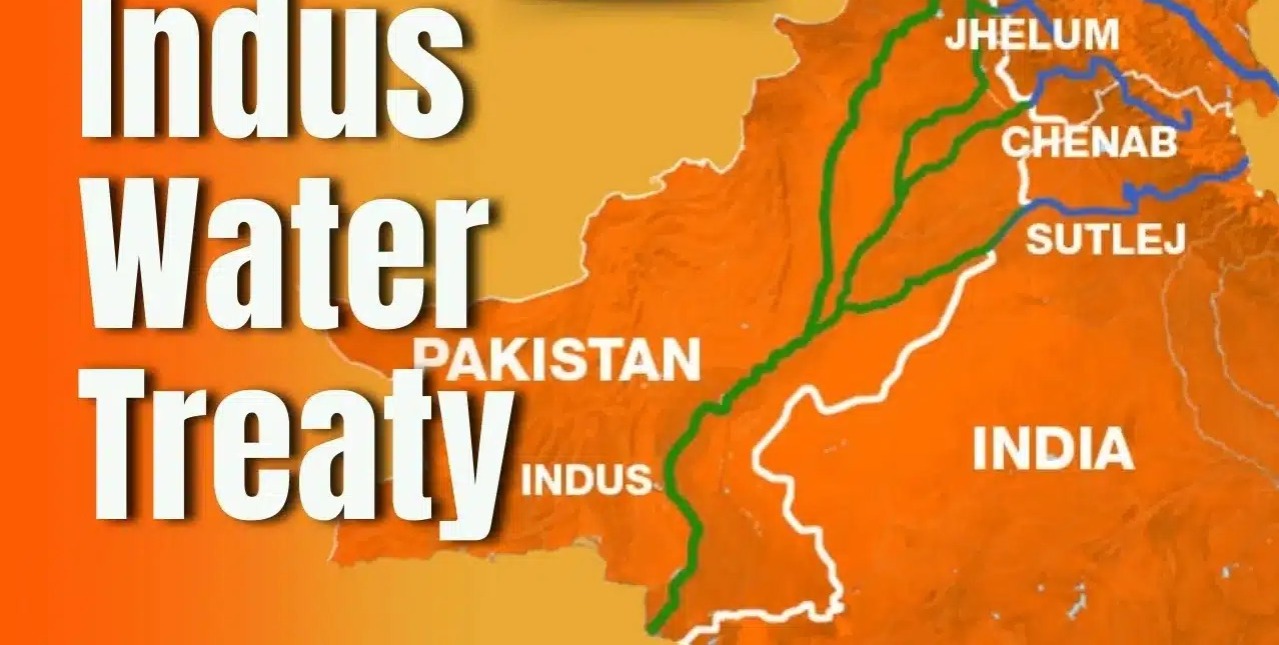
The IWT, signed in 1960 by Pakistan’s President Field Marshal Ayub Khan and India’s Prime Minister Jawaharlal Nehru with the World Bank as guarantor, allocated the waters of the western rivers namely Indus, Jhelum and Chenab to Pakistan, while India received rights over the eastern rivers Ravi, Sutlej and Beas.
“The loss of freshwater inflows will significantly reduce the natural regeneration of riverine and mangroves forests, weaken their ability to absorb carbon dioxide and diminish habitats for wildlife, fish, bees and migratory birds,” he said.
Besides producing timber, firewood and grazing resources, the ravarian forests provide habitat for countless plant and animal species, support honey production and fisheries, protect riverbanks from erosion and help slow floodwaters during the monsoon season.
“The annual flooding of the Indus acts as a lifeline for these forests. Without regular inundation, natural regeneration becomes increasingly difficult and population of wildlife, fisheries and humans are affected,” he observed.
Mubarak Ali, former KP Wildlife Chief Conservator said that reduced freshwater reaching the Guddu and Kotri barrages could have negative consequences for the Indus Delta.
“As seawater pushes further inland, agricultural lands may suffer from increased salinity and waterlogging, reducing crop yields and threatening food security and wildlife conservation programs in coastal areas.”
The shrinking freshwater flows could also endanger globally significant species, including the endangered Indus River dolphin, while placing additional pressure on the fragile mangrove forests that serve as natural barriers against cyclones, coastal erosion and storm surges.
Mubarak cautioned that further ecological decline in the wake of IWT violations could deepen poverty, trigger displacement and undermine climate resilience in one of Pakistan’s most vulnerable regions as India was trying to create reign of hunger and starvation in Pakistan.
Condemning the Indian Govt’s decision to place the Indus Waters Treaty (IWT) in abeyance unilaterally, the experts argued that the illegal move undermines international law, threatens regional stability and raises serious concerns over water security for millions of people dependent on the Indus River system.
They said access to water is recognized internationally as a fundamental human right, and any attempt to restrict or politicize water resources could have far-reaching humanitarian consequences.
The United Nations has explicitly recognized access to water as a basic human right essential for the full enjoyment of people’s lives and all other human rights.
Restricting river water flows to a lower riparian state raises serious legal and humanitarian concerns because it directly affects the rights to life, health and an adequate standard of living of millions of people.
India’s uncalled for decision to place the IWT in abeyance after the April 2025 Pahalgam incident was inconsistent with the principles of the United Nations Charter, World Bank guarantee and international treaty obligations.
Instead of utilizing the dispute resolution mechanisms provided under the treaty, India had attempted to link water cooperation with broader political and security disputes that will put peace of the subcontinent into jeopardy.
The treaty already contains comprehensive procedures for addressing disagreements through bilateral discussions, neutral experts and international arbitration. Bypassing these solid mechanisms weakens confidence in international agreements besides shows India disregard for global treaties.
The experts further observed that restrictions on water resources disproportionately affect vulnerable communities, particularly women, children and rural populations whose livelihoods largely depend on agriculture, fisheries, forests, water and livestock.
Water and food are universally recognized as essential human necessities under UN charter and should never be used as political weapons against others.
India’s claim of keeping the treaty in abeyance is provocative and raises significant legal and environmental questions.
Under international law, treaties generally remain in force unless they are lawfully terminated, suspended by mutual agreement or materially breached in accordance with recognized legal principles.
The IWT was designed in such a manner to survive political crises and military conflicts between the two neighboring countries.
The treaty remains internationally recognized and cannot be unilaterally suspended by either party. They referred to recent proceedings before the Permanent Court of Arbitration, noting that Pakistan has all rights to pursue legal remedies available under the treaty framework.
Pakistan has consistently maintained that disputes should be resolved through the mechanisms already provided in the treaty rather than through unilateral actions and using water as a weapon,” he said.
The experts warned that attempts to use water as a political tool could create dangerous precedents in international relations.
If the so-called principle that an upper riparian state can unilaterally suspend water-sharing arrangements gains acceptance, it could have negative implications far beyond South Asia and potentially influence other international river disputes.
They added that climate change, increasing water scarcity and growing populations make adherence to established water-sharing agreements more important than ever.
They warned that prolonged uncertainty regarding water cooperation could adversely affect agricultural productivity, ravarian forests, food security and rural livelihoods. Environmental consequences could also emerge, including reduced freshwater flows affecting wetlands, mangrove forests, fisheries and biodiversity.
Various species such as the endangered Indus River dolphin and indigenous masher fish populations depend upon maintaining healthy river ecosystems and these species will likely to be vanished if frash river water was blocked.
The experts further argued that procedural issues such as delays in data sharing, reduced technical cooperation and prolonged disputes over water infrastructure by India could weaken confidence-building measures established under the treaty over several decades.
“Our objective is not confrontation but compliance with international commitments. Treaties are intended to provide certainty and stability, particularly during periods of political tension,” Iftikhar Khalil said.
The experts unanimously stressed that at a time when climate change is intensifying water scarcity across South Asia, preserving internationally recognized mechanisms for transboundary water cooperation is essential for regional peace, sustainable development and the welfare of millions of people dependent on the Indus Basin.
They expressed the hope that international community will think beyond trade and put pressure on fascist Modi Govt to restore IWT imperative for peace and life of millions of people in the region.
Safeguarding the Indus River’s natural flow is essential not only for protecting forests and wildlife but also for preserving the economic security, environmental sustainability and cultural heritage of the millions of people whose lives remain inseparably linked to the mighty Indus.
As another monsoon season unfolds, experts stressed that preserving the natural flow of rivers is not only vital for agriculture but also for safeguarding Pakistan’s unique riverine forests, living ecosystems whose future depends on the waters that have sustained them for generations.