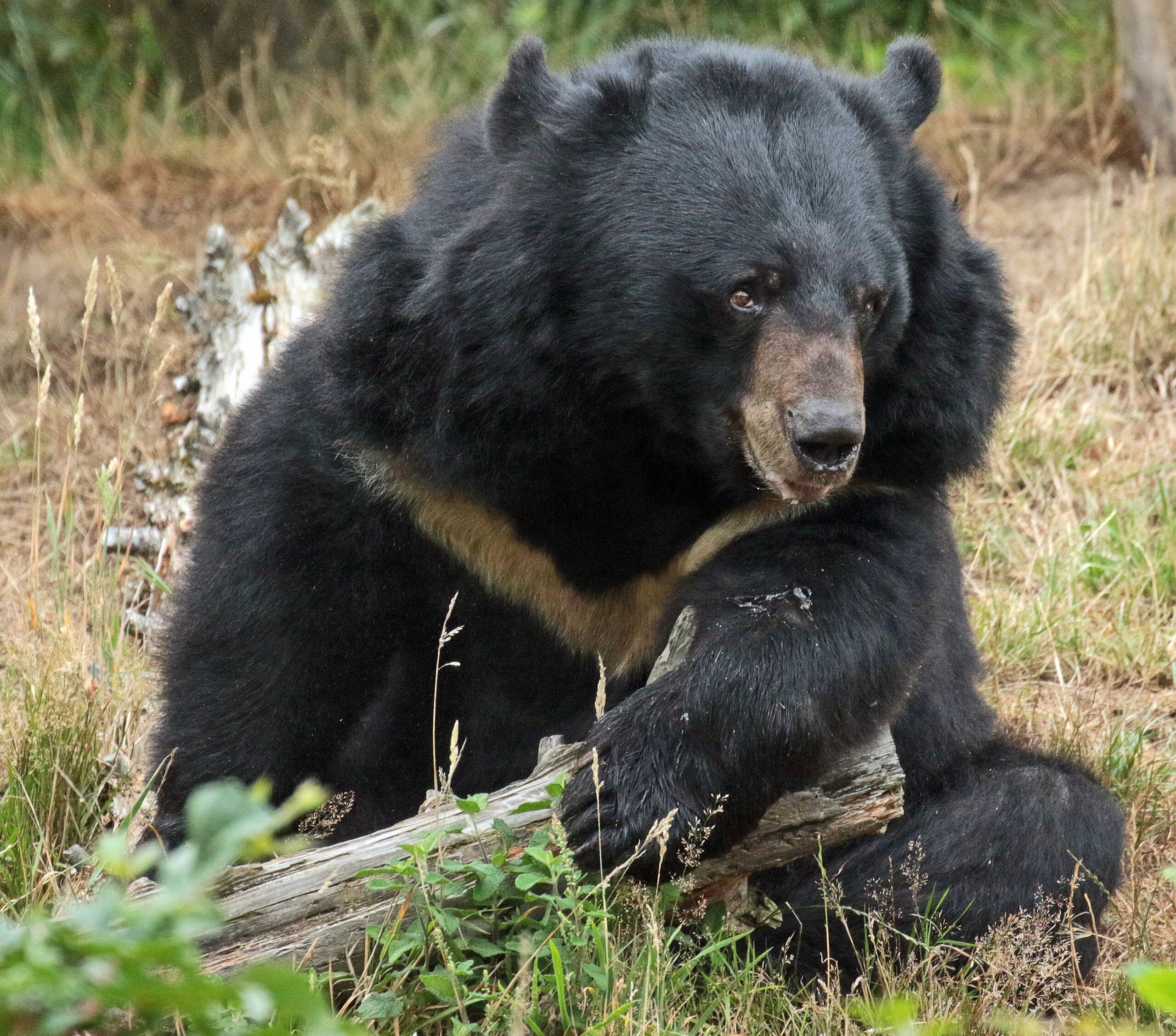
As the first rays of sunlight spill across the jagged mountains of Dubair Valley in Lower Kohistan, a solitary black bear emerges from the forest, carefully making its way along a rocky ridge overlooking the mighty Indus River.
When river runs quiet: Kohistan’s blackbear fear an uncertain future amid IWT violations by India
By Fakhar-e-Alam
LOWER KOHISTAN, Jun 29 (APP): As the first rays of sunlight spill across the jagged mountains of Dubair Valley in Lower Kohistan, a solitary black bear emerges from the forest, carefully making its way along a rocky ridge overlooking the mighty Indus River.
For centuries, these mountains and rushing waters have sustained one another, providing life to wildlife and the communities that call this rugged landscape home.
Today, conservationists fear that this timeless relationship is under growing strain due to persistent violations of Indus Water Treaty (IWT) by India.
The endangered black bear, once thriving in mountain caves covered by dense forests, enjoying freshwater streams and alpine meadows nourished by the Indus River system, now faces a future clouded by uncertainty.
Wildlife experts warned that shrinking water resources linked to India’s violations of IWT could place immense pressure on fragile ecosystems already grappling with climate change.
For generations, the western rivers, namely Indus, Jhelum, and Chenab have nourished millions of people while sustaining forests, wetlands, grasslands, fisheries, and mountain habitats that shelter an extraordinary diversity of wildlife.
Conservationists cautioned that any disruption in the natural flow of these rivers could trigger ecological consequences stretching from the Himalayan ranges of Kashmir to the fertile plains of Punjab and the northern mountains of Khyber Pakhtunkhwa.
Standing beside decades-old wildlife maps and conservation surveys, Dr Mumtaz Malik, former Chief Conservator of Wildlife, Khyber Pakhtunkhwa, described water as the lifeline of the region’s biodiversity and wildlife.
“Without a smooth flow of water, there is hardly any survival of black bears, markhor and other wildlife,” he said.
“Water is essential for wildlife and biodiversity. Conservation efforts in KP, Azad Kashmir, and Punjab will suffer immensely if western river flows decline. The entire food chain depends on these freshwater systems.”
According to Dr Malik, declining water availability affects every layer of the ecosystem. Reduced river flows limit plant growth, shrink grazing grounds, fragment habitats, and place increasing stress on species already struggling to adapt to a changing climate.
The black bear and markhor in Kohistan could find it increasingly difficult to access food and water during prolonged dry periods, while habitat degradation may accelerate population decline in vulnerable mountain regions.
The diverse landscapes of Khyber Pakhtunkhwa and Azad Kashmir stretched from subtropical forests to snow-covered peaks, provide sanctuary for snow leopards, Himalayan brown bears, musk deer, Himalayan goral, Eurasian lynx, pangolins, barking deer, grey wolves, migratory birds, and native trout.
Environmentalists warned that shrinking freshwater sources could disrupt breeding cycles, reduce vegetation cover, force wildlife migration, and weaken the resilience of these ecosystems against drought and deforestation.
Along the banks of the Indus in Dasu and Dubair valleys, local fishermen and farmers speak of the river not merely as a source of water but as the heartbeat of their daily lives.
Its waters irrigate crops, sustain livestock, support fisheries, replenish forests, and provide the natural habitats on which wildlife depends.
“When there is no water, there are no habitats. And when habitats collapse, conservation programmes collapse,” Dr Malik said.
He stressed that the consequences extend beyond wildlife conservation.
“Healthy ecosystems support sustainable agriculture, food security, and human well-being,” he said. “Reduced water flow increases the risks of drought, desertification, hunger, poverty, and food insecurity for millions.”
Pakistan is already among the countries most vulnerable to climate change, facing erratic rainfall, fluctuating glacial melt, and mounting environmental pressures.
Experts warned that additional stress on river systems could intensify existing challenges, affecting forests, pollinators, agriculture, fisheries, and biodiversity alike.
Birds such as the Himalayan monal, Himalayan snowcock, chukar partridge, and Eurasian eagle-owl may also lose vital habitats if freshwater ecosystems continue to shrink.
“Water sustains the entire food chain,” Dr. Salimur Rehman, former Chairman, Environmental Science Deptt at University of Peshawar, observed. “Starvation at one level spreads throughout the ecosystem, unsustainable water of rivers and habitats destructions.”
Environmental and wildlife experts are urging international institutions, including the World Bank—the broker of the 1960 Indus Waters Treaty—to help ensure compliance with the treaty and safeguard the ecological stability of the Himalayan region. They have also appealed to global conservation organisations to pay closer attention to the environmental consequences of declining river flows.
For villagers living along the riverbanks of Pattan in Lower Kohistan and Kolai-Palas, however, the issue is not simply a matter of diplomacy or environmental policy but every stream represents a harvest, every canal sustains livestock and every flowing river carries the promise of another season.
Dr Salimur Rehman believed that environmental protection must rise above political disputes. As the rivers descend from the Himalayas through the mountains of Kohistan and Azad Kashmir before reaching the fertile plains of Punjab, they carry far more than water.
“They carry livelihoods, biodiversity, hope, and the future of generations yet to come,” Dr Salim said.
If those waters diminish, experts warned, the silence left behind may echo not only through the forests where black bears roam and the cliffs where markhor climb, but also across the countless communities whose lives have always flowed with the rivers.