By Fakhar e Alam PESHAWAR, Mar 13 (APP):As the holy month of Ramazan has entered its final ashra, mosques across Peshawar and other cities of Pakistan filled with worshippers seeking forgiveness, freedom from hellfire and spiritual renewal. The third Ashra (last ten days) of Ramazan is regarded as a sacred period for Muslims to pray for salvation from hellfire and draw closer to Allah Almighty through devotion, worship, alms, itikaf …
Third Ashra of Ramazan: A golden time for Muslims to seek freedom from hellfire
By Fakhar e Alam
PESHAWAR, Mar 13 (APP):As the holy month of Ramazan has entered its final ashra, mosques across Peshawar and other cities of Pakistan filled with worshippers seeking forgiveness, freedom from hellfire and spiritual renewal.
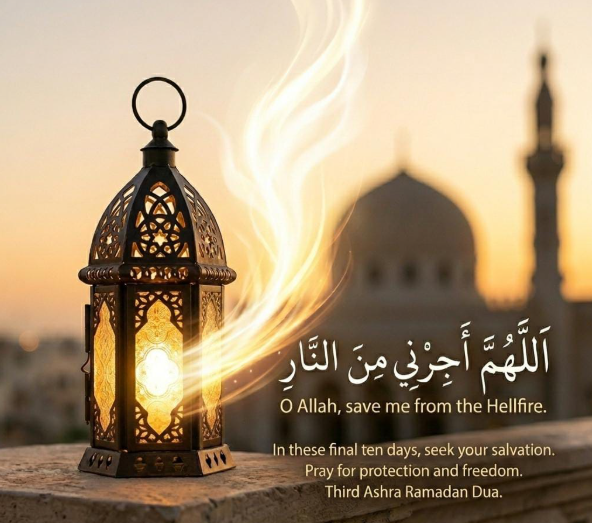
The third Ashra (last ten days) of Ramazan is regarded as a sacred period for Muslims to pray for salvation from hellfire and draw closer to Allah Almighty through devotion, worship, alms, itikaf and charity.
Fasting during Ramazan, followed by the Muslims across the world, is among the five pillars of Islam alongside belief in the Oneness of Allah, prayer, charity and pilgrimage.
As the entire holy month is filled with numerous blessings, religious scholars said the final ten nights hold a unique spiritual significance for Muslims due to existence of Laylatul Qadar among it.
According to Islamic tradition, Ramazan is divided into three Ashras as the first is for mercy, second for forgiveness, and the last for freedom from hellfire.
Religious scholar Maulana Tayyab Qureshi, Central Khateeb of Khyber Pakhtunkhwa, said the holy Prophet Muhammad (peace be upon him) increased his worship during the last ten days of Ramazan.
“The Prophet (PBUH) would spend these blessed nights in prayer, remembrance of Allah and observed Itikaf,” he told APP. “He also encouraged his family members to wake up and join in worship especially during last 10 days of Ramazan.”
Narrated by Hazrat Aisha bint Abu Bakr (RA) described how the holy Prophet (PBUH) intensified his devotion in the last days of Ramazan, staying awake at night and dedicating himself fully to prayer.
One of the most significant practices during the third Ashra is Itikaf, a spiritual obligation in which Muslims stay in the mosque solely for worship seeking forgiveness and freedom from hellfire.
The holy Prophet (PBUH) regularly observed Itikaf during the last ten days of Ramazan and after his passing, his wives continued this religious custom.
During this period, worshippers spend their time in prayer, recitation of the Quran, avoiding worldly desires and seeking closeness to Allah.
Maulana Tayyab said in last ashra there is a blessed night of Laylat al-Qadr, the Night of Power.
The Quran described it as a blessed night better than a thousand months, when angels descend and divine mercy fills the earth until dawn.
The religious scholars explained that worship performed during this holy night carries rewards more than 83 years of devotion.
Narrated by Abu Hurairah (RA), the Prophet (PBUH) said that whoever spends Laylatul Qadr in prayer with faith and sincerity for the forgiveness of their past sins.
Muslims are therefore encouraged to seek the blessed night during the odd nights of the final ten days of Ramazan.
Beyond worship, Ramazan also taught patience, compassion and generosity, said
Professor Dr Hifazatullah, Chairman of Arabic Studies at Islamia College Peshawar, adding the concept of Sabr (patience) was emphasized repeatedly in Islamic teachings.
“The Quran mentions patience dozens of times,” he said, adding, “Believers are encouraged to endure hardships with faith and patience, trusting that Allah’s wisdom guides every situation.”
Medical experts also reiterated that fasting during Ramazan has great psychological benefits. Renowned psychiatrist Dr Khalid Mufti, former principal of Khyber Medical College, said research indicated that fasting promotes emotional balance, control anger, minimize depression, anxiety and create self-discipline as well as empathy.
“Ramazan cultivates compassion, unity, friendship, mutual coexistence and empathy that continue long after the month ends.”
He said charitable acts become more visible during Ramazan, particularly in Peshawar’s historic Qissa Khwani Bazaar, where community volunteers used to arrange free meals for fasting individuals till last day of the holy month.
For the past 12 years, local philanthropist Shahid Khan is arranging an Iftar Dastarkhwan, serving meals to the poor and also invites members of minority communities to join in last ashra of Ramazan.
Religious scholars emphasized that the third Ashra was not only about worship but also about personal transformation by encouraging Muslims to help the needy, strengthen bonds within society and cultivate patience and steadfastness.