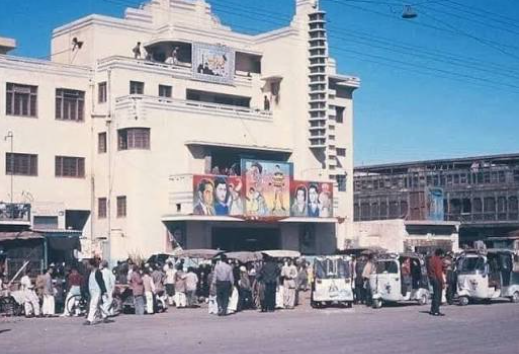
Every weekend, Ehtisham Khan drove his friends to Firdus Cinema on GT Road in Peshawar, where the queue at the ticket window stretched outside, the aroma of roasted peanuts filled the air and families eagerly waited for the latest Pashto blockbuster.
The last reel: Peshawar’ s silver-screen legacy fades in age of social media
Fakhar-e-Alam
PESHAWAR, July 29 (APP)::Every weekend, Ehtisham Khan drove his friends to Firdus Cinema on GT Road in Peshawar, where the queue at the ticket window stretched outside, the aroma of roasted peanuts filled the air and families eagerly waited for the latest Pashto blockbuster.
For many people, the cinema was more than just a place to watch films; it was a cultural landmark where memories were created, friendships flourished and Pashtun culture came alive on the silver
screen.
Today, Ehtisham Khan, a lecturer in Urdu literature, stands at the same site. But instead of the grand cinema building that once drew generations of moviegoers, he finds a modern shopping plaza, a striking reminder of how the city’s cultural landscape has changed over time.
“It was heartbreaking to see Firdus Cinema disappear,” he said, gazing at the bustling commercial complex where trade activities replaces entertainment.
“I watched countless Pashto films there during weekends since my childhood and came here on Eid
days with my family and friends. Those were days when people laughed, cried and celebrated together at Peshawar.
“Now, all I see are glass and cloth shops. The cultural soul of the place has vanished after the cinemas were bulldozed for commercialization.”
Ehtisham story mirrored that of thousands across Khyber Pakhtunkhwa, where the rapid rise of social media platforms, streaming services and artificial intelligence has fundamentally transformed entertainment habits.
Cultural experts, filmmakers and human rights advocates feared that while digital technology has brought convenience, it has also accelerated the decline of cinema culture, weakening community interaction and threatening an important part of the province’s cultural identity.
Across Peshawar and other districts, cinema halls that once attracted packed audiences till night now struggle to survive as young people increasingly spend hours scrolling through short-video applications, watching online content or relying on AI-powered tools for education and entertainment.
With summer vacations underway in Khyber Pakhtunkhwa, many students admitted that mobile phones have become their primary companions for completing their education tasks.
“Mobile phones are our most effective tool for completing summer vacation assignments quickly, especially when deadlines come close,” says Malaika Bibi, an 8th grade student of a private school in
Peshawar.
She said artificial intelligence applications and educational platforms have reduced dependence on private tutors by providing instant explanations, translations and solutions to academic
problems.
Education experts acknowledged the educational benefits of AI but cautioned that excessive dependence on digital platforms is also changing lifestyles, reducing outdoor activities and limiting face-to-face social
interaction.
For decades, Peshawar was regarded as the heart of Pashto cinema where information was delivered through quality entertainment.
Famous cinema houses such as Capital, Falak Sair, Sabrina, Metro, Shabistan, Palwasha and Naz were landmarks where thousands gathered every week to enjoy films rooted in Pashtun traditions, folklore and values.
The city also proudly claims ancestral links to legendary actors late Dilip Kumar (Yousaf Khan) and Raj Kapoor, making Peshawar an important chapter in South Asian cinematic history.
But those landmarks have steadily disappeared courtesy to social media onslaught and
commercialization.
Many historic cinemas in Peshawar have been demolished to make way for shopping malls, hotels and commercial plazas, reflecting both changing business priorities and declining public interest in traditional movie-going.
Out of nearly 15 cinemas that once operated in Peshawar, only a handful including Arshad, Aaeena, Naz and Shama remain operational, and even they face an uncertain future.
“Even on weekends, when we once expected full houses, we barely sell enough tickets to cover electricity bills,” said Gohar Yousafzai, manager of Sabrina Cinema while talking to APP.
“Operating costs continue to rise while audiences continue to shrink. Without policy support and investment, survival has become increasingly difficult.”
Veteran filmmakers recalled a time when Pashto cinema represented the hopes, struggles and traditions of the people.
The release of Yousuf Khan Sher Bano in 1970, the first Pashto-language feature film, opened a new chapter in regional cinema.
Its success inspired a flourishing film industry that produced stories celebrating honor, courage, love and family values.
Legands actors such as Badar Munir, Yasmeen Khan and Asif Khan became household names, while cinema halls echoed with emotional dialogues and memorable songs that resonated across generations.
“Pashto cinema was our cultural treasure,” said veteran director Shahid Khan. “It reflected our
language, traditions, humor and emotions. When we lost our cinemas, we also lost an important connection with our history.”
Industry veterans believed several factors contributed to the downfall of cinema in KP. During the 1990s, pashto filmmakers increasingly turned towards sensational and horror-based productions that alienated family audiences.
“Instead of meaningful stories, films focused on violence and shock value,” recalled Shahid
Khan.
“The audience gradually turned away because the emotional connection had disappeared and stories did not match Pashtun culture.”
He said situation worsened after terrorism incidents increased in Khyber Pakhtunkhwa where cinema halls became targets of violence, including the bombing of Shama Cinema in Peshawar, while deteriorating law and order forced many theaters in Swat, Mardan and Kohat to shut down permanently.
Pride of performance and renown Pashto actor Javed Babar said that following the 18th constitutional amendment, film censorship became a provincial responsibility, but KP did not establish its own censor board.
According to him, the resulting regulatory vacuum allowed piracy through memory cards, DVDs and online leaks to flourish, severely damaging box office revenues in KP.
“Hundreds of artists, technicians and cinema workers became unemployed first by terrorism and later by COVID-19. Some actors now drive rickshaws or work as laborers to support their families. Many never returned to film making,” he said.
Dr Ebad Khan, Opposition leader in KP Assembly said that the federal government had established a “Binding Film Finance Fund” to promote the film industry in Pakistan.
Medical insurance policy has been introduced for artists’ community besides tax exemptions and five-year tax holiday on income tax for film makers on establishment of new cinemas, production houses, film museums and tax rebate on the export of film and drama for 10 years.
Besides establishment of a national film Institute and post-film production facility, he said a national film studio will revive film industry.
He said rebates would also be given to foreign filmmakers on joint film and drama projects locally, adding the condition of shooting 70 percent of film in Pakistan would be applicable to them to promote business activities including tourism and culture.
He said an eight percent withholding tax on distributors and producers was also abolished and there was a five-year exemption from customs duty on import of machinery, equipment and supplies for films and dramas.
He said Finance Bill 2018 had been amended to completely exempt importing equipment for new films and dramas from sales tax and entertainment duty.
While the cinema industry struggled with security challenges and financial pressures, smart phones quietly transformed entertainment consumption.
Today, endless streams of short videos, online films and social networking platforms have replaced weekend visits to cinema halls for many young people.
“The audience still exists but we need quality films,” says veteran actor Shahid Khan.
“We witnessed encouraging crowds during last Eid, hoping for more fans on upcoming Independence Day releases. If quality films are produced, people will certainly return. But filmmakers need financial support, stronger regulation and modern cinema infrastructure,” Shahid Khan said.
Experts said the disappearance of cinemas represents more than an economic and financial loss. Dr Malik Riaz, Principal Officer at Government Hospital Nowshera, warned that excessive dependence on social media may contribute to isolation, anxiety and declining face-to-face interaction.
“Cinema, theater and live performances have traditionally created opportunities for dialogue, empathy and community bonding,” he explained.
“When those shared experiences disappear, society gradually loses spaces where people from different backgrounds interact peacefully.”
Former Sarhad Chamber of Commerce and Industry (SCCI) president Fuad Ishaq said the economic impact of declining cinemas is equally severe in KP.
“The closure of cinemas has affected projectionists, ticket sellers, ushers, vendors and dozens of small businesses that depended on moviegoers,” he said.
Human rights lawyer Asif Khan Yousafzai argued that access to cultural life is recognized internationally as a fundamental cultural right.
“When traditional spaces for art, film and community interaction disappear, opportunities for cultural expression and social cohesion become weaker and terrorism crept in society,” he
said.
“Cultural heritage should be protected with the same seriousness as physical infrastructure,” he
reiterated.
Industry stakeholders believed revival is still possible if Govt gives patronage to cinemas and films
making.
They recommended establishing a provincial film policy, strengthening anti-piracy laws, modernizing cinema infrastructure, encouraging digital distribution, investing in film schools and supporting scriptwriters capable of producing high-quality stories that reflect Pashtun society.
“Pashto cinema is not just about movies,” said Dr Malik Riaz. It is our folklore, our traditions, our language and our collective memory. If we lose it completely, we lose an important part of who we are.”
Ehtisham said that he will travel to Rawalpindi or Lahore whenever he wants to watch a new film especially on Pakistan Independence Day.
“When I was a student, visiting Firdus Cinema with friends was part of growing up,” he recalled. “Today’s generation may never experience that excitement.”
As Peshawar’s skyline continues to change, dotted with shopping malls, commercial plazas and high-rise buildings, many feared another chapter of the city’s rich cultural history may soon exist only in fading photographs and cherished memories.
Whether Pashto cinema can rise again will depend not only on government policies and investment in the film industry but also on society’s willingness to preserve the shared cultural spaces that once brought generations together under the glow of the silver screen.