Muhammad Atif Ismail MULTAN, Sep 27 (APP)::For generations, rooftops remained a cherished part of family life, particularly in Multan, where the fierce summer heat sent families upstairs at dusk to welcome the cooling breeze, gather under the fading light and in many homes, surrender to sleep beneath the vast, star-studded sky. But that cherished summer ritual is now quietly giving way to a new rooftop …
Solar revolution transforms rooftop life, reshapes family traditions
Muhammad Atif Ismail
MULTAN, Sep 27 (APP)::For generations, rooftops remained a cherished part of family life, particularly in Multan, where the fierce summer heat sent families upstairs at dusk to welcome the cooling breeze, gather under the fading light and in many homes, surrender to sleep beneath the vast, star-studded sky.
But that cherished summer ritual is now quietly giving way to a new rooftop reality, as gleaming rows of solar panels increasingly spread across residential buildings, turning once-open family spaces into sources of
power.
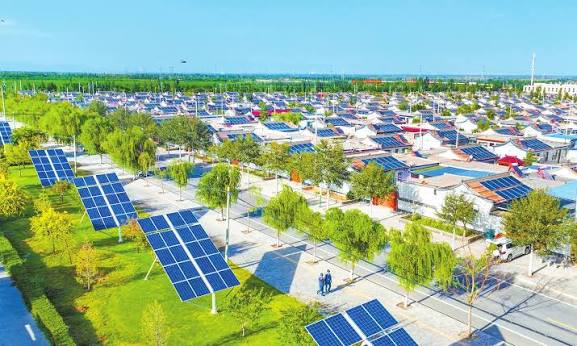
What was once an open space for family gatherings, children’ s play and sleeping during hot nights is now being used by many households to generate electricity. In several residential areas, large portions of rooftops are covered with rows of solar panels, mounting structures and related equipment.
For many families, the decision to install solar systems is primarily linked to rising electricity costs and the desire to generate their own power. However, the growing use of solar energy has also changed the way residents use and view their rooftops.
“People used to see the rooftop mainly as an open family space. Now they also see it as an opportunity to generate electricity,” said solar installer Muhammad Asif while talking to APP.
He said homeowners were increasingly planning the placement of solar panels carefully to make maximum use of available rooftop space while keeping some portion open for household activities.
For families who traditionally slept on rooftops during summer, the change has been particularly noticeable. With solar systems helping households run air conditioners and other appliances during the day, some residents said they were relying less on rooftops at night.
Antique Chaudhary, a government employee, said members of his family had reduced or stopped sleeping on the roof because much of the available space was now occupied by solar panels.
He said the daytime use of air conditioning also helped keep rooms relatively cool, reducing the need to move upstairs after sunset.
The difference is also being felt by older residents who remember when the rooftop was considered a natural extension of the home.
“During hot summer nights, families used to carry charpoys and bedding upstairs after sunset. Children played around while elders sat and talked late into the night,” said Rana Arif, a worker with a local NGO.
He said spending time on the rooftop was once part of the normal rhythm of summer life for many
households.
“Today, the same rooftops often look very different,” he added.
Solar panels, metal mounting structures, wiring and other equipment have become permanent features of many homes. Some residents are also cautious about using areas close to the panels for sleeping or recreational activities.
Yet, residents do not necessarily view the transformation negatively.
For most homeowners, solar energy offers a practical benefit that outweighs the loss of some open rooftop space. The ability to generate electricity from sunlight has encouraged families to make a different calculation about how their rooftops should be used.
Muhammad Asif said some households had adapted by leaving a portion of the roof open or creating sitting areas beneath the panels.
“In this way, the rooftop is not completely disappearing from family life; its purpose is changing,” he
explained.
The transformation also reflects changing priorities among urban households.
A generation ago, the value of a rooftop was largely measured in terms of open space, ventilation and its usefulness for family activities. Today, the same space also carries economic value as a location for electricity
generation.
For a city like Multan, where summers are long and sunlight is abundant, rooftops provide a readily available area for solar installations.
The trend is visible not only in newly constructed houses but also in older homes, where residents are adapting existing rooftops to accommodate solar systems.
The change has created a new question for families: how can they balance the economic benefits of solar energy with the traditional uses of their rooftops?
For some households, electricity generation has become the priority. Others are trying to retain a small open area where family members can continue to sit, relax or spend summer evenings.
The choice varies from household to household, but the transformation is already visible across Multan, Asif said.
Rooftops that once came alive after sunset with charpoys, family conversations and children’ s games are increasingly spending their days producing electricity.
The city’s solar transition is therefore changing more than the way homes consume power. It is quietly changing how families use one of the most familiar spaces in their homes.
For many residents, today’s solar-covered rooftops have become a striking symbol of change offering a practical answer to growing energy needs while slowly pushing an old and cherished summer tradition into memory.