
From a football kicked on an international playing field to precision instruments used in hospitals around the world, a remarkable share of Pakistan’s industrial story begins in Sialkot.
Sialkot Pakistan’s export powerhouse that became a shining example of homegrown success
Jamil Ahmad
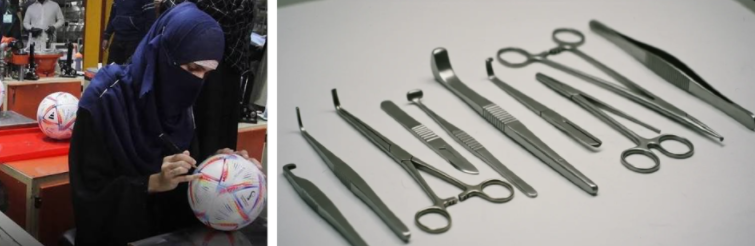
Sialkot, Sep 3 (APP)::From a football kicked on an international playing field to precision instruments used in hospitals around the world, a remarkable share of Pakistan’s industrial story begins in Sialkot. What started as a city driven by skilled hands and entrepreneurial determination has evolved into a globally connected export powerhouse, where craftsmanship, innovation and self-reliance have turned local enterprise into an international success story.
Sialkot’ s industrial strength is not built merely on large factories or corporate investment. Its real power lies in thousands of skilled workers, family-owned businesses, small and medium-sized enterprises and exporters who have built global markets through decades of hard work, experience and business vision.
Known worldwide for its sports goods, surgical instruments, leather products, garments and other value-added items, Sialkot today ranks among Pakistan’s major export hubs and is widely regarded as the country’s “export powerhouse”.
The most striking feature of Sialkot’ s industrial identity is its strong export orientation.
Around 99 percent of locally manufactured products are exported to markets across the world, while the city’s small and medium-sized industries generate more than $2.5 billion annually in foreign exchange, making a significant contribution to the national economy.
According to the Trade Development Authority of Pakistan (TDAP), Sialkot is among Pakistan’s prominent industrial and export centers, with thousands of small and medium-sized industrial units producing goods for international
markets.
Because of their frequent participation in international business activities, trade exhibitions, commercial delegations and meetings with buyers around the world, Sialkot’ s exporters are sometimes described as the country’s “roaming ambassadors”. Through their business engagements, they not only earn valuable foreign exchange but also promote “Made in Pakistan” products and contribute to projecting a positive image of the country.
More than 25,000 active firms are associated with the Sialkot Chamber of Commerce and Industry, reflecting the scale and dynamism of the city’s business community. Sialkot is also known for having a relatively high per-capita income compared with many other Pakistani cities, largely driven by its export-oriented economy, skilled workforce, family-run enterprises and extensive network of small and medium-sized industries.
Across Sialkot and its surrounding areas, thousands of industrial units are engaged in manufacturing a diverse range of value-added products, including leather goods, sports equipment, surgical instruments, gloves, textile products, sportswear, martial arts uniforms and accessories, musical instruments, kitchenware, hollow ware, knives, cutlery and military uniform badges.
These products have secured a place in major international markets because of their quality, craftsmanship and competitive pricing.
Sialkot has particularly earned global recognition for footballs, field hockey sticks, cricket equipment, boxing gloves and other sporting goods. Products manufactured in the city have also been used in major international sporting events, including the Olympics and the FIFA World Cup.
The city’s sports goods industry represents decades of accumulated skills and craftsmanship. Behind a single football, glove or piece of sports equipment is a chain of skilled workers involved in manufacturing, finishing, quality control, packaging and export, making the sector an important source of employment as well as foreign exchange.
The surgical instruments industry is another of Sialkot’ s oldest and most important industrial sectors. Pakistani surgical instruments manufactured in the city are recognized internationally for their quality, precision craftsmanship and competitive prices.
Manufacturers produce thousands of types of surgical, dental and other medical instruments for international markets. Available official data shows that the surgical instruments sector recorded exports of around $449 million in 2024, while the industry has considerable potential for further growth through modern technology, precision manufacturing, international certification and greater value addition.
Sialkot’ s success, however, extends beyond factories, exports and business figures. The city’s business community has also demonstrated an exceptional spirit of collective responsibility and self-reliance by investing in projects designed to address practical challenges faced by local industries and exporters.
The establishment of Sialkot International Airport Limited remains one of the most prominent examples of this approach. The business community collectively developed the airport to address travel and logistics challenges faced by exporters, international buyers and passengers. The project demonstrated how private-sector collaboration and local investment could create infrastructure with significance far beyond the business community itself.
Following the success of the airport, Sialkot’ s business community also moved towards establishing AirSial, a private airline aimed at further improving air connectivity.
Both initiatives reflect the vision, unity, self-reliance and collective thinking of the city’s traders and industrialists and demonstrate their willingness to invest in the development of their own city.
Alongside industrial and commercial activities, efficient communication, postal services and logistics remain important for exporters.
In this context, Saleem Akhtar Bhutta, Executive Member of the Sialkot Chamber of Commerce and Industry and former chairman of the Chamber’s Departmental Committee on Post Office, is among the business representatives who have remained involved in representing the business community on administrative and facilitation-related matters affecting trade and industry.
Industrial and trade experts believe Sialkot can further expand its exports by adopting modern business strategies and investing in research and development, automation, digital marketing, e-commerce, contemporary product design, international certification and global branding.
A large number of Sialkot-based industries already manufacture high-quality products for leading international brands. However, developing and promoting these products under Pakistani brands could help increase export earnings and strengthen the country’s presence in global markets.
In the surgical instruments sector, advanced precision manufacturing; in sports goods, international-standard branding; in sportswear and textiles, technical and environmentally sustainable products; and in leather, greater value-added finished products could open new markets for Sialkot.
The industrial journey of Sialkot demonstrates how a city can build its economic strength through skills, entrepreneurship, hard work, collective investment and self-reliance.
With an overwhelmingly export-oriented production base, more than $2.5 billion in annual foreign exchange earnings, over 25,000 active firms, thousands of skilled workers and major infrastructure projects developed through collective private-sector efforts, Sialkot represents much more than an industrial city.
Sialkot’ s remarkable journey stands as a reflection of Pakistan’s export potential, the entrepreneurial spirit of its people and their determination to take locally made products, skills and craftsmanship to markets around the world.

