The academics, water and policy experts of Khyber Pakthunkhwa here on Tuesday expressed their grave concern over prolonged violations of the Indus Waters Treaty (IWT) by India, warning that any disruption to Pakistan’s share of river waters could have been far-reaching adverse consequences for agriculture, food security, energy generation, livestock, tourism and national economy.
Pakistan’s right on western rivers globally accepted; IWT’s abeyance by India against Intl law
By Fakhar-e-Alam
PESHAWAR, Jun 30 (APP): The academics, water and policy experts of Khyber Pakthunkhwa here on Tuesday expressed their grave concern over prolonged violations of the Indus Waters Treaty (IWT) by India, warning that any disruption to Pakistan’s share of river waters could have been far-reaching adverse consequences for agriculture, food security, energy generation, livestock, tourism and national economy.
They argued that illegal abeyance of the treaty could adversely affect millions of people whose livelihoods largely depend on the Indus Basin irrigation system and urged the international community especially World Bank to support the treaty’s implementation through established legal and diplomatic mechanisms.
The IWT, brokered by the World Bank and signed in 1960 by Pakistan’s President, Field Marshal Muhammad Ayub Khan and the India’s Prime Minister Jawaharlal Nehru, had for over six decades been regarded as one of the world’s most enduring trans-boundary water-sharing agreements until it was held in abeyance unilaterally by fascist Modi Government in April 2025.
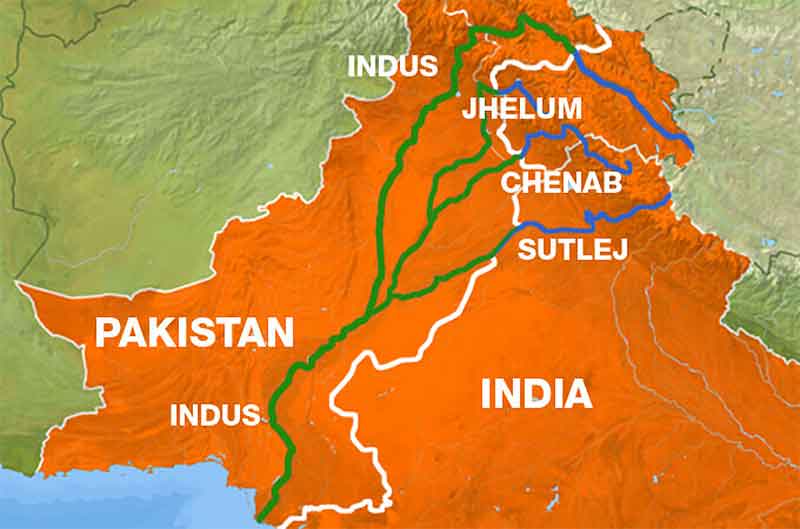
The historic treaty allocated the waters of the three western rivers namely Indus, Jhelum and Chenab to Pakistan, while India has rights over the eastern rivers Ravi, Beas and Sutlej as per the agreement.
However, international and water experts termed the recent developments regarding the treaty have generated serious concerns about the future of regional water cooperation and sustainable development.
Manzoorul Haq, former Ambassador said that water was the lifeline of Pakistan and India could not hold IWT in abeyance unilaterally.
He said Pakistan’s right on water of western rivers under IWT was globally accepted and holding the treaty in abeyance by India was illegal and violation of international law.
He termed India’s decision to place the treaty in abeyance was a serious violation of bilateral commitments and international legal norms.
“IWT is an internationally recognized agreement that has survived wars and political crises for over 66 years,” he said.
“Any unilateral attempt to suspend or undermine its implementation sets a dangerous precedent for international treaty obligations,” he added.
Ambassador Manzoor said that India has lost all legal grounds after historic ruling by International Court of Arbitration. He said that the court ruled that no country could hold the treaty in abeyance uniterally and it was intact.
He observed that Pakistan’s agricultural economy was fundamentally dependent upon the Indus Basin irrigation system, which he described as the country’s economic lifeline.
More than 80 percent of Pakistan’s irrigation requirements were met through the western rivers allocated under the treaty and any disruption in these water flows would directly affect crop production, rural livelihoods and national food security, he said.
He reiterated that nearly 80 percent of Pakistan’s cultivated land and about 90 percent of its irrigated agriculture rely upon the Indus Basin system, making uninterrupted water availability indispensable for agricultural and food sustainability.
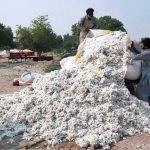
According to Ambasador Manzoor, reduced water availability could significantly affect the production of strategic crops including wheat, rice, cotton and sugarcane, with serious implications for domestic food supplies and agricultural exports.
Pakistan’s agriculture contributed approximately 23 percent to the national GDP and provided employment to nearly 38 percent of the labour force. Any prolonged reduction in irrigation water would have negative effects throughout the economy, increasing food prices, reducing farmers’ incomes and intensifying rural poverty,” he remarked.
Professor Dr Zilakat Malik, former Chairman Economics Department at University of Peshawar said that IWT was a lifeline for agriculture and food sectors of Pakistan.
He warned that Punjab, which produced more than 20 million metric tons of wheat annually, could face considerable food challenges if irrigation supplies were disrupted during sowing or harvesting seasons.
Alike, the livestock sector, which supported millions of rural households, would also suffer from declining fodder production resulting from water shortages.
“Livestock contributes significantly to Pakistan’s agricultural economy. Reduced water availability affects fodder cultivation, milk production and meat supply, ultimately impacting household incomes and food availability,” he explained.
Dr. Zilakat expressed deep concern that reported interruptions in hydrological data sharing could complicate our ability to forecast floods, manage reservoirs and prepare for droughts, exposing millions to disasters.
“Timely hydrological information is essential for effective flood forecasting, water management and disaster preparedness. Continued cooperation on technical matters benefits both countries and contributes to regional stability,” he added.
He also cautioned that increasing dependence on groundwater extraction in response to reduced surface water availability could accelerate aquifer depletion, increase soil salinity and worsen environmental degradation, particularly in Punjab and Sindh.
“Groundwater cannot indefinitely replace river water. Excessive pumping may create long-term environmental challenges, including land degradation, declining water tables and ecological imbalance,” he observed.
Referring to climate change, the experts said Pakistan was already experiencing rising temperatures, erratic rainfall patterns, glacial melt and prolonged droughts, making efficient water management more critical than ever.
“The combined impact of climate change and water uncertainty requires greater investment in reservoirs, modern irrigation systems and water conservation technologies,” he emphasized.
He welcomed Pakistan’s ongoing efforts to strengthen water infrastructure through the construction of major reservoirs, including the Mohmand, Dasu and Diamer-Bhasha dams.
“These strategic projects will significantly improve water storage capacity, enhance hydropower generation and strengthen Pakistan’s ability to manage seasonal fluctuations in river flows,” he said.
While advocating an accelerated construction of small and medium-sized dams across Khyber Pakhtunkhwa, Gilgit-Baltistan and other mountainous regions, the experts described such water reservoirs were cost-effective measures to improve local water availability and climate resilience.
Dr. Ejaz Khan, former Chairman of the Department of International Relations at the University of Peshawar, said the treaty has long served as an important confidence-building mechanism between Pakistan and India despite political tension.
He said Hinduvata Modi regime went against World Bank guarantee and international commitment after holding the treaty in abeyance unilaterally.
“The Indus Basin supports more than 240 million people and constitutes one of the largest contiguous irrigation systems in the world. Water from this basin is indispensable for agriculture, drinking water, industry and energy production across the region,” he observed.
He stressed that water security has become increasingly intertwined with food security, economic development and regional peace.
“Any prolonged uncertainty regarding implementation of the treaty has humanitarian dimensions because water directly affects agricultural production, nutrition, public health and livelihoods,” he said.
Dr. Ejaz warned that prolonged reductions in irrigation supplies could increase food insecurity, particularly among vulnerable communities including women and children.
“Malnutrition in children and lactating mothers are often the first consequences when agricultural production declines due to water shortages. Ensuring uninterrupted access to water is therefore essential for protecting vulnerable populations,” he noted.
He called upon the World Bank, which facilitated the treaty, to step in and help support peaceful resolution of IWT issue through the mechanisms provided under the agreement.
“The treaty contains established procedures for addressing disagreements. Respect for these mechanisms remains essential for preserving regional stability and maintaining confidence in international agreements,” he maintained.
The experts observed that the implications of disputes over trans-boundary rivers may extend beyond South Asia and warned that if unilateral approaches become normalized, they could create precedents affecting other international river systems around the world.
They said cooperative management of shared water resources remained the most sustainable path for all riparian states, emphasizing that Pakistan should continue strengthening its domestic water management through investment in modern irrigation technologies, expansion of storage facilities, watershed management, groundwater recharge, efficient water distribution systems and climate adaptation strategies.
They emphasized that improved governance of water resources, scientific planning and conservation measures would help Pakistan enhance resilience against increasing water stress driven by climate change.
The experts reiterated that IWT has served as an important framework for peaceful water-sharing for more than six decades and expressed hope that all outstanding issues would ultimately be resolved through dialogue, international law and mutual respect for treaty obligations.
They concluded that sustainable management of shared water resources remained indispensable for ensuring regional peace, food security, economic development and the well-being of millions of people who depend upon the Indus River system.