Pakistan, Uzbekistan embrace renewed bilateral cooperation commitment amid signing 28 accords, set $2bln trade target
Pakistan, Uzbekistan embrace renewed bilateral cooperation commitment amid signing 28 accords, set $2bln trade target
By Ali Jabir
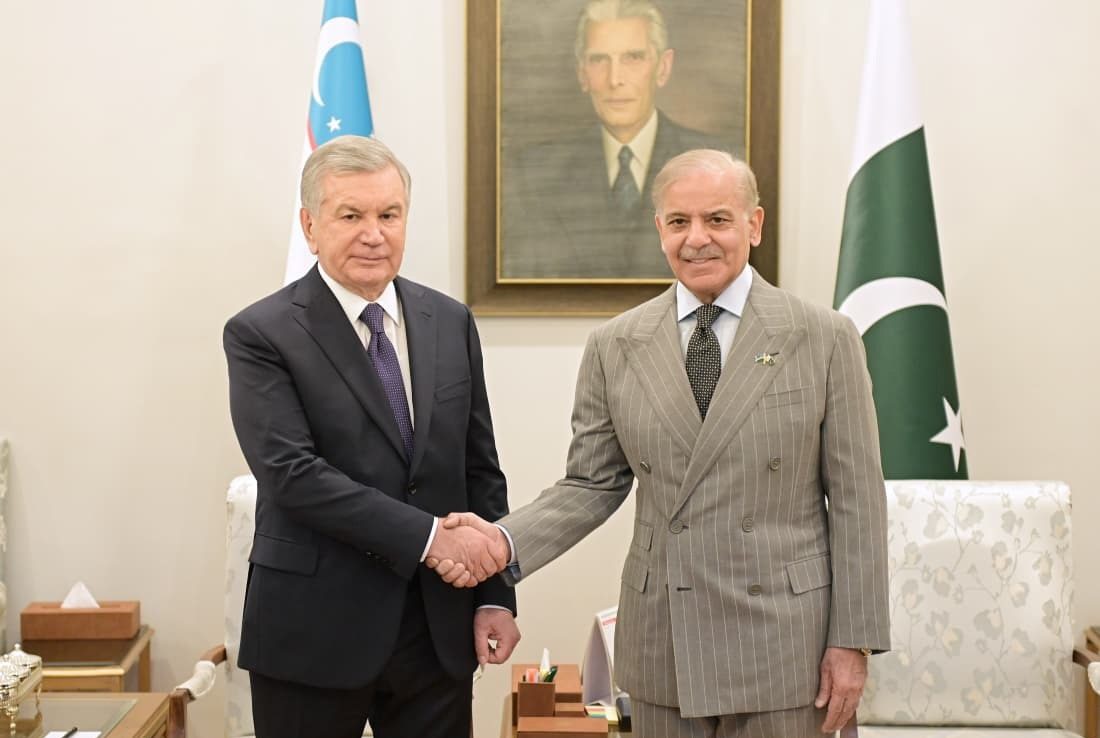
ISLAMABAD, Feb 08 (APP): Uzbekistan President Shavkat Mirziyoyev’s state visit to Pakistan marked a major breakthrough in bilateral relations, and a renewed cooperation commitment with the two countries signing 28 agreements and memoranda of understanding across multiple sectors and setting a target to raise annual trade to $2 billion.
The visit, held amid shifting global trade routes and growing concerns over energy and food security, underscored the shared resolve of Islamabad and Tashkent to deepen economic cooperation and enhance regional connectivity between Central and South Asia.
Prime Minister Shehbaz Sharif and President Mirziyoyev signed a joint declaration reaffirming their commitment to a stronger strategic partnership. They also concluded a key agreement aimed at expanding bilateral trade to $2 billion over the next five years.
The signed documents covered cooperation in foreign affairs, preferential trade, defence, climate change, agriculture, food security, information technology, science, education, culture, maritime affairs, pharmaceuticals, textiles, mining, geosciences, small and medium enterprises, sports and counter-narcotics.
Among the major outcomes was a protocol expanding the list of goods under the Preferential Trade Agreement, along with the establishment of a Pakistan-Uzbekistan Inter-Regional Forum to promote business-to-business cooperation. The two sides also signed an MoU between their foreign ministries and an action plan for defence cooperation.
To boost trade facilitation, both countries signed an MoU on maritime cooperation, including preferential port arrangements at Karachi, Gwadar and Port Qasim, giving Uzbekistan improved access to sea routes. Agreements were also concluded in industrial cooperation, pharmaceuticals, textiles and support for small and medium enterprises.
In the energy and environmental sectors, the two sides signed agreements on ecology, climate change adaptation and disaster risk reduction, reflecting their shared focus on sustainable development and non-traditional security challenges.
The countries also signed MoUs on agricultural research, plant protection, food security, information technology, science and education, cultural heritage preservation and sports cooperation. An agreement was reached on combating illicit trafficking in narcotics and another on the exchange of convicted prisoners.
The visit highlighted the strategic importance of regional connectivity, particularly through proposed trans-Afghan transport corridors, which both sides view as essential for reducing logistics costs, shortening delivery times and unlocking trade potential between Central Asia and the Arabian Sea.
Beyond economic and political agreements, the visit also featured symbolic and academic recognition of the Uzbek president. The National University of Sciences and Technology conferred an honorary Doctor of Philosophy degree and the title of professorship on President Mirziyoyev at a special convocation held at the Prime Minister’s House.
Prime Minister Shehbaz Sharif and NUST Rector Dr Muhammad Zahid Latif presented the honours in recognition of the Uzbek leader’s contributions to strengthening bilateral ties and promoting peace, development, education and innovation in the region.
The citation noted President Mirziyoyev’s role in steering Uzbekistan through political, economic and social reforms, expanding investments in higher education, research and digital transformation, and fostering collaboration between government, academia and industry.
President Mirziyoyev described Pakistan as a close friend and reliable partner, while Prime Minister Shehbaz Sharif said the agreements reflected the political will of both sides to build a stable, interconnected and prosperous region.
The signing of the 28 accords, the ambitious trade target and the symbolic honours together signalled a new phase in Pakistan-Uzbekistan relations, anchored in connectivity, economic cooperation and shared development goals.