By Syeda Amnah Batool, MNA The fact that American and Iranian delegations chose Islamabad rather than Geneva, Brussels, or any other established diplomatic hub speaks volumes about the credibility and vision that Pakistan’s leadership has built. This is not by accident. It is the direct result of the strategic wisdom and steadfast commitment of Prime Minister Shehbaz Sharif and Field Marshal Asim Munir to regional peace and stability. Since the …
Pages of history being written in Islamabad will be studied for generations to come
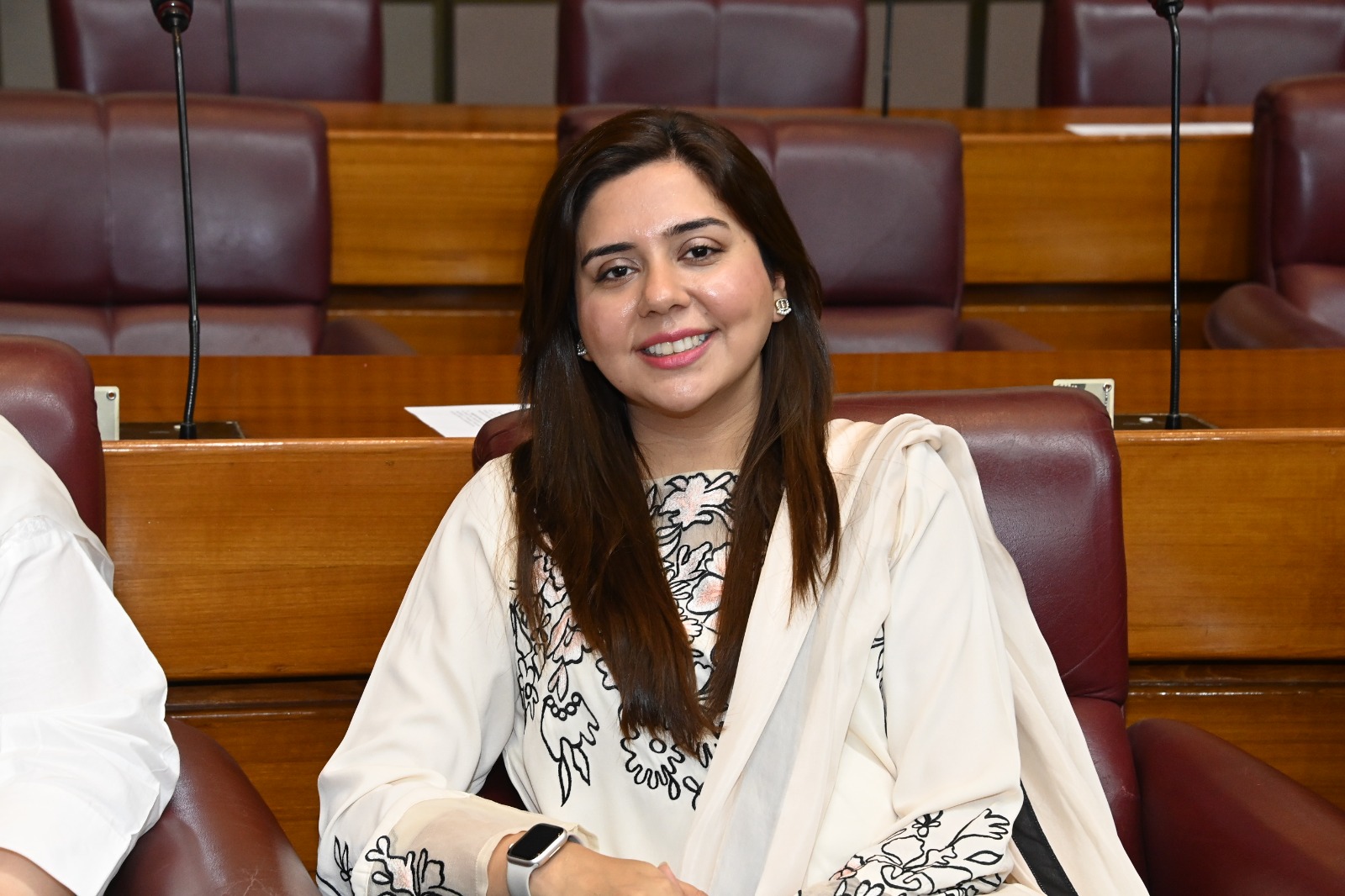
By Syeda Amnah Batool, MNA
The fact that American and Iranian delegations chose Islamabad rather than Geneva, Brussels, or any other established diplomatic hub speaks volumes about the credibility and vision that Pakistan’s leadership has built. This is not by accident. It is the direct result of the strategic wisdom and steadfast commitment of Prime Minister Shehbaz Sharif and Field Marshal Asim Munir to regional peace and stability. Since the US Israeli strikes on February 28, 2026, which marked the beginning of the Iran conflict, Pakistan has positioned itself as the indispensable bridge between two nuclear powers.
Every Pakistani household right now understands the impact of global energy markets on daily lives. The challenges we face with fuel and energy availability are not isolated events, but part of a larger international crisis. When the Strait of Hormuz became a flashpoint following the military escalation on 28 February 2026, the world faced an unprecedented emergency. The International Energy Agency (IEA), in its official assessment dated March 2026, rightly described this as the largest supply disruption in the history of the global oil market. Pakistan, as a nation dependent on imports through this critical waterway, stands at the frontline of this challenge. Yet rather than retreating inward, Pakistan’s government has seized this moment to demonstrate leadership on the world stage.
The strategic significance of Pakistan’s position cannot be overstated. According to energy market data from Q1 2026, Qatar and the UAE provide 99 percent of our LNG (Liquefied Natural Gas) imports, making energy security one of our most vital national interests. Unlike larger economies with diverse supply sources and substantial reserves, Pakistan faces genuine vulnerabilities. However, under the visionary guidance of the Prime Minister Shehbaz Sharif’s government, this vulnerability has been transformed into strategic opportunity. Through patient diplomacy and genuine commitment to regional stability, Pakistan has positioned itself not just as a consumer of global energy but as a guarantor of the stability that enables that energy to flow. This is the hallmark of strategic leadership.
The global impact of fuel prices, fertilizer shortages affecting food security, and the cascading effects on developing nations like ours are deeply concerning. Fertilizer prices have surged by 30 to 40 percent as documented by commodity markets in March April 2026, given that approximately one third of global fertilizer trade passes through the Strait. Yet these very challenges provided the backdrop for Pakistan’s remarkable diplomatic achievement. Even during the most tense phases of the conflict, Pakistan was one of only five nations that Iran permitted to pass through the Strait. As per official statements from the Islamic Republic of Iran on 26 March 2026, China, Russia, India, Iraq, and Pakistan were granted passage rights. This is extraordinary recognition of Pakistan’s role and our government’s dedication to maintaining balanced, principled relationships across the Islamic world and beyond.
The international community has taken notice of our leadership in remarkable ways. President Donald Trump, in a social media post dated 15 April 2026, publicly acknowledged Field Marshal Syed Asim Munir as an “extraordinary man doing a great job”. This recognition from the American presidency reflects something profound: Field Marshal Syed Asim Munir embodies a credibility that transcends traditional diplomacy. As the head of Pakistan’s military establishment, he represents not merely political positions but genuine strategic capability and wisdom. When he speaks to Tehran, Iranian military leaders recognize the voice of someone who understands power, strategy, and the weight of responsibility. When he talks to Washington, the Trump administration receives assessments backed by genuine military and strategic insight. This is the kind of credibility that is earned through principled leadership and professional excellence.
The three-day visit to Tehran from 16 to 18 April 2026 that Field Marshal Syed Asim Munir undertook was a masterclass in diplomatic engagement at the highest levels. He met not only with Foreign Minister Abbas Araghchi but with Iran’s President, Parliament Speaker Mohammad Bagher Ghalibaf, and the command of Iran’s military establishment. The warm embrace with which Araghchi received him at the airport was itself a statement. Recognition between military and diplomatic professionals of mutual respect and shared commitment to dialogue. The discussions of what Iranian media described as a modified framework for talks represented concrete progress. Field Marshal Syed Asim Munir was carrying serious proposals, listening carefully to counterproposals, and most importantly, laying the groundwork for the next critical rounds of negotiation. This is the work of a strategist who understands that lasting peace requires patience, respect, and genuine engagement with complex realities.
While Field Marshal Syed Asim Munir engaged in these crucial technical discussions in Tehran, Prime Minister Shehbaz Sharif executed a regional diplomatic initiative of remarkable sophistication during 14 to 19 April 2026. His four-country tour visiting Saudi Arabia on 14 April, Qatar on 16 April, and Turkey from 17 to 19 April was not a ceremonial exercise but a carefully choreographed effort to build regional consensus for peace. When the Prime Minister met with Saudi Arabia’s Crown Prince Mohammed Bin Salman in Jeddah on 14 April 2026, he was securing support from a crucial regional power whose economic interests align with stability. Official statements from the Prime Minister’s Office confirmed discussions focused on regional de escalation. The Crown Prince’s endorsement of Pakistan’s constructive role carried enormous weight. In Qatar on 16 April, the Prime Minister addressed the energy crisis directly with the Emir, discussing how the reopening of the Strait serves not just Qatar but the entire world. The Antalya engagement in Turkey from 17 to 19 April brought that nation and the international community into the fold, demonstrating that peace in the Gulf is a shared responsibility.
This was strategic leadership of the highest order. The simultaneity of actions military level technical discussions in Tehran from 16 to 18 April paired with prime ministerial regional diplomacy from 14 to 19 April reflected a coordinated, sophisticated approach. While Field Marshal Syed Asim Munir was discussing substance with Iran’s defense establishment, Prime Minister Sharif was ensuring that regional powers would support rather than obstruct the peace process. This is how modern diplomacy works at the highest levels. This is the kind of thinking and execution that comes from a government genuinely committed to serving Pakistan’s interests and the broader good.
The historic Islamabad Talks on 11 to 12 April 2026 were monumental in ways that deserve proper appreciation. According to official records from the Prime Minister’s Office, Vice President JD Vance brought a 300-member delegation. Not a symbolic representation, but a full government operation spanning economic, diplomatic, military, and technical experts. Iran’s Parliament Speaker Mohammad Bagher Ghalibaf led their 70 member team. The talks, held at the Serena Hotel in Islamabad, lasted approximately 21 continuous hours across three rounds: one indirect round and two direct rounds of engagement. For the first time since the 1979 Iranian Revolution, these two nations engaged in direct, face to face, high level engagement. Not through intermediaries. Not through back channels. Direct dialogue between principals. This was a monumental achievement, and it happened in Islamabad because of the trust that Pakistan has built.
Though these 21 hours of intensive negotiations on 11 to 12 April did not result in a comprehensive agreement, it cannot be termed as a failure. In fact, it is the natural course of serious diplomacy. Iran and the United States have been separated by profound differences for nearly half a century, since the 1979 Revolution. No reasonable observer expected them to resolve nuclear programs, control of the Strait of Hormuz, sanctions relief, frozen assets, and regional conflicts in a single session. What mattered enormously was that both sides showed up. Both sides negotiated in good faith. Iran’s Foreign Minister Abbas Araghchi, in statements to international media on 12 April 2026, spoke of being inches away from an MoU, a memorandum of understanding. This language reflects not failure but near success. Iranian officials publicly stated they did not expect agreement in one session, signaling that they understood this as part of an ongoing process.
Most tellingly, Iran’s ambassador to Pakistan, Reza Amiri Moghadam, issued a powerful statement on 16 April 2026: Tehran will not consider any venue other than Pakistan for talks with Washington. This is not what a nation says when a mediation has failed. This is what a nation says when it has found a trusted, honest broker. When it believes in the process and wants to continue. This is validation at the highest level of our government’s role and credibility.
The ceasefire announced on 8 April 2026, following intensive Pakistan mediated negotiations, represents an extraordinary achievement in preventing wider catastrophe. This two week ceasefire was formally agreed upon after Pakistan presented its Five Point Peace Initiative on 31 March 2026, which called for immediate cessation of hostilities, humanitarian aid corridors, and confidence building measures. Yes, there are technical challenges and disagreements about implementation. But as of 20 April 2026, neither side is actively escalating beyond posturing. Neither side is resuming full scale warfare. This holding of the line, this prevention of further descent into conflict, is itself a massive accomplishment. And it exists because Pakistan provided the venue, the mediators, and the framework within which dialogue could happen.
I want to emphasize something crucial: what our government has achieved here is genuinely in Pakistan’s national interest. This is not altruism. Though the humanitarian dimension is important. This is enlightened self interest of the highest order. Every day that the Strait of Hormuz remains fully open is a day that energy flows to our economy. Every week that disruption is minimized is a week that Pakistani families pay less for electricity and fuel. According to economic reports from April 2026, energy price volatility has directly impacted consumer costs across the nation. If our government can help bring the United States and Iran even closer to a working agreement, we are directly serving the welfare and prosperity of our own people.
Beyond the immediate energy security dimension, there is a larger strategic dimension. By proving itself as a trusted intermediary between global superpowers, Pakistan has opened doors for future cooperation. The respect and goodwill being generated will create opportunities for energy partnerships, security cooperation, and regional leadership roles that would not otherwise exist. This is how nations build power and influence in the international system. Not through military conquest, but through being trusted to handle the most sensitive responsibilities. The historical record will show that in April 2026, Pakistan transformed vulnerability into diplomatic triumph.
The world has noticed what Pakistan has become under its leadership. We are no longer simply a nation trying to manage crises within our borders. We are a nation that the world turns to when the most critical international crises demand resolution. We are Islamic but not narrow in our relationships. We have military credibility without being perceived as militarily aggressive. We maintain deep friendships with both Iran and the Gulf states, with both the United States and China. We stand at the crossroads of the Middle East, Central Asia, and South Asia, and we are using that position wisely.
Prime Minister Shehbaz Sharif and Field Marshal Syed Asim Munir have taken Pakistan’s potential and transformed it into actual global influence. Over the course of less than three weeks from the Pakistan Five Point Initiative on 31 March through the Islamabad Talks on 11 to 12 April to the diplomatic tour of 14 to 19 April, they have demonstrated what visionary leadership looks like. They have shown up consistently. They have listened with genuine respect to all parties. They have made serious proposals grounded in regional realities. They have treated both adversaries with dignity. And in doing so, they have created space for two adversaries to move from conflict towards dialogue. This is the work of leaders who understand that true strength lies not in military dominance but in being trusted, in being fair, and in working toward solutions that serve broader interests.
As we look forward to any further development, I am filled with appreciation for the vision, dedication, and strategic wisdom that our government has demonstrated. The hard work continues, but Pakistan has already achieved something remarkable: We have become trusted. We have become the place where the world’s most difficult problems come to find resolution. This is a moment every Pakistani should be proud of. This is the Pakistan that the government of Prime Minister Shehbaz Sharif is building, a nation respected globally, secure in its region, and committed to playing a constructive role in solving the world’s most pressing challenges. The pages of history being written in Islamabad these days will be studied for generations to come.