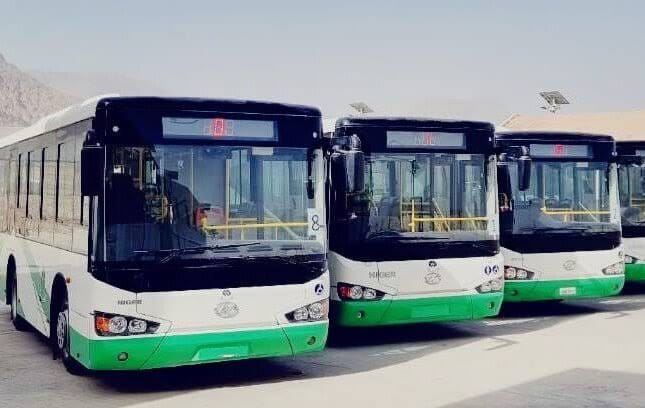
Every morning, 31-year-old Ehsanullah, a resident of Killi Almas on the outskirts of Quetta, waits at a Green Bus stop before traveling nearly 10 kilometers to his shop daily. He says the journey, once made on old diesel-powered buses, used to be exhausting due to smoke, heat, noise and poor sanitation.
By Matiullah Mati
Quetta, Jul 26 (APP): Every morning, 31-year-old Ehsanullah, a resident of Killi Almas on the outskirts of Quetta, waits at a Green Bus stop before traveling nearly 10 kilometers to his shop daily. He says the journey, once made on old diesel-powered buses, used to be exhausting due to smoke, heat, noise and poor sanitation.

According to Ehsanullah, although Green Buses are often overcrowded because demand exceeds supply, air-conditioned cabins, improved cleanliness and greater comfort have significantly improved the daily commuting experience. He adds that passengers have also become more conscious about keeping the buses
clean.
With a population of more than 2.2 million, Quetta’s growing urbanization has increased the demand for reliable public transport. The Government of Baluchistan launched its Green Bus service in 2023 with eight buses serving around 8,000 passengers daily.

Following the project’s expansion in 2025, the fleet now consists of 25 buses operating on four major routes and carrying approximately 25,000 passengers every day. The provincial government aims to gradually transition Quetta’s public transport system to fully electric buses by 2030.

Public health specialist Dr. Zaffar Iqbal Khosti warns that emissions from conventional vehicles remain a major public health concern.
He explains that exhaust from petrol and diesel engines contains harmful pollutants, including carbon dioxide (CO2), nitrogen oxides (NO?) and fine particulate matter (PM2.5), all of which contribute to deteriorating air quality in urban areas.
While carbon dioxide is a key driver of climate change, nitrogen oxides and microscopic particles have more immediate effects on human health by contaminating the air people breathe every day, he added.
According to Dr. Khosti, prolonged exposure to these pollutants significantly increases the risk of respiratory and cardiovascular diseases.
Fine particulate matter is particularly dangerous because it can penetrate deep into the lungs and enter the bloodstream, triggering asthma attacks, worsening allergies and contributing to chronic lung conditions such as bronchitis and chronic obstructive pulmonary disease (COPD).
Long-term exposure has also been linked to reduced lung function and an increased risk of heart disease and premature death.
He notes that the health burden is not shared equally across the population. Children, whose lungs are still developing, older adults and people with pre-existing respiratory illnesses are especially vulnerable to the harmful effects of vehicle-related air pollution. Individuals living or working near busy roads are also at greater risk because of their continuous exposure to traffic emissions.
Dr. Khosti says these growing health concerns are one of the key reasons governments around the world are accelerating the transition to electric mobility.
Electric vehicles produce no tailpipe emissions, helping to reduce urban air pollution and improve public health. Although the broader environmental benefits depend on how electricity is generated, the shift toward cleaner transportation is widely regarded as an important step toward healthier cities, lower disease burdens, and a more sustainable future, he added.
According to the Transport Department, around 400 aging buses and nearly 12,000 licensed rickshaws operate in Quetta, most of them running on conventional fuels.
Brick kilns, crushing plants, open waste burning and old vehicles also contribute significantly to the city’s deteriorating air quality.
The Baluchistan High Court has recently directed authorities to take action against smoke-emitting buses and restrict their operation, while the Transport Department has so far issued permits to only two environmentally friendly vans.
Data from international air-quality monitoring organizations show that PM2.5 concentrations in Quetta frequently exceed the World Health Organization’s recommended annual guideline, with air quality often ranging from moderate to unhealthy levels.
Changez Khan, a lecturer at the Department of Environmental Sciences, University of Baluchistan, believes the initiative should not stop at introducing a limited number of Green or electric buses. Instead, he argues, the entire public transport system should gradually shift to electric mobility.
He points to cities such as Shenzhen and Beijing in China, Paris in France and London in the United Kingdom, where large-scale deployment of electric buses, charging infrastructure, battery recycling systems and strict emission regulations have contributed to significant reductions in air pollution, particularly PM2.5 levels.
Secretary of Transport Hayat Kakar says the federal government’s New Energy Vehicles Policy 2025-30 provides a nationwide framework to promote electric vehicles in both the public and private sectors.
The policy aims to reduce dependence on imported fossil fuels, lower carbon emissions and build a modern, sustainable transport system across Pakistan.
He says the current Green Bus project represents a transitional phase. The provincial government is working to procure 27 new electric buses, which will be deployed on 12 additional feeder routes once funding is secured. Existing Green Buses will later be relocated to other Districts, while Quetta’s urban transport network will gradually transition to a fully electric system.
According to Hayat Kakar, the addition of the new buses is expected to increase daily ridership from about 40,000 to 50,000 passengers, reducing reliance on private vehicles while providing safer, more affordable and comfortable transportation.
He says the government is not only investing in buses but also developing charging stations, power supply systems and the technical infrastructure necessary to support electric mobility.
With support from the Asian Development Bank, authorities are also exploring Bus Rapid Transit (BRT) and modern urban rail projects to reduce congestion and improve air quality.
Kakar Notes that although the existing Green Buses are powered by Euro-III diesel engines rather than electricity, they emit significantly less pollution than older buses.
The government’s long-term objective is to complete the transition to a fully electric public transport system in Quetta by 2030.
To complement this transition, the government of Baluchistan has also launched the Chief Minister’s Electric Bike Scheme.
Under the first phase, 20,000 electric motorcycles are being provided to working women, students, and the general public through subsidized financing. Each motorcycle costs PKR 175,000, with the government providing a 30 percent subsidy (PKR 52,500), while beneficiaries pay the remaining amount through bank installments.
Among the successful applicants is Bilal Awan, a resident of Mekangi Road, whose name was selected through the first digital ballot.
He says rising fuel prices have made conventional motorcycles increasingly expensive to operate and switching to an electric bike will reduce household transport costs while also benefiting the environment.
Dr. Khosti says Quetta’s air pollution is driven largely by aging diesel buses, smoke-emitting vehicles, rickshaws, brick kilns, crushing plants, dust and open waste burning.
He emphasizes that expanding environmentally friendly public transport and electric vehicles could significantly improve public health, particularly for children, the elderly and people with respiratory diseases.
Environmental experts believe that if the provincial government achieves its 2030 target of electrifying Quetta’s public transport system, the initiative will not only improve urban mobility but also reduce air pollution, lower carbon emissions and strengthen the city’s resilience to climate change.
For commuters like Ehsanullah, the Green Bus is simply a convenient way to get to work. For environmental experts, however, it represents the first step toward a cleaner, healthier and more sustainable urban future for Baluchistan.