As monsoon clouds gather over Nowshera, anxiety is once again gripping farmers living along the River Kabul, where sudden rises in water levels can turn fertile agriculture fields into flooded expanses within hours.
Deforestation: A growing threat to ecological balance, agricultural productivity
By Fakhar-e-Alam
NOWSHERA, Aug 20 (APP): As monsoon clouds gather over Nowshera, anxiety is once again gripping farmers living along the River Kabul, where sudden rises in water levels can turn fertile agriculture fields into flooded expanses within hours.
For farmers such as 33-year-old Malyar Khan of Mohib Banda, floods are not merely a seasonal phenomenon rather they are a recurring threat to livelihoods built over years of hard work.
Standing beside his two acres maize field, Malyar was busy draining floodwater with a large water pump, assisted by his brothers Hussain Khan and Kamal Khan.
The previous night’s torrential rains had caused the River Kabul to swell, inundating maize and orchard crops and forcing the family to bring a pump from Pabbi Bazaar to save whatever could be salvaged.
“The heavy rains suddenly raised the water level in the River Kabul and inundated our maize and orchard crops,” Malyar told APP, recalling how previous floods had also damaged his agricultural land with sobbing eyes.
His story reflects the growing vulnerability of communities living along the Kabul River, particularly in Nowshera, Charsadda and Peshawar, where low-lying settlements and agricultural land remain exposed to flash floods during the monsoon.
Recent heavy rains in upper parts of Khyber Pakhtunkhwa, including Chitral and Dir, have once again raised water levels downstream, inundating low-lying areas, creating environmental degradation and inflicting financial losses on farming communities.
But behind these recurring disasters lies a deeper environmental concern that the steady degradation of the province’s forests that amplified floods risks.
Former Conservator of Forests KP Taheedul Haq told APP that Pakistan is among the countries highly vulnerable to climate change and extreme weather events, with the devastating floods of 2010 and 2022 providing stark evidence of the country’s exposure.
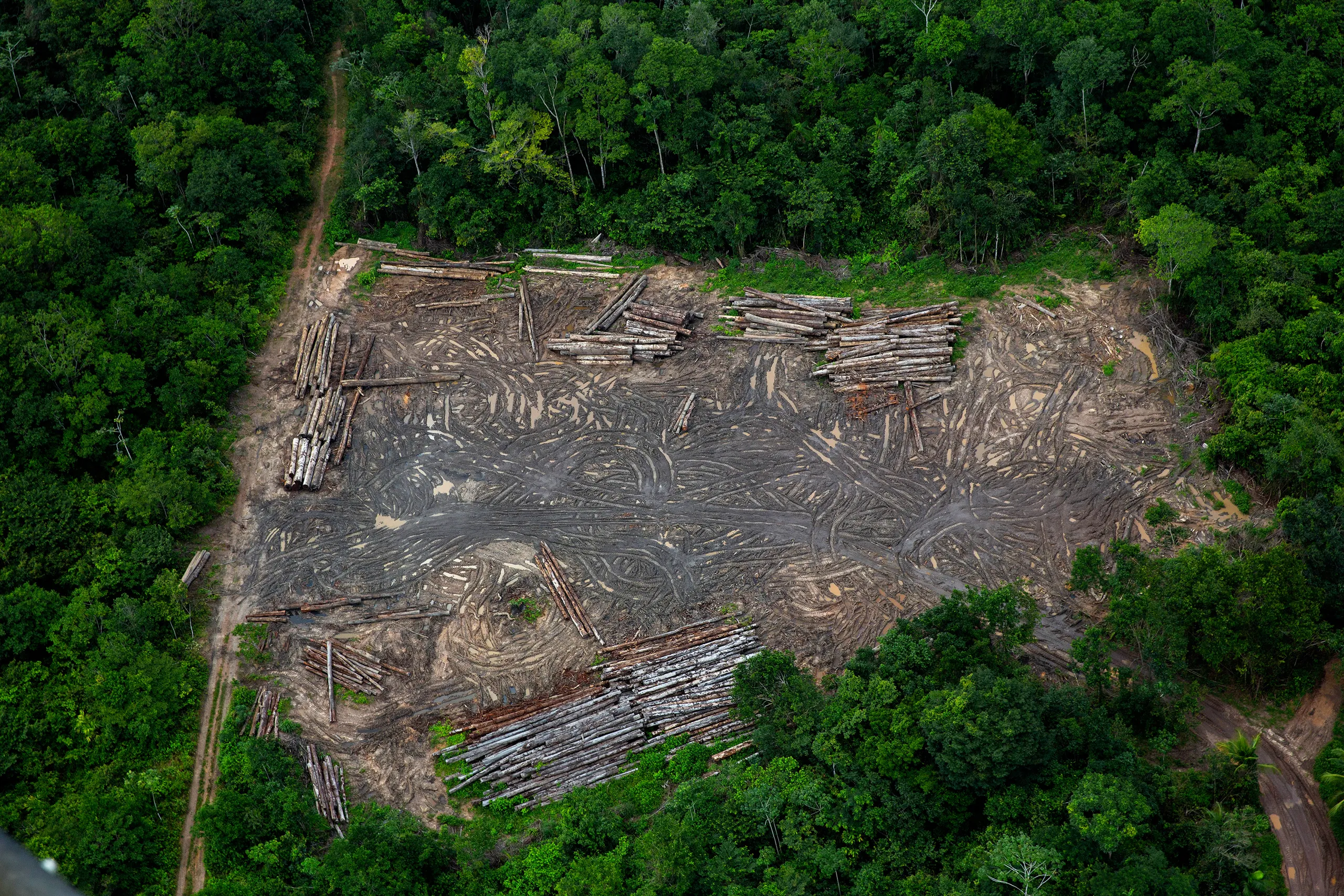
He said deforestation had further aggravated flood risks in Khyber Pakhtunkhwa, where forests often described as the province’s green gold are under mounting pressure from rapid population growth, poverty, unemployment and increasing demand for fuel and timber.
Touheed said the connection between forests and flood protection is critical. Healthy forests slow down rainfall runoff, allow water to infiltrate into the soil, reduce erosion and help stabilize river watersheds. “When trees are removed, rainwater can flow rapidly over exposed slopes, carrying soil and debris into rivers and streams and increasing the likelihood and severity of flash floods.”
For residents of flood-prone areas like Nowshera, Charsadda and Peshawar, this environmental degradation is becoming increasingly visible in recent years.
Traveling along the Grand Trunk (GT) road from Tarnab in Peshawar towards Azakhel in Nowshera, forest conservation advocates said the sight of timber depots filled with cut logs and uprooted tree trunks provides an unsettling picture of the pressure on the region’s tree cover.
At a wood depot near Pabbi station, timber trader Amanullah Khan and his three workers were busy cutting logs into smaller pieces. His sons were also helping prepare bundles of wood, including shisham, pulai, ber, kikar, poplar, neem, amaltas and jaman without knowing its adverse effects on ecology and environment.
For Amanullah, the timber sale remains an important source of income and household energy for his family but for environmentalists it increases chances of floods and environmental degradation.
The national forest policy has highlighted the scale of the problem, estimating that around 27,000 hectares of forests are lost annually from private and community-owned natural forests at the national level.
The policy also points to intense pressure on forest resources across the country, particularly in Khyber Pakhtunkhwa and Gilgit-Baltistan, where communal lands, shamalats, guzara forests and privately owned forests face increasing exploitation.
Deforestation in watershed areas of KP has consequences extending far beyond the forests themselves. It can reduce agricultural productivity, affect water availability, accelerate land degradation and threaten biodiversity and wildlife.
In riparian and coastal areas, including parts of Sindh and Balochistan, the removal of vegetation can also intensify flooding and contribute to seawater intrusion, imposing heavy economic costs.
Professor Dr. Iftikhar Ahmad of Environmental Sciences Department at University of Peshawar said the problem of climate change needed to be viewed in a global context.
He said around 10 million hectares of forest are reportedly lost worldwide each year, although a significant portion is offset by natural or assisted regeneration.
He identified population growth, poverty and unsustainable logging as major drivers of deforestation in KP.
Dr Iftikhar said Pakistan’s population has expanded dramatically since independence, placing enormous pressure on land, water, forests and other natural resources. With continued population growth and urbanisation, the demand for housing, agricultural land, fuel and timber is expected to rise further.
He also pointed to the environmental pressure associated with the arrival of millions of Afghan refugees following the Soviet invasion of Afghanistan in 1979. He said forest resources in parts of KP, including the former tribal areas, came under additional pressure, with trees being cut and, in some cases, roots removed for fuel and commercial purposes.
He stressed that alternative sources of energy were essential to reducing dependence on forests and controlling floods.
Around 68 percent of trees in the country are reportedly used as firewood, while urbanisation and community-driven demand account for another significant share of forest loss, according to figures cited by the former conservator.
He warned that without a major policy shift towards alternative energy sources such as solar, hydro-power, biomass and wind energy, Pakistan could face further depletion of its forests and more frequent climate-related disasters.
Former Forest Minister Wajid Ali said Swat continues to struggle with the consequences of damage inflicted on its forests and natural resources. He said forests in Upper Swat and Kohistan, particularly areas historically rich in pine and deodar trees, had suffered from illegal logging and commercial exploitation due to unrest in the past.
He attributed part of the problem to policies that allowed private forest owners to cut trees under wood-lot arrangements, claiming that the policy was exploited by illegal timber operators.
According to him, by the time authorities intervened and restrictions were imposed, significant damage had already occurred in parts of Swat, Dir, Shangla, Kohistan, Chitral, Mansehra and Abbottabad.
He said a complete ban on forest cutting was subsequently enforced under the Private Wood Lots Rules 2017 in KP and called for stronger action against illegal timber networks.
The KP Forest Department said the province already has a legal and institutional framework to protect its forests. A Forest Department spokesman said that under the KP Forest Ordinance 2002, a Forest Force had been established with extensive powers to protect forest resources and take action against illegal timber operators.
Forest officials have the authority to arrest offenders, seize smuggled timber and inspect vehicles and other means of transportation suspected of carrying illegally harvested wood.
Divisional and range forest officers can also inspect timber depots, sawmills and other premises and seize illegally held timber.
The department has also extended forest protection measures to the merged districts and established check-posts along major national and regional highways to curb timber smuggling.
However, forestry experts argued that enforcement must be accompanied by stronger judicial mechanisms, better equipment, community participation and alternative livelihoods for people dependent on forests.
They have called for special forest courts to ensure speedy trials, improved communication systems, additional detention facilities and greater mobility for forest officials.
For environmentalists, the debate is no longer simply about saving trees rather it is about protecting agriculture, water supplies, biodiversity and human settlements from an increasingly unpredictable climate.
Every tree lost in a watershed represents a reduction in the land’s capacity to absorb rainfall and resist floods erosion. Every forest degraded for fuel or illegal timber potentially increases the pressure on downstream communities.
For farmers like Malyar Khan, however, the consequences of deforestation in Khyber Pakhtunkhwa are immediate and forest department needs powers like police to curb deforestation and forest smuggling.
As he and his brothers continued pumping water from their flooded maize field, the broader environmental debate was reduced to a simple question of survival whether their crops would survive another flood and whether they would have enough income to plant again.
Experts believed that the answer requires a province-wide and national commitment to what they describe as a green emergency combining strict enforcement of forest laws with reforestation, community participation, sustainable forestry, alternative energy and climate-resilient agriculture.
Pakistan’s forests are not merely a source of timber rather they are natural infrastructure against floods, drought, erosion and extreme weather.
Protecting them, therefore, is not only an environmental obligation but also an economic and humanitarian necessity.
As monsoon rains continue to test the resilience of communities along the River Kabul, the flooded fields of Nowshera offer a reminder that the cost of losing the country’s green gold may ultimately be measured not only in trees, but in farms, homes, livelihoods and lives.