Fakhar-e-Alam Kalam, Sep 27 (APP):As the first hints of winter begin to creep into the breathtaking valleys of Madain and Kalam, a different kind of season is taking shape in Swat marked not only by crisp mountain air, rushing streams and snow-capped peaks, but also by the irresistible aroma of freshly fried trout and sizzling chappli kababs. On crisp weekend mornings and misty winter evenings, the banks of …
Cold streams, warm pates: Swat’s trout beckons winter foodies
Fakhar-e-Alam
Kalam, Sep 27 (APP):As the first hints of winter begin to creep into the breathtaking valleys of Madain and Kalam, a different kind of season is taking shape in Swat marked not only by crisp mountain air, rushing streams and snow-capped peaks, but also by the irresistible aroma of freshly fried trout and sizzling chappli kababs.
On crisp weekend mornings and misty winter evenings, the banks of the River Swat come alive with the warmth of food and family gatherings.
Steam rises from sizzling trout, laughter mingles with the sound of rushing water and tourists returning from Mahudand Lake drift through bustling bazaars, where the irresistible aroma of grilled meat and fried trout fills the cold mountain air.
For many visitors, winter in Swat is as much about food as it is about scenery and food heritage.
The valley, popularly described as the “Switzerland of Pakistan”, has long attracted tourists for its lush green mountains, waterfalls, snowfall, water rafting and lakes.
But increasingly, its culinary traditions are becoming part of the tourism experience, with trout emerging as one of the most sought-after delicacies.
As temperatures fall, restaurants and roadside food stalls in Mingora, Bahrain, Madain, Kalam and Malam Jabba prepare for a familiar annual rush especially on weekend.
On Sundays, particularly, the aroma of sizzling chappli kababs and golden-brown trout drifts through the bazaars. Tourists wrapped in warm clothes move between food stalls and restaurants, while local families settle down for meals beside the river for selfies, turning an ordinary lunch into a memorable mountain experience.
Among Swat’s many culinary attractions, trout occupies a special place. Rainbow and brown trout are particularly prized, while other varieties of fish found or sold in the region include Mushka, Raho, Simon, Pomfret and
Mahsher.
For many visitors, however, the appeal of trout lies in its mouthwatering taste, freshness and the simple way it is prepared.
“During pre-winter, we receive a steady supply of trout from private fish farms in Madain and Kalam, catering to the increased demand from tourists and locals,” said Zeeshan Yousafzai, a veteran fish vendor who has spent more than 22 years in the business, while speaking to APP in Kalam.
The preparation is straightforward but deeply rooted in local taste that bring people together.
Fresh trout is marinated with spices, pomegranate seed powder and chilli sauces before being fried until crisp and golden. It is then served with chips, fresh salad and naan that has become synonymous with a chilly evening in the
valley.
For visitors sitting beside the river at Kalam, the experience is about more than food. The sound of rushing water, the scent of wood smoke, the cold air coming down from the mountains and the warmth of freshly cooked fish combine to create a sensory experience that is difficult to reproduce elsewhere.
For some visitors, eating trout in Swat is also a journey into childhood. Former ambassador Manzoorul Haq is among those who return to Kalam not simply for the scenery, but to relive memories of winters spent in the
valley.
“I come to Kalam every year with my family to recall those moments and introduce my children to this beloved trout delicacy,” he said.
He recalled enjoying freshly caught brown trout at Kalam Bazaar during his childhood and said the tradition had become part of his family’s connection with Swat.
“I have seen many countries, but the unique seven tourism features of Swat, including speedy snowfall, trout, paragliding, water rafting, river and motorway, make it an ideal tourist destination of Pakistan,” he said.
His story reflects something common among Swat’s returning visitors where food often becomes a bridge between generations.
Parents who remember eating trout during childhood now bring their own children to the same valleys, hoping they too will associate the taste with family trips, mountain air and winter holidays besides exploring beauty of Pakistan.
Behind the plates of trout is a growing local industry for Eco-tourism in Swat.
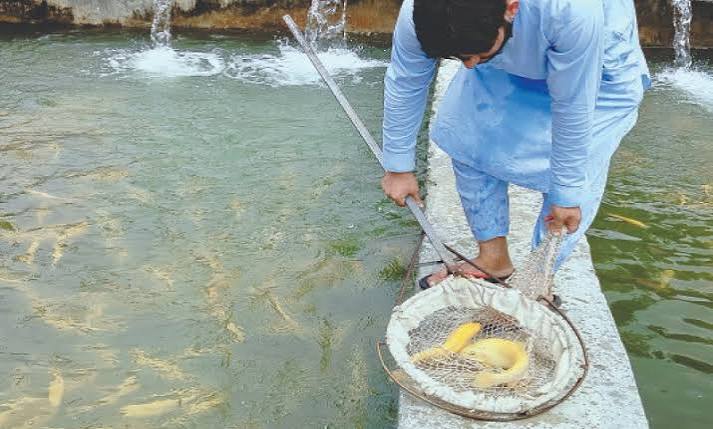
The demand from tourists has helped expand trout farming across Swat, creating livelihoods for farmers, vendors, restaurant workers and others connected with the fish trade.
According to Usman Ali, General Secretary of the Swat Trout Fish Farming Association (STFA), around 160 trout farms operate in the region and provide employment to approximately 3,500 people.
“Trout farming can be highly profitable with the right resources, and the government’s support is crucial to help farmers recover from losses caused by floods and temperature changes,” he said.
He said a farmer with around 35 Marla of land, along with an appropriate water inflow and outflow system, could produce about 2,250 kilograms of trout in 15 months and potentially earn around Rs 3 million in
profit.
Ali also called for incentives for trout farmers and the construction of additional trout lakes, particularly in Malakand and Hazara divisions, where cold-water resources and climatic conditions can support trout farming.
The economic importance of the fish extends beyond individual farms in Kalam and Madain where growing trout industry means more work for fish sellers, transporters, restaurant owners, cooks and other small businesses that benefit from the steady stream of tourists entering Swat.
The government has also been expanding initiatives aimed at developing cold-water fisheries to promote trout farming. Zubair Ali, Director General of the Fisheries Department, told APP that the Trout Village Project (TVP) had been launched in Hazara and Malakand divisions to promote trout farming in Khyber Pakhtunkhwa.
He said around 93 new small and large trout farms had been established in Malakand and Hazara divisions under a 50:50 cost-sharing arrangement between the provincial government and farmers, particularly in Swat and
Mansehra.
A model trout hatchery has also been established at Salathanar Valley in Upper Swat on 15 kanals, with the capacity to produce six million fish seeds annually.
Another project, titled “development of cold water fisheries resources”, is being implemented jointly by the federal and provincial governments under a 40:60 cost-sharing arrangement. Under the project, 297 trout lakes are being established in Malakand and Hazara divisions.
The government has also launched a project focused on developing water reservoirs for fisheries resources.
Under the initiative, 67 carp fish farms and a model hatchery spread over 179 kanals have been established in
Swabi. The hatchery is expected to provide fish seedlings to private hatcheries and Tarbell dam.
With the completion of these initiatives, the fisheries department expects fish production in Khyber Pakhtunkhwa to rise to around 800 metric tons from the existing 440 metric tons over the next few years.
Prof Dr. Salimur Rehman, former Chairman Environmental Science Department at University of Peshawar said the same tourism boom that creates a market for fish can also put pressure on the fragile freshwater ecosystem that trout depends upon.
He said water pollution and climate change are emerging as major concerns for trout farmers and fisheries officials in Swat and Mansehra districts.
The plastic waste and untreated hotel effluent being discharged directly into the River Swat and River Kunhar posed serious risks to freshwater trout, he added.
For a region whose tourism economy depends heavily on clean rivers and scenic landscapes, the issue goes beyond fisheries.
A polluted river can affect fish populations, damage the landscape that attracts visitors and ultimately undermine the tourism economy itself.
The challenge is therefore to ensure that the growing number of visitors does not come at the expense of the natural resources that bring them to Swat in the first place.
The experts has called for a comprehensive mechanism for the disposal of hotel waste and waste-water in the tourism areas of Malakand and Hazara, particularly Swat.
Efforts to protect and expand the trout industry are also receiving support from research, said Zubair.
He said a model cold-water research centre has been established at Madain in Swat, with a fish hatchery and facilities intended to support academia and young researchers studying aquatic resources.
Such research could prove increasingly important as farmers confront changing water temperatures, floods, pollution and other environmental pressures.
For a fish that thrives in cold, clean water, the future of trout farming is closely tied to the future of Swat’s rivers themselves.
As evening falls over Kalam, the mountains turn darker and the temperature drops amid uploading of beautiful videos on social media by tourists.
Along the river, however, the scene of hospitality remains warm at Kalam where a family leans over a shared platter of trout.
Nearby, friends laugh over chappli kababs and naan, restaurant workers carry steaming trout plates to tables while visitors photograph sunset before taking the delectable bites.
For some, it is simply dinner but for others, it is a childhood memory being recreated and for farmers and vendors, it is a livelihood.
For tourism operators, it is another reason for visitors to stay longer and return and for Swat itself, trout has become an edible symbol of the valley’s cold streams, local hospitality and enduring food traditions.
The appeal is perhaps best understood in that simple moment when a visitor sits beside the rushing River Swat, surrounded by mountain air, and reaches for a piece of freshly fried trout during moonlight.
“In Kalam, the stream is cold and the plate is warm,” said ambassador Manzoor.
And for a few precious moments, the two seem to tell the same story of a valley where nature, food, family memories and livelihoods remain closely intertwined.