Every morning, private school vans move through Islamabad and Rawalpindi carrying children to their educational institutions. For parents, the journey is part of the daily routine, but for some children, the short trip to school can bring risks that often go unnoticed.
Moniba Iftikhar
ISLAMABAD, Oct 11 (APP):Every morning, private school vans move through Islamabad and Rawalpindi carrying children to their educational institutions. For parents, the journey is part of the daily routine, but for some children, the short trip to school can bring risks that often go unnoticed.
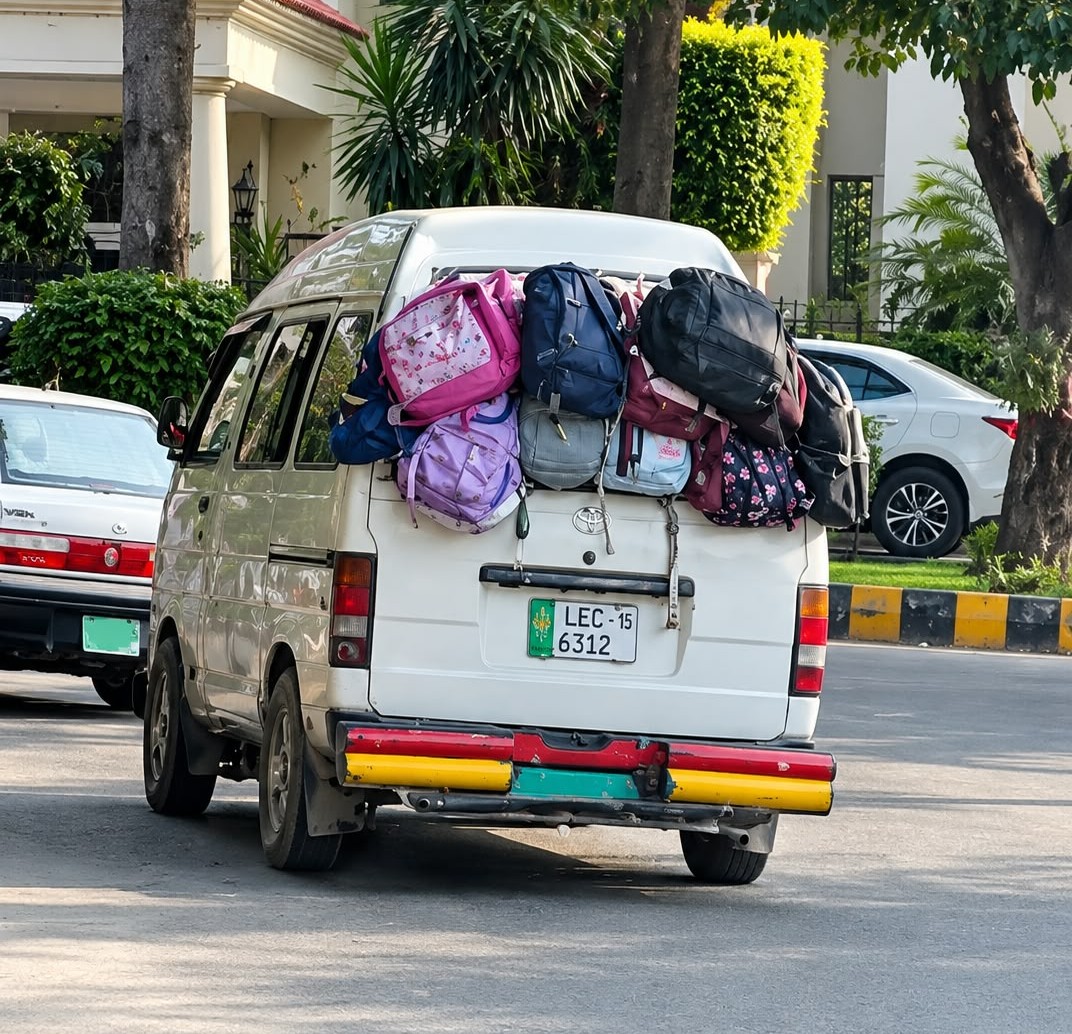
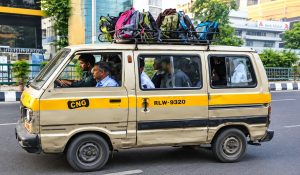
Behind the doors of some vans, children are packed into limited space, schoolbags are placed between seats or hung outside the vehicle and drivers hurry through busy roads to complete their routes on time.
For Class 6 student Yumna, the concern became clear when she reached school one morning without her
schoolbag. The bag had reportedly fallen from the private van somewhere along the route.
Her books, notebooks and homework were gone, while neither the driver nor other passengers noticed the
incident.
Teacher Fouzia of F-10/2 Model Girls College noticed Yumna Amin without her schoolbag and immediately contacted her mother, asking her to speak to the driver and find out where the bag had been lost.
The belongings could be replaced, but the incident raised a more serious question: if a schoolbag could fall from a moving vehicle without anyone noticing, how closely were the children being watched?
Yumna also complained about the limited space inside school vans, saying children often have to share insufficient room with their schoolbags.
She also raised concerns about drivers rushing through traffic, leaving young passengers exposed to risks beyond their control.
For many families, however, private school transport is not a choice but a necessity. Parents leave for work early, while professional and household responsibilities make it difficult to manage school timings themselves. Vans, buses and rickshaws therefore remain an important means of transport for schoolchildren.
Mrs Nayab Ali said repeated encounters with what she described as irresponsible behaviour by school-van drivers eventually led her to arrange the pick-and-drop of her own children.
She said many parents could not make the same arrangement because of work and family commitments and therefore had to depend on school transport.
She stressed that such dependence should not become blind trust and that people entrusted with children must be properly verified and held accountable.
Another parent Arsalan Rao said he had repeatedly seen school pick-and-drop drivers violating traffic
rules.
“Countless times, I have seen van drivers flout traffic rules, yet traffic police often appear to do little to check such deplorable behaviour,” he said.
He said reckless driving was particularly serious when children were travelling inside the vehicle, as a speeding driver was putting the lives of all passengers at risk.
Speaking to APP, Rawalpindi traffic official Lehar Mirza said strict measures were being taken against school-van operators violating traffic and safety regulations, particularly those carrying children beyond the designated seating capacity.
She said a special drive had also been launched against the unsafe practice of allowing schoolbags to hang from the rear or sides of moving vans, warning that such practices could endanger children as well as other road
users.
“We are taking strict action against vehicles carrying children beyond their designated capacity and against drivers violating prescribed safety rules,” she said, adding that violators were being warned and fined.
Lehar Mirza said the issue was not simply about traffic violations but directly concerned the safety and lives of schoolchildren. A school van, she stressed, was carrying children whose safety could not be compromised merely to accommodate additional passengers.
She said vehicles designed for a limited number of children must not be overloaded, as overcrowding leaves children without proper seating and makes it difficult for them to move or protect themselves during sudden braking, collisions or other emergencies.
She also warned against hanging schoolbags outside vans, saying bags could fall onto roads, create hazards for other motorists and pedestrians, or become lost without the children or driver noticing.
Lehar Mirza said traffic officials in Rawalpindi with the directives of Senior Chief Traffic officer Farhan were carrying out checks and would continue enforcement against violators, with warnings and fines being issued where necessary.
She said the special drive was expected to produce better results in the coming days as monitoring was being strengthened.
Alongside enforcement, she said awareness sessions were being conducted in schools to educate students, parents, drivers and school administrations about road safety and responsible school transport.
She urged parents to cooperate with authorities and avoid sending their children in overcrowded or unsafe vans.
“Parents also have a responsibility. If a van is overcrowded, unsafe or the driver repeatedly violates traffic rules, the matter should be reported rather than accepted as part of the daily routine,” she said.
Speaking to APP, Inspector Traffic Rana Ishtiaq Ahmed of the Education Wing of Islamabad Traffic Police said the department had intensified its road-safety campaign around government and private schools in and around the
Capital.
He said police personnel had been deployed near various private schools, while awareness activities were being conducted for students, teachers, parents, drivers and school administrations.
Rana Ishtiaq Ahmed said traffic discipline was not limited to avoiding fines. Pedestrians, particularly children, should be given the right of way at zebra crossings.
He said traffic police encounter around 60 to 80 violators daily, including school-van drivers involved in pick-and-drop services. Depending on the offense, fines ranging from Rs500 to Rs1,500 are imposed, while vehicles failing to meet safety requirements may also face action.
He identified overcrowding as one of the major concerns, saying vehicles designed to carry around 10 children were sometimes found carrying 18 to 20.
Ishtiaq Ahmad also said a strict crackdown was being launched against private pick-ups and vans fitted with rear grills or metal frames used for hanging schoolbags, as such modifications could pose safety risks to children.
He urged parents not to compromise their children’ s safety merely to save money and stressed that drivers must be properly trained and licensed.
Taqi Jawad, Public Relations Officer and official spokesperson for Islamabad Capital Territory Police, said traffic personnel were also warning school-van drivers against over speeding, dangerous manoeuvring, illegal parking, overloading and other violations.
An official of an authorised online school transport service operating in Islamabad and Rawalpindi said safer school transport could be provided through CNIC verification, background checks and police verification of drivers. The service provides parents with real-time journey updates, fixed pick-up and drop-off schedules, controlled passenger numbers and emergency communication.
These measures provide a useful standard for responsible school transport: verified drivers, roadworthy vehicles, proper seating, controlled passenger numbers and communication with parents.
Parents, meanwhile, can ask basic questions before entrusting their children to any vehicle: Who is driving? Is the driver properly licensed and verified? How many children are travelling? Does every child have a seat? Is the vehicle maintained? Are schoolbags secure?
Yumna’ s schoolbag can be replaced. Her books can be bought again and her homework rewritten.
But the incident offers a simple reminder that the journey to school deserves the same attention to safety as the classroom itself.
The school run is a daily responsibility shared by parents, drivers, schools, transport providers and authorities. Each has a role in ensuring that children reach school and return home safely.
Education begins with reaching the classroom safely. For every child travelling to school each morning, that journey should be secure, orderly and worthy of the trust placed in the adults responsible for it.
A bag may be lost and replaced, but a child can never be replaced.