
By Fakhar-e-Alam PESHAWAR, Apr 14 (APP):Before sunrise breaks over Peshawar Valley, fruit seller Zakirullah Khan starts his motorbike and heads toward Chamkani fruit market amid uncertainty caused by repeated violations of the Indus Water Treaty (IWT) by India. For many fruit traders like Zakir Khan, mornings are not just about business or trade of Banana or other fruits but they are about survival of their families to live with dignity …
Banana trade under threat: A Trader’s daily struggle amid IWT violations by India
By Fakhar-e-Alam
PESHAWAR, Apr 14 (APP):Before sunrise breaks over Peshawar Valley, fruit seller Zakirullah Khan starts his motorbike and heads toward Chamkani fruit market amid uncertainty caused by repeated violations of the Indus Water Treaty (IWT) by India.
For many fruit traders like Zakir Khan, mornings are not just about business or trade of Banana or other fruits but they are about survival of their families to live with dignity in society.
An inter-provincial banana trader, Zakir personally oversees the unloading of trucks arriving from Sindh, ensuring the fruit reaches local markets fresh and on time. Assisted by two labourers, he quickly organizes the distribution, sending bananas onward to nearby districts like Nowshera and Charsadda, where demand surges with the arrival of summer. But behind his routine trade activities lies a growing anxiety due to repeated violations of IWT by India since April last year.
“We bring bananas from Sindh province because of their good quality and affordable price,” Zakir says while directing crates onto rickshaws. “But now, everything feels uncertain following IWT’s illegal abeyance.”
Bananas arriving in Khyber Pakhtunkhwa originate from regions like Thatta, Matiari, Mirpurkhas, Sanghar, Badin, Khairpur, Hyderabad, Karachi, Ghotki, Sukkur, and Tando Allahyar—areas heavily dependent on consistent water supply. Any disruption of upstream water ripples directly into Zakir’s livelihood.
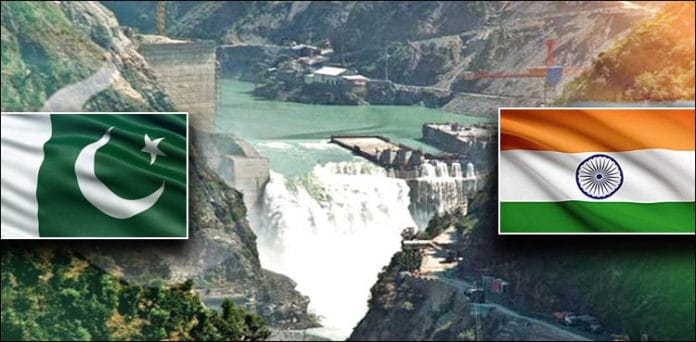
That uncertainty stems from concerns over the Indus Waters Treaty (IWT), a decades-old agreement between Pakistan and India governing river water distribution after the historic treaty was brokered by the World Bank in 1960. Since India announced illegal moves to hold the treaty in abeyance, farmers and traders alike fear the negative consequences of Banana, watermelon, mangoes, citrus and other fruits trade in Khyber Pakthunkhwa and other provinces of Pakistan.
“I have seen worry in the eyes of Banana, Mangoes and Watermelon growers,” Zakir says. “If river water flow is reduced, banana farming will badly suffer—and so will thousands of families like mine in Pakistan.”
Agriculture experts highlighted these concerns and negative effects of reduced water on fruit orchards especially in Sindh and Azad Kashmir besides Punjab. Dr. Abdul Rauf, Director General of Agriculture Research, warned that bananas are especially vulnerable to water shortage. “Banana is a water-intensive crop. Without consistent irrigation, its survival becomes extremely difficult,” he explains.
Traditional banana farming in Pakistan yields around five to six tons per acre and it was also vulnerable to water scarcity. However, modern tissue-cultured varieties can produce significantly higher yields—offering strong export potential. Yet even these advancements depend entirely on reliable water access.
According to the Trade Development Authority of Pakistan, bananas are cultivated on over 32,000 hectares across the country, with most production concentrated in Sindh and South Punjab due to Indus, Chanab and Jehlum’s rivers water.
For a country where agriculture supports millions, water is more than a resource, it is lifeblood and sustained growth.
IWT has long ensured the division of river waters between Pakistan and India, granting Pakistan rights over the western rivers namely Indus, Jhelum, and Chenab amounting to nearly 80% of the total flow on which agriculture and fruits orchards largely depend.
Senior Economist Dr. Muhammad Naeem calls the treaty a lifeline for Pakistan’s agriculture, fruit production, and even apiculture sectors, saying any disruption in river water flow threatens food security for millions of populations, bees and apiculture besides fishing farming in Pakistan,” he says.
The diplomatic experts also emphasize that the treaty is internationally binding on both the countries and no state unilaterally or suspends it . Former ambassador Manzoorul Haq points to the historic rulings by the Permanent Court of Arbitration, which reaffirmed that no country can unilaterally suspend the agreement and IWT is still intact.
He said fascist Modi Govt was using water as a weapon to create hunger and starvation like situation in Pakistan, adding IWT violations was a serious human rights issue. He said India went against international treaties, Geneva convention and World Bank guarantees, urging the international community to look beyond trade interests and force the Modi regime to reverse its decision immediately otherwise another war on water could engulf the entire region.
Back in Chamkani market, Zakir continues his work in relative hot weather, but his thoughts remain elsewhere. For traders like him, the issue of IWT is not just about geopolitics, rather it is about daily bread. A disruption in water supply upstream could mean fewer crops, higher prices, and eventually, loss of income.
“People cannot expect such a negative approach from a big country like India calling itself so called champion of democracy and human rights” he says quietly. “As put millions of people to starvation and hunger suit slogans of Modi Govt.”
As the sun rises and the market grows busier, Zakir loads another batch of bananas, hoping that the rivers keep flowing and with them, his livelihood.

