Muhammad Aslam ISLAMABAD, Aug 30 (APP)::“Aur lijiye, aap takalluf kar rahe hain” (Please have some more; you are being too polite). These are words almost every guest in Pakistan has heard and faced. Before the guest can finish saying no, another serving lands on a plate that is already overflowing, or in a stomach that is already full. It is the familiar Pakistani ritual of feeding …
‘Aur Lijiye’: When Pakistani hospitality becomes food pressure
Muhammad Aslam
ISLAMABAD, Aug 30 (APP)::“Aur lijiye, aap takalluf kar rahe hain” (Please have some more; you are being too polite). These are words almost every guest in Pakistan has heard and faced.
Before the guest can finish saying no, another serving lands on a plate that is already overflowing, or in a stomach that is already full.
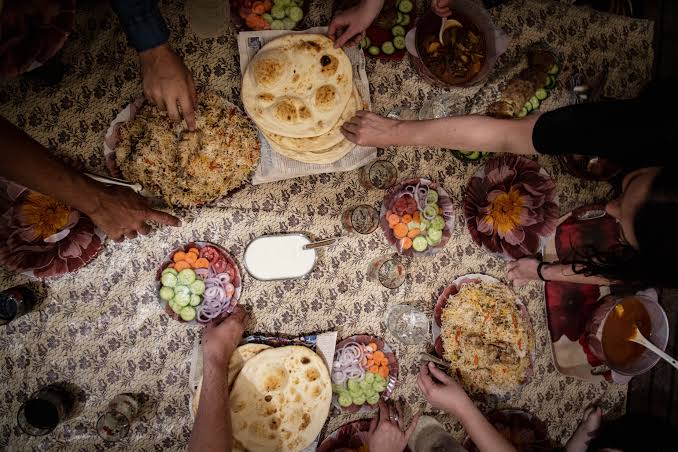
It is the familiar Pakistani ritual of feeding a guest until they finally surrender a battle of hospitality in which the host insists, the guest resists and the food keeps coming.
It starts innocently enough. A visitor walks through the door and is offered tea. “No, thank you,” the guest replies.
“Just one cup,” the host insists. “No, really,” is the guest’s reply.
“Achha, half cup” (Alright, half a cup), and the guest has now surrendered out of courtesy.
The tea arrives with biscuits. Then come samosas. If the guest happens to mention that they have not eaten dinner, the information is immediately treated as an emergency.
Within minutes, the host is discussing biryani, karahi, barbecue or whatever can be made available.
The script is almost always the same: “Bas thora sa aur” (Just a little more). “Aap ne to kuch khaya hi nahi” (You have hardly eaten anything). “Yeh bhi try karein” (Please try this too). “Ghar ka bana hai” (It is homemade).
The guest may have finished one plate, refused another and quietly pushed the plate away, but the host reads the refusal as politeness rather than a final answer.
“Bas, thank you, I’m full,” the guest protests.
“Full? You have hardly eaten anything,” the host replies, already reaching for another kebab.
Dr Tariq Chaudhry, a National Savings official, told APP that Pakistan’s ritual of repeatedly pressing guests to eat is not merely a formality but is also rooted in the belief that guests, out of modesty, often refuse even when they want something, while a lukewarm offer can make the host appear miserly.
Raja Tanvir, CEO of advertising agency Minerva, disagreed, saying, “This ritual needs to end. Guests should stop playing coy and ask for what they want; hosts, in turn, should stop performing generosity and simply say what they can comfortably serve.”
But somewhere between generosity and insistence, the tradition can become pressure.
A guest may be genuinely full yet continue eating simply because refusing another helping feels rude.
At family gatherings, elders may insist that a guest try every dish. In some homes, leaving anything on the plate may be interpreted as dislike, while finishing it can invite another serving.
The result is a peculiar social contest in which the host measures hospitality by how much the guest consumes.
The humour, however, hides a larger problem.
The problem is not hospitality itself, but ignoring the body’s signals.
Dr Ghulam Fareed, a practicing physician, strongly cautioned against forcing a person to eat when they are not hungry or have no genuine desire to eat.
“Overeating or eating without genuine hunger or desire is far more than simply consuming excess food. It can have a powerful and lasting impact on both physical health and psychological well-being, disrupting the body’s natural balance, affecting energy and comfort, and contributing to emotional distress and an unhealthy relationship with food,” he
said.
“When someone says they are full, that should be respected,” the doctor said.
Dietitians also highlights the importance of portion size, particularly at family gatherings where a polite “just a little more” can quickly turn into several additional servings.
Nutrition experts advise people to start with modest portions, eat slowly and pause before accepting a second helping, giving themselves an opportunity to recognize whether they are still hungry or already comfortably satisfied.
Mindful eating places particular importance on paying attention to hunger and fullness cues rather than eating simply because food is available or someone is encouraging another helping.
For guests, nutritionists say, healthy eating does not have to mean rejecting hospitality. A small portion of a dish can be accepted as a gesture of appreciation, while a polite but firm indication that one is satisfied should also be respected.
In this sense, the solution may lie not in ending the tradition of offering food, but in changing the expectation that every offer must be accepted and every refusal must be challenged.
Islamic teachings offer a useful counterbalance to such excess. Religious scholar Allama Zamir-ul-Hassan told this scribe that feeding guests is strongly associated with generosity and good character, but hospitality should not be confused with extravagance or compulsion.
“Islam encourages generosity, but it also teaches moderation. Offering food is hospitality; forcing someone to eat beyond their capacity is not,” he said.
The challenge is knowing where generosity ends and excess begins.
Perhaps the host does not need to count the number of kebabs eaten. Perhaps an empty plate should not be the certificate of successful hospitality. And perhaps “I’m full” should finally be accepted as a complete sentence.
The change could be remarkably simple.
Instead of “Aur lijiye,” one may say, “Jitna dil chahe lijiye” (Have as much as you like).
Instead of measuring affection through quantity, measure it through comfort.
Because the best Pakistani hospitality has never really been about filling someone’s stomach. It has been about making someone feel at home.
And a guest should leave with a full heart, not a food coma, a guilty conscience and a promise to start dieting tomorrow.
After all, hospitality should make people feel welcome, not make them surrender.