
By Fakhar-e-Alam PESHAWAR, Apr 04 (APP):In the narrow streets of Peshawar, in the bustling bazaars of Khyber Pakhtunkhwa, and in the quiet hujras of remote villages, memories of Quaid e Awam Zulfiqar Ali Bhutto remain alive not just as history, but as emotion, identity, and enduring hope. On his 47th death anniversary observed with respect and admiration by his supporters, the remembrance of ZA Bhutto was not confined to formal …
ZAB’s enduring legacy alive despite 47 years
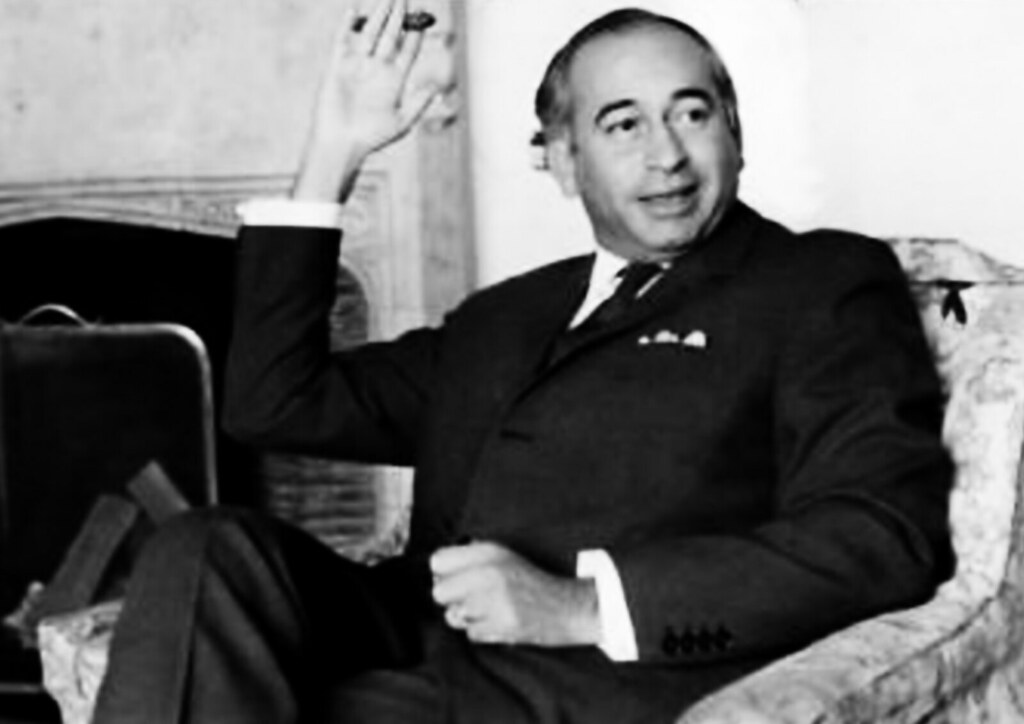
By Fakhar-e-Alam
PESHAWAR, Apr 04 (APP):In the narrow streets of Peshawar, in the bustling bazaars of Khyber Pakhtunkhwa, and in the quiet hujras of remote villages, memories of Quaid e Awam Zulfiqar Ali Bhutto remain alive not just as history, but as emotion, identity, and enduring hope.
On his 47th death anniversary observed with respect and admiration by his supporters, the remembrance of ZA Bhutto was not confined to formal speeches or party gatherings.
It was visible in the eyes of elderly political workers who once saw him speak with grace, in the passion of young activists who never met him, and in the stories passed down like heirlooms across generations.
At a modest gathering in Peshawar’s Tehkal area, 84-year-old Misal Khan, a retired Govt servant, clutched a faded photograph of ZA Bhutto and said. “I was there when he came to Peshawar in the 1970s,” he recalled, his voice trembling.
“The great leader didn’t speak like a ruler but he spoke like one of us–a leader of par excellence.”
For many like Misal Khan, ZA Bhutto was more than a politician and founder of a political party. He was a symbol of dignity for the common man and a leader who made them feel seen and heard.
Across the province of KP, workers of the Pakistan Peoples Party gathered to pay tribute to Quaid e Awam, but the atmosphere was deeply personal.
In Nowdhera, a group of women lit candles and recited prayers, remembering not only Bhutto but also his great daughter, Benazir Bhutto Shaheed, whose legacy remains intertwined with his leadership.
“Bhutto gave us a voice, and Shahid BB gave us courage,” said Shazia Tehmas, a local leader of PPP. “Their sacrifices are not just political but they are part of our lives.”
The leaders of PP expressed similar sentiments while paying tribute to the charismatic leader who accepted gallow but never bow to the dictatorial forces.
Faisal Karim Kundi, Governor of KP, described ZA Bhutto as a leader who gave power to the powerless and laid the foundation of democracy in Pakistan.
He also paid tribute to Shaheed Benazir Bhutto, calling her a continuation of her father’s mission.
Beyond official statements, it is the lived memories that shape Bhutto’s enduring legacy in KP.
Former Federal Minister Dr Alamgir Khan said that ZA Bhutto was removed from politcal scene in a bid to keep Pakistan deprived of democracy and constitutionalism.
Professor Dr. Z.A. Hilali of the University of Peshawar explained why ZA Bhutto still resonates deeply in Pakistan. “He changed the psychological and political landscape of Pakistan as ZAB knew the real power vested in people hands. He told ordinary people that they mattered in democracy and that their voice could shape the country.”
That message found fertile ground in KP, where communities and tribesmen in erstwhileFata long felt marginalized. Bhutto’s visits to the region, and later those of Benazir Bhutto, forged an emotional bond that still holds strong in Khyber Pakhtunkhwa.
In a small tea shop near Qissa Khwani Bazaar, a group of young men debated politics animatedly. None of them were alive during Bhutto’s era, yet his name surfaced repeatedly in their conversation.
“We read a lot about Quaid e Awam’s great services and hear about his love for Pakhtoons from our elders,” said 24-year-old Zeeshan Khan. “But it feels like we know him. Leaders today are compared to him that tells you everything.”
For older generations, the memories are sharper, often tied to defining national moments such as 1973 Constitution, labour reforms, and a sense of pride on the international stage.
For the younger generation, ZA Bhutto represents an ideal of fearless leadership, political acumen and public service.
His life story, too, continues to inspire many. From his education at Christ Church College Oxford to his rise as a populist leader, Bhutto’s journey reflects ambition fused with strong political conviction.
His decision to found the PPP reshaped Pakistan’s political landscape, creating a platform that many in KP still identify with.
After his execution in 1979, the torch passed to his wife Nusrat Bhutto and later to Benazir Bhutto, whose return to Peshawar in December 2007 drew massive crowds—an event still remembered vividly by the residents.
On December 1, 2007, when she came to Peshawar during her election campaign amid “Geye Bhutto and Long Live Benazir” full throated slogans from hundreds of thousands of PPP supporters, BB said, I seek your help and cooperation to turn this land of Pashtuns into a peaceful zone.
“I appeal to you not to fall into the trap of those, who believe in violence and extremism. Reject those who want to form their government at gunpoint. I ask my Pashtun brothers to come forward for peace and support the People’s Party.”
Today, that legacy continues through PPP Chairman Bilawal Bhutto Zardari, who has vowed to carry forward the mission of his grandfather and mother who lived for people and died for them. Party supporters in KP see this continuity as a promise that the ideals they cherish will not fade.
But perhaps the most powerful tribute lies not in speeches or political pledges, but in the quiet, persistent remembrance among ordinary people.
As the sun set over Peshawar on Saturday, candles flickered in small gatherings, and prayers were offered in homes and mosques. In those moments, Bhutto was not just a figure of the past but he was a presence in the present.
“Leaders come and go,” said Misal Khan, still holding his photograph. “But some become part of your soul. Bhutto Sahib is one of them.”