A lack of proper pedestrian pathways in cities across South Punjab is turning walking into a daily struggle for residents, pushing many to rely on motorcycles even for short, everyday journeys.
Muhammad Atif Ismail
MULTAN, October 4 (APP) :A lack of proper pedestrian pathways in cities across South Punjab is turning walking into a daily struggle for residents, pushing many to rely on motorcycles even for short, everyday journeys.
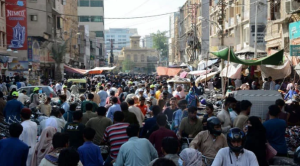
From visiting a nearby shop to buying vegetables or travelling to work, people often struggle to walk safely along busy roads where footpaths are missing, poorly maintained or buried under encroachments, leaving pedestrians exposed to traffic and making even the shortest journey a difficult and risky experience.
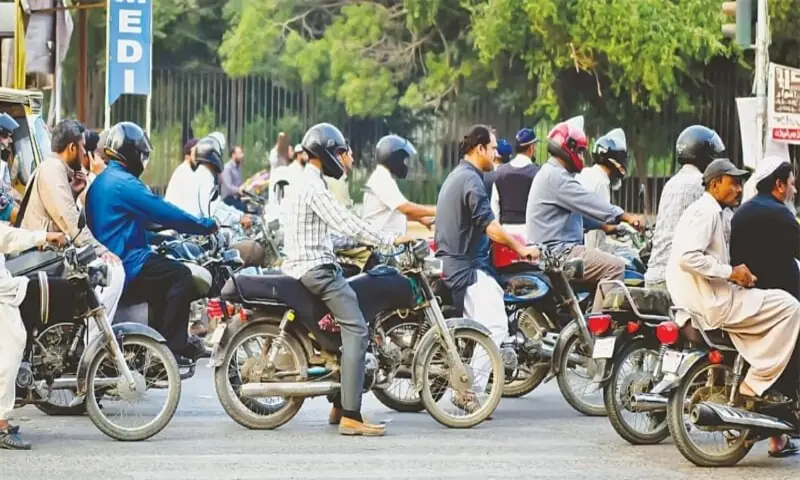
As a result, walking is gradually losing its place in daily urban life, while motorcycles have become a common choice for even the shortest trips.
Across Urban South Punjab, only some roads have designated footpaths and even these do not always provide a continuous and accessible route. In many places, pedestrians encounter broken surfaces, parked motorcycles, shop displays and other obstructions that leave little room to walk.
On roads without footpaths, they are often forced to share space with moving traffic, making routine journeys uncomfortable and potentially dangerous.
For many residents, walking has consequently become an activity reserved mainly for parks rather than a practical way to reach nearby destinations.
People can be seen exercising in parks during the morning and evening, but considerably fewer appear to choose walking for ordinary tasks such as visiting a market, going to a shop or travelling to a nearby workplace.
Muhammad Rashid Qureshi, a resident of Pul Bararan (Multan), says he usually walks in a park but uses his motorcycle even when going out to buy vegetables.
“Many roads do not have footpaths. Even where they exist, they are often not properly maintained. In several places, encroachments leave almost no space for pedestrians,” he says.
He adds that walking along busy roads makes him feel uneasy because he remains concerned about the possibility of an accident involving passing traffic.
His experience highlights a practical problem faced by many urban residents: walking may be a convenient option in terms of distance, but the absence of safe pedestrian routes can make it an unattractive choice.
Muhammad Amjad, another citizen from Nawabpur road, points to Bosan Road, one of the city’s major thoroughfares, where footpaths are present along some stretches but missing from others.
Despite the road’s considerable width, he says, the lack of continuous pedestrian pathways makes walking difficult. He also believes that the growing number of motorcycles has contributed to a change in people’s daily habits.
Amjad describes this change as a cultural shift, arguing that people increasingly prefer motorcycles even for short journeys. However, he stresses that walking remains important for personal health and that residents need suitable infrastructure if they are to make it part of their everyday routines.
His observations raise an important question: can people be encouraged to walk when the streets around them offer little safe space to do so?
The issue goes beyond individual preferences. A road designed primarily to accommodate moving and parked vehicles serve motorists while creating difficulties for people travelling on foot.
The availability of a footpath on one section of a road is not enough if it ends abruptly, is blocked by encroachments or fails to connect pedestrians safely to shops, markets, public transport stops and other
destinations.
For older people, children, persons with disabilities and those accompanying young children, these gaps can make walking particularly challenging. Broken surfaces, missing ramps, unsafe crossings and poor street lighting can further limit access to public spaces.
The shortage of pedestrian pathways also has implications for public health. Walking to nearby destinations provides an opportunity to incorporate physical activity into daily life without setting aside a separate time for exercise. When people depend on motorcycles for almost every journey, some of these opportunities may be lost.
This is particularly relevant for people living with diabetes and other conditions for which regular physical activity can form part of a healthy lifestyle. Parks remain valuable places for exercise, but safe footpaths can help people remain active during ordinary daily routines as well.
The environmental impact is another consideration, said Muhammad Adnan Jandran, an environmentalist. Motorcycles and other vehicles contribute to fuel consumption, traffic emissions and noise. Although road transport is only one part of the wider urban pollution problem, making short journeys on foot a realistic option could help reduce some unnecessary motorized trips, he suggested.
Adnan, however, expecting residents to change their habits without improving street conditions would overlook a central part of the problem. Public awareness about walking and healthy lifestyles can have limited effect when people cannot reach their destinations safely on foot.
Multan Development Authority (MDA) says it conducts regular operations against encroachments and has a dedicated wing working to address the issue.
Such action can help restore public space, but maintaining pedestrian access also requires regular monitoring, repairs and measures to prevent cleared footpaths from being occupied again.
The responsibilities of urban development authorities, municipal bodies and other relevant departments need to be clearly coordinated. New road projects should provide appropriate pedestrian facilities, while existing roads require assessments to identify missing pathways, dangerous crossings and sections obstructed by encroachments.
Footpaths also need to be designed for practical use. Continuous, level and accessible pathways, supported by safe crossings and suitable street lighting, can make walking easier for a wider range of residents. Where space is limited, authorities need to plan how roads can safely accommodate pedestrians alongside other users.
Similarly, shopkeepers, vendors and vehicle owners also have a role in keeping pedestrian routes clear. At the same time, authorities need consistent enforcement and practical arrangements for parking and commercial activity so that public pathways remain available for their intended purpose.
Better pedestrian infrastructure can also support public transport. People travelling by bus or other shared services often need to walk to and from their stops. If these routes are blocked or unsafe, using public transport becomes less convenient, even when the service itself is available.
For South Punjab’s cities including Vehari, Khanewal, Loudhran, Muzaffargarh, Layyah and others, the challenge is therefore not simply to build more roads or accommodate more vehicles. It is also to ensure that residents can move around their neighbourhoods safely, including when they choose to walk.
The experiences shared by Rashid Qureshi and Amjad suggest that the growing reliance on motorcycles cannot be understood solely as a matter of personal preference. The condition and availability of pedestrian pathways also influence the choices people make every day.
For South Punjab’s urban centers, restoring space for pedestrians is not merely a matter of road design. It is an opportunity to make everyday journeys safer, support healthier lifestyles and create streets that serve people on foot as well as those travelling on two wheels.