By Fakhar-e-Alam PESHAWAR, Jul 19 (APP):Kashmiris residing in Pakistan and Azad Jammu and Kashmir (AJK) on Sunday observed Accession to Pakistan Day, reaffirming their strong commitment to continue struggle for the right to self-determination and urging the international community to play a more active role in resolving the longstanding Kashmir dispute imperative for lasting peace and stability in South Asia. Observed annually on July 19, the day commemorates the 1947 …
Kashmiris observe Accession to Pakistan Day, renew call for implementation of Kashmir resolution
By Fakhar-e-Alam
PESHAWAR, Jul 19 (APP):Kashmiris residing in Pakistan and Azad Jammu and Kashmir (AJK) on Sunday observed Accession to Pakistan Day, reaffirming their strong commitment to continue struggle for the right to self-determination and urging the international community to play a more active role in resolving the longstanding Kashmir dispute imperative for lasting peace and stability in South Asia.
Observed annually on July 19, the day commemorates the 1947 resolution adopted by the All Jammu and Kashmir Muslim Conference in Srinagar, which declared the accession of the erstwhile princely state of Kashmir to Pakistan, citing its Muslim-majority population and geographical contiguity.
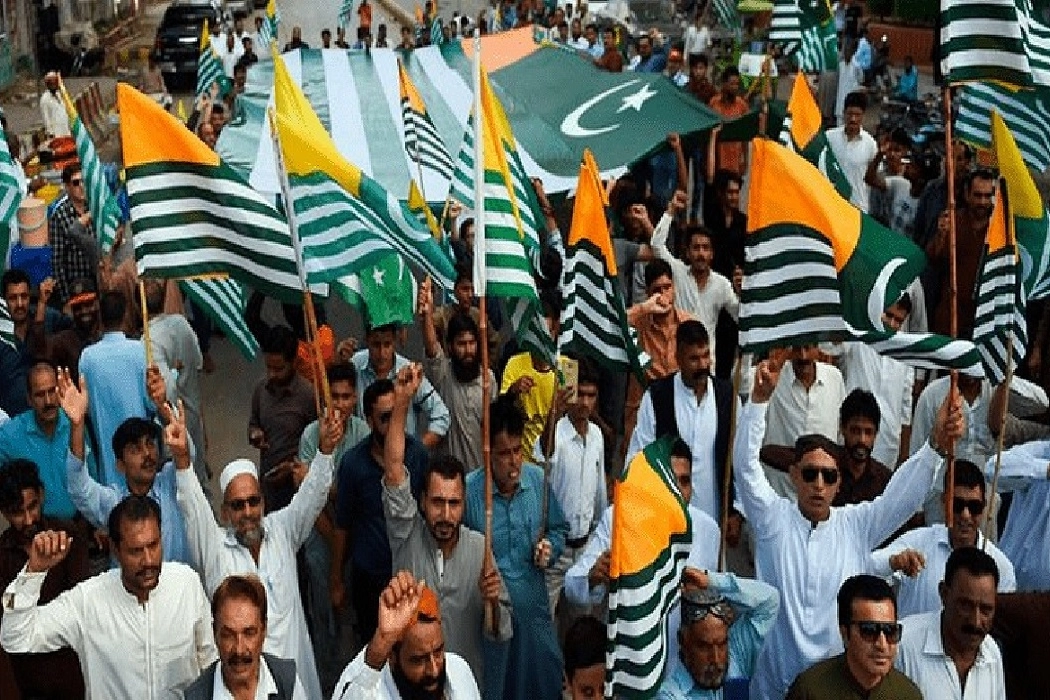
Rallies, seminars, public gatherings and walks were organized across Pakistan including Khyber Pakhtunkhwa and Azad Jammu and Kashmir to mark the significant occasion.
Participants carried placards and banners expressing support for Pakistan and calling for implementation of United Nations Security Council resolutions on Kashmir.
Speakers at the events reiterated that the people of Kashmir would continue their struggle until achieving freedom from Indian yoke.
Vice Chairman of the Jammu and Kashmir Peoples League, Mushtaq Ahmed Shah, said Kashmiris on both sides of the Line of Control had observed the day with renewed resolve to continue their movement for right of self-determination and accession to Pakistan.
He said that Indian occupied forces have unleashed terror in IIOJ&K where they intensified night raids, house searches and arrests without courts warrants,, creating an atmosphere of fear among the civilian population.
“Indian occupation forces, often accompanied by sniffer dogs, conduct house searches under the pretext of security operations, causing great distress to women, children and elderly residents,” he claimed.
Referring to the revocation of the special constitutional status of Jammu and Kashmir by the Indian government on August 5, 2019, Mushtaq Shah said the political and security situation in the territory had further deteriorated in IIOJ&K where India broke all records of oppressions.
Despite an increasingly restrictive environment and heavy military presence at IIOJ&K, he said that Kashmiris had continued their freedom movement for self-determination in the held valley that was turned to a large prison of modern era.
He said educational institutions, businesses and places of worship function under strict surveillance, while many families fear sending their daughters to schools, colleges and public places due to security concerns in IIOJ&K.
Mushtaq Shah said that excessive use of force by Indian occupied army, including the use of live ammunition, pellet guns and sniper fire had resulted in civilian casualties and injuries. The fake encounters, enforced disappearances and violence against women had become recurring features in IIOJ&K.
Referring to the 2019 report of the UN Office of the High Commissioner for Human Rights (OHCHR), he claimed that the document highlighted human rights violations in the occupied territory, including the excessive use of force against peaceful Kashmiris.
He also criticized the Armed Forces (Jammu and Kashmir) Special Powers Act (AFSPA) and the Public Safety Act (PSA), claiming that the laws provide sweeping powers to the Indian occupied forces and allow detention without trial.
Mushtaq Shah further criticized restrictions imposed on political leaders, citing the burial of veteran Hurriyat leader Syed Ali Geelani at night without religious rituals and the illegal imprisonment of Muhammad Yasin Malik in a fake case, describing both as examples of India’s repression.
The issuance of domicile certificates to non-residents after 2019 was aimed at altering the demographic composition of IIOJK.
Citing Pakistan’s 2021 dossier on Kashmir, Mushtaq Shah referred to figures relating to an unmarked graves, arbitrary arrests, torture, pellet gun injuries, sexual violence, widows and orphaned children.
He claimed the use of cluster munitions and human shields along the Line of Control, condemning what he described as attacks against Muslims in the Indian state of Tripura while mosques and businesses had been targeted by extremist groups.
Former Chairman of the Department of International Relations at the University of Peshawar, Dr. Ejaz Khan, said India’s uncalled for actions in Jammu and Kashmir constituted violations of international human rights principles and called on the international community to prioritize the Kashmiris issue before its flames engulfed entire region.
“It is time for the international community to move beyond economic interests and take meaningful steps to ensure protection of human rights in Kashmir,” he said.
Dr. Ejaz Khan urged major world powers to press India to reverse the illegal constitutional changes introduced on August 5, 2019, and facilitate a peaceful resolution of the Kashmir dispute in accordance with the aspirations of the Kashmiri people.
Expressing concern over regional security, he warned that unresolved tensions over Kashmir could threaten peace in South Asia, noting that Pakistan and India had already fought multiple wars over the dispute.
The speakers also referred to the military confrontation between Pakistan and India in May last year, claiming Pakistan had responded effectively to Indian aggression during the conflict.
They called upon the United Nations and influential world powers to play a more proactive role in resolving the Kashmir dispute in accordance with relevant UN Security Council resolutions.
The participants concluded that a peaceful settlement of the Kashmir dispute remains essential for lasting peace, stability and economic prosperity across South Asia.
The participants raised full throated slogans in favour of Pakistan.