
By Fakhar-e-Alam PESHAWAR, Jun 08 (APP):Before dawn breaks over Peshawar, when most of the city is still asleep, 30-year-old taxi driver Kamal Khan is already on the road amid rising temperature. His destination is not a workplace or a market instead, he heads towards a water filtration plant to collect clean drinking water — a daily journey that has become a lifeline for his family. With four plastic tanks tied …
As water runs dry, new dams offer lifeline to KP amid rising temperature
By Fakhar-e-Alam
PESHAWAR, Jun 08 (APP):Before dawn breaks over Peshawar, when most of the city is still asleep, 30-year-old taxi driver Kamal Khan is already on the road amid rising temperature.
His destination is not a workplace or a market instead, he heads towards a water filtration plant to collect clean drinking water — a daily journey that has become a lifeline for his family.
With four plastic tanks tied carefully on his taxi, Kamal travels several kilometers every morning before returning to his home, where 12 family members depend on the clean water he brings.
“My father had passed away from a cancer and the whole burden of family comes on me,” Kamal recalled, wiping sweat from his forehead under the scorching summer sun. “The water in our area has become unsafe. What I bring home every day is not a luxury items rather an essential commodity ie water for our survival.”
For Kamal, the cost is more than fuel, food and time. The daily task consumes hours that could otherwise be spent earning income. Yet he said he has no choice but to wake early for clean water to save my siblings of water-borne diseases.
“If we drink the local water, children get sick. We have seen stomach infections, fever and skin problems in the past. Clean water has become as important as food and air for us,” Kamal reiterated.
His painful story mirrors the reality faced by thousands of families across Peshawar’s outskirts, including Tarnab, Akbarpura, Taru, Amankot, Khuderzai, Babay Jadeed, Tarkha, Korvi and Khushmaqam, where residents struggled to secure safe drinking water amid rising temperatures and shrinking water resources in KP.
Health experts warned that waterborne diseases such as cholera, hepatitis A and diarrhea caused by untreated sewage system, industrial discharge, leak water pipes and agricultural runoff often contaminate rivers and groundwater sources that exposed poor people to these life threatening diseases in KP.
Kamal said the devastating floods of 2022 left behind more than destroyed homes and damaged roads rather they altered water tables, contaminated wells and weakened already fragile water infrastructure in most parts of Khyber Pakhtunkhwa.
“We used to draw water from our village hand pumps without worry,” said Sidra Bibi, a resident of Khush Maqam tehsil Pabbi. “Now we boil water, filter it and still fear it may not be safe. Families spend a significant portion of their income just to buy clean water,” she reiterated.
“My only demand of our lawmakers are clean drinking water,” she said, adding delay in potable water plants’ establishment will put lives of many at risks in Nowshera, Peshawar and Charsadda districts.
According to water experts, nearly 90 percent of Peshawar and Nowshera population still relies on unfiltered water sources, exposing many to serious health complications.
In affluent neighborhoods such as posh Hayatabad and University Town in Peshawar, residents are increasingly depending on private water tankers despite paying municipal taxes. Aging pipelines, leakage and decades-old infrastructure in several areas of interior city have reduced the reliability of public water supplies.
“Water scarcity is no longer a problem limited to the villages but emerged a problem for city dwellers,” said Sumbul Riaz, an economist while talking to APP. “It has become a city-wide challenge affecting rich and poor alike,” she reiterated.
Khyber Pakhtunkhwa enacted the Water Act in 2020 to improve regulation and management of water resources. However, experts argued that implementation remains weak.
“The law was an important step, but institutions responsible for enforcement needs to work actively especially in its implementation on ground,” Sumbul Riaz said. “Without an effective Water Resources Regulatory Authority, illegal water extraction by car washing pumps, wastage and poor planning continue largely unchecked in KP.”
She said that Pakistan’s per capita water availability has also declined over the decades due to climate change, deforestation and lack of dams. The excessive pumping of water by car washing stations in Peshawar and adjoining districts caused downing of water table, she claimed.
“We have fallen from over 5,000 cubic meters per person in the 1950s to nearly 1,000 cubic meters today. That is a warning sign. Climate change, declining rainfall and excessive groundwater extraction are pushing us closer to water stress,” she said.
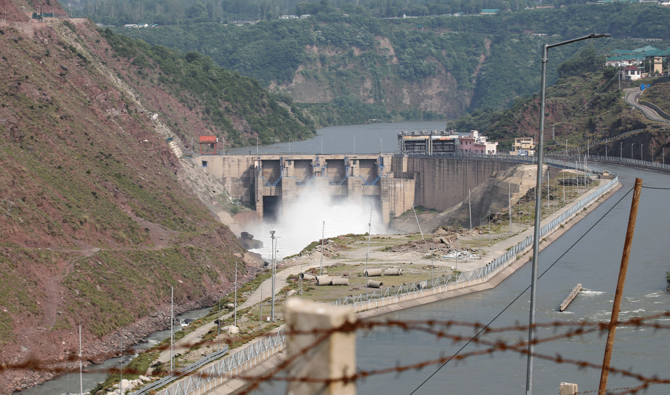
Against this grime water backdrop, a series of water storage and hydropower projects are generating optimism among residents and policymakers. Foremost among them is the Mohmand Dam, one of Pakistan’s largest hydropower and water storage projects currently under construction on river Swat.
Standing 213 meters high, Mohmand dam is expected to become the world’s fifth-tallest concrete-faced rockfill dam upon completion. Wapda officials said the project will store about 1.29 million acre-feet of water, irrigate thousands of acres of agricultural land and provide approximately 300 million gallons of clean drinking water daily to Peshawar.
Beyond drinking water, it will help protect districts such as Charsadda, Peshawar and Nowshera from devastating floods while generating affordable electricity. For residents like Kamal, such water projects offer a rare source of optimism for water scared KP.
“If the dam can bring clean water directly to our homes, it will change our lives,” he said. “Our children deserve a better future where they do not have to worry about every glass of water they drink.”
Alongside mega water projects, the provincial government is investing in dozens of smaller dams designed to meet local needs more quickly. The spokesman of Directorate of Small Dams KP said that about 56 small dams have already been completed across the province. Together, they can store more than 281,000 acre-feet of water and irrigate over 300,000 acres of agricultural land.
Small dams are particularly suited to KP’s mountainous terrain besides cost-effective and that it can be completed within a few years and directly benefit local communities.
He said work is progressing on around 30 additional small dam projects in districts including Kohat, Karak, Lakki Marwat, Swabi and Nowshera. Moreover, eight hydropower projects have already been completed, generating around 172 megawatts of electricity and producing huge annual revenue.
Projects including the 84-MW Gorkin Matiltan hydropower project in Swat and 40.8-MW Koto Hydropower Project in Dir will help provide clean water to the locals. Despite the optimism surrounding new dams and hydropower projects, experts cautioned that infrastructure alone cannot solve the water challenges.
“Storage projects are important, but they must be environmentally sustainable,” Sumbul Riaz reiterated. “Issues such as sedimentation, displacement of communities and equitable water distribution require careful planning and execution.”
Environmental experts also stressed the need for stronger regulation of groundwater extraction and greater public awareness about water conservation in KP. “If illegal boreholes and unchecked commercial water usage continue, the pressure on groundwater reserves will remain severe,” said Dr. Salimur Rehman, former Chairman of the Environmental Sciences Department at the University of Peshawar. “Infrastructure must be complemented by responsible management and public participation.”
As temperatures continue to soar across Khyber Pakhtunkhwa, residents remained hopeful that a combination of dams, improved governance and public awareness can help avert a deeper water crisis in the province.
For Kamal Khan, however, the challenge remains immediate and required urgent attention of KP Govt to tackle. As he secures the ropes around his water tanks and prepares for another journey home, his words reflect the deep concerns of countless families across the province.
“We need clean water just like fresh air,” he said. “It should not be a privilege for those who can afford it. Every person deserves access to safe drinking water in KP.” His daily struggle serves as a strong reminder that behind every policy, project and statistic are ordinary people whose lives depend on something such as clean glass of water for all.