
PESHAWAR, Jan 04 (APP):As Pakistan’s population crosses 245 million mark last year, the pressure on its most precious water resource is becoming impossible to ignore in the wake inadequate snowfall. From shrinking forests, lack of snowfall per-capita shortage in availability groundwater and recurring floods, the country is facing a deepening water crisis that threatens public health, agriculture, and food security, particularly under the growing impacts of climate change and global …
When winter doesn’t freeze: How population growth, warm weather squeezing water supplies in KP
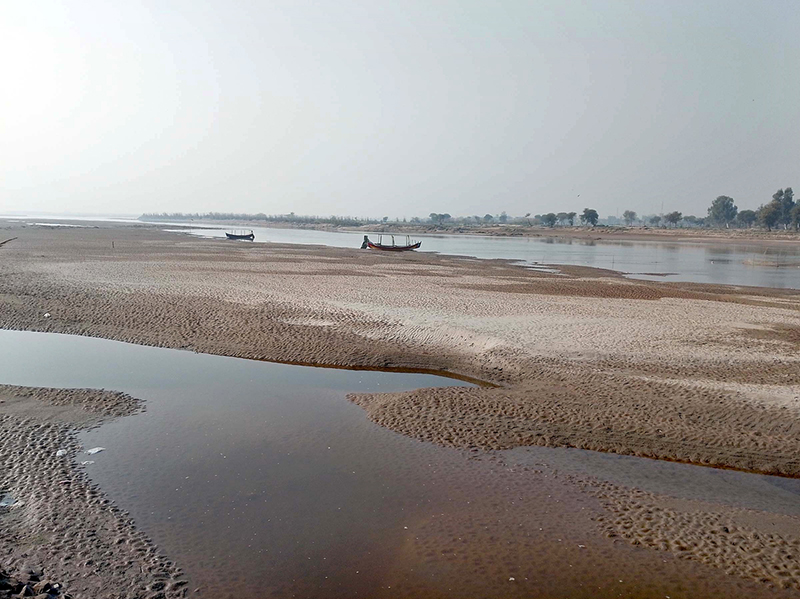
PESHAWAR, Jan 04 (APP):As Pakistan’s population crosses 245 million mark last year, the pressure on its most precious water resource is becoming impossible to ignore in the wake inadequate snowfall.
From shrinking forests, lack of snowfall per-capita shortage in availability groundwater and recurring floods, the country is facing a deepening water crisis that threatens public health, agriculture, and food security, particularly under the growing impacts of climate change and global warming.
In Khyber Pakhtunkhwa’s densely populated districts of Swabi, Mardan, Nowshera, Peshawar and Charsadda districts, the human cost of water crisis is visible every day amid rising population bulge.
People in Nowshera’s tehsil of Pabbi were seen bringing clean water from different filtration plants after underground water became heavy due to 2010 and 2022 floods.
“There is no letup in our miseries to bring water from Pabbi after water table in our village became heavier after 2022 floods,” said Riazul Haq, a resident of Nowshera.
The issue was brought into the notice of our elected lawmakers but no solid efforts were made in this regard, he said.
Riazul Haq said the devastated floods did not just wash away homes and crops they also severely damaged underground aquifers in these districts. In many villages, groundwater turned unsafe, forcing families to search far and wide for potable water.
Husain Khan, a poor farmer from Mohib Banda village in Nowshera, begins his day long before sunrise not in the fields, but on the road.
“I travel nearly eight kilometers daily just to fetch clean drinking water,” he said. “The water in our village wells is no longer safe. We have no other option.”
Hussain’s struggle is echoed across nearby towns, where residents depend on urban centers such as Pabbi, Charsadda and Peshawar for drinking water. What was once a basic necessity available at the doorstep has become a daily burden, especially for women and children.
The health consequences are equally alarming. Malik Riaz Khan, a senior children’s specialist at Government Hospital Pabbi, warns that contaminated water is silently harming the most vulnerable especially children.
“Cases of diarrhea, cholera and other waterborne diseases increase whenever water quality declines,” he explained.
“Long-term consumption of polluted water also contributes to malnutrition and stunted growth among children, as well as health complications for lactating mothers.”
Experts say the roots of the water crisis go beyond floods and contamination.
Professor (retd) Dr. Naeem Khattak of the University of Peshawar points to alarming national indicators.
He said Pakistan ranks 14th among 170 countries facing extremely high water risk. While the population is expected to exceed 400 million by 2050, water demand is projected to rise to 274 million acre-feet (MAF), far exceeding the estimated supply of 191 MAF.
“Per capita water availability has fallen dramatically from over 5,200 cubic meters in the early 1960s to near water-scarce levels today,” Dr. Naeem said. “By the next few years, it may drop below 860 cubic meters.”
He also highlighted systemic inefficiencies: Pakistan treats only about one percent of its wastewater, among the lowest rates globally, while nearly 40 percent of water is lost through seepage, spillage, leakage and poor canal management.
Agriculture, the backbone of Pakistan’s economy, consumes nearly 97 percent of freshwater resources. Without timely interventions, experts warn that around 30 percent of agricultural land could become waterlogged and another 13 percent saline in coming years that will further undermining food security in a warming climate marked by rapid glacier melt, shortage in snowfall and frequent floods in Khyber Pakhtunkhwa.
Tauheed Khan, former Conservator of Forests, believes the failure to build dams after Tarbela has severely weakened Pakistan’s water management capacity.
“Globally, more than 46,000 dams have been constructed. China alone has over 22,000 and Pakistan, unfortunately, has built only around 150 small and large dams since independence.”
According to Tauheed, small dams offer a practical and cost-effective solution, particularly for provinces like Khyber Pakhtunkhwa.
“Small dams can be completed within two to three years and do not require massive foreign investment,” he said. “By 2050, Pakistan will need an additional 76 MAF of water, and small dams are the fastest way to bridge this gap.”
The urgency of the situation is reflected in the National Water Policy 2018, which warns that Pakistan is rapidly transitioning from a water-stressed to a water-scarce country. Surface water availability has already dropped from 5,260 cubic meters per person in 1951 to around 1,000 cubic meters in 2016.
There are, however, signs of progress. The Directorate of Small Dams KP reports that 56 small dams with a combined storage capacity of over 281,000 acre-feet have been completed.
Another 30 dams are under construction, while several projects including Jaroba Dam in Nowshera and Pezu Dam in Lakki Marwat are nearing completion.
On a larger scale, mega projects by Federal Government such as the 800-MW Mohmand Dam are expected to be game-changers. Once completed, it will store 1.293 MAF of water, irrigate thousands of acres, supply 300 million gallons of drinking water daily to Peshawar, protect downstream districts from floods, and generate clean electricity worth billions of rupees annually.
For families like Hussais Khan’s, these projects represent more than statistics they offer hope. Hope that clean water will once again flow from village taps, that children will grow healthier, and that Pakistan can secure its future against the twin threats of overpopulation and climate change.