
Threads of tradition: Peshawar’s wool workers battle inflation through craftmanship
Threads of tradition: Peshawar’s wool workers battle inflation through craftmanship
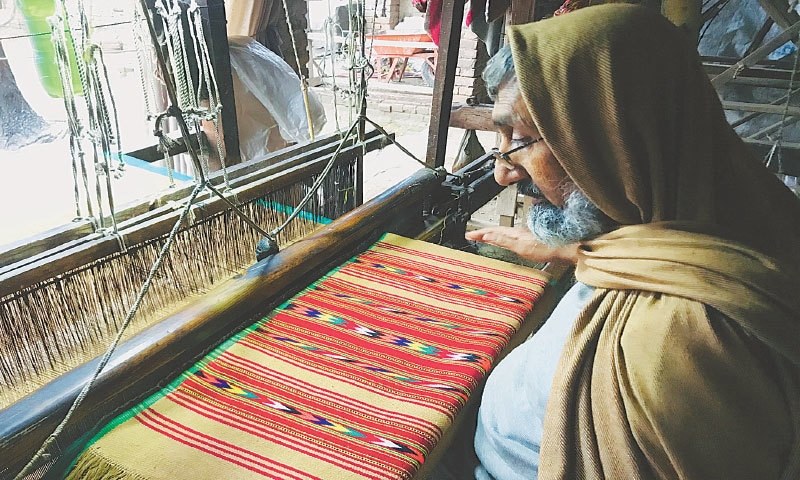
PESHAWAR, Nov 16 (APP): As the cold winter breeze sweeps through the winding alleys of old Peshawar, the centuries-old Jehangirpura and Qissa Khwani bazaars awaken with a familiar rhythm flooded with wool garments, attracting customers in droves.
Their narrow passageways, which once trodden by caravans and storytellers, is now burst into life with a mosaic of wool jackets, coats, sweaters and shawls draped from every stall and stacked on every shoulder.
For hundreds of families arrived from different cities of Khyber Pakthunkhwa, these garments are not merely seasonal goods but they are a lifeline for underprivileged and poor families to protect themselves of biting cold.
Among the chorus of shopkeepers calling out to passing customers, 25-year-old Hussain Khan stands out at Qissa Khwani bazzar on Sunday.
His warm smile, gentle voice, and quiet determination have earned him a reputation in the historic bazaar not just as a vendor, but as a symbol of hope and resilience for many unemployed youth.
Every morning, long before the city stirs, Hussain leaves his home in Pabbi, Nowshera, riding his motorcycle through the fog-thick roads toward Peshawar’s historic markets.
What awaits him there is both his workplace and his refuge that is a modest corner where he arranges heaps of second-hand wool jackets, coats, and sweaters, which are treasures for those seeking affordable protection against the cold.
“I lost my parents when I was very young,” he said softly, folding a heavy coat while attending to a customer. “The loans I took for their medical treatment left me with nothing. Selling used jackets and sweaters became my only option to survive.”
For the past ten years, Hussain has weathered life’s storms selling coats in the winter and Peshawari chappals in the summer. Each sale earns him roughly Rs. 300, barely enough to get by. Yet he dreams of one day opening a small shop of his own near Qissa Khwani Bazaar, a dream he safeguards with the same care he gives to his neatly folded garments.
As winter tightens its grip on the city of artisans, Peshawar’s readymade garment markets transform into bustling hubs. Low-income families, daily wage earners, farmers, drivers, underpaid employees and middle-class shoppers from across Khyber Pakhtunkhwa flood these bazaars, searching for warmth that fits within their limited budgets.
“People trust second-hand garments for quality and cost efficient,” said shopkeeper Waheed Khan, who has spent two decades in Jehangirpura. “They are affordable, durable, warm and cost a fraction of what new ones do.”
Market surveys back his claim as imported second-hand jeans is priced Rs. 400–500, shirts Rs. 300–400, sports shoes Rs. 600–800, used coats Rs. 1,000–1,200 versus Rs. 7,000–10,000 new, jackets available at Rs. 1,500–2,000 versus Rs. 4,000–5,000 new.
Even these low prices, traders say, are threatened by rising rents, electricity tariffs, and increased import duties in Khyber Pakhtunkhwa.
“The quality of used jackets is often better than new clothes,” said Sajid Ali from Nowshera, patiently sorting through a pile of coats. “You just need the patience to find the right piece.”
For parents like Nasir Khan from Wapda Town, second-hand markets are more than a preference rather they are a necessity. “Children outgrow their clothes every season,” he said while examining a pair of shoes. “Here we can afford warm clothing for the whole family.”
In Peshawar, the rise of second-hand clothing tells a larger story as one woven with economic hardship and climate vulnerability.
According to Dr. Zilkat Malik, former Chairman of the Economics Department, University of Peshawar, Pakistan’s imports of second-hand clothing surged to $511 million in FY 2024–25, up from $434 million the previous year.
“This reflects growing poverty, regional security challenges, and economic inequality,” Dr. Malik said. “The 2022 floods, rising population, and unequal distribution of resources have pushed families toward Sasta bazaars. These markets are not just commercial centers rather they are mirrors of our economic reality.”
The World Bank estimates that nearly 45% of Pakistan’s population now lives below the poverty line in the aftermath of the floods, making affordable clothing essential for survival.
While imported second-hand clothing dominates winter markets, efforts are underway to revive Pakistan’s traditional wool craftsmanship. A spokesman for SMEDA KP said the government is pushing programs under the National Wool Development Programme (NWDP) to promote local wool crafts from Chitral Chugha and Jinnah caps to handmade wool shawls.
The initiative spans the entire wool value chain from improved rangeland management and sheep vaccination to shearing services, carpet weaving, and sweater making.
Experts believed promoting woolen sheep breeds from Chitral, Kohistan, Malakand, Swat, and Balochistan could boost exports and generate valuable foreign exchange.
Despite the challenges, hope thrives in these markets. Each sale whether of a heavy coat or a simple wool sweater keeps alive not only a vendor’s livelihood but also the centuries-old spirit of Peshawar’s bazaars.
As the winter sun dips behind the old city’s skyline, shoppers continue to haggle, vendors continue to smile, and voices echo through the labyrinthine lanes.
For traders like Malayar, every folded coat is more than merchandise but it’s a testament to survival, perseverance, and hope.
In Peshawar’s wool trails, warmth is found not just in the used garments, but in the human stories stitched into every thread at Qissakhwani.