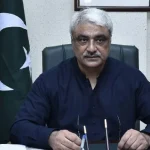
Former Azad Jammu and Kashmir (AJK) president and Pakistan’s former ambassador to the United States, China and the United Nations, Sardar Masood Khan, has called for sustained diplomatic efforts, credible security arrangements and a political settlement to end the Ukraine war, stressing that lasting peace must address the legitimate concerns of all parties while safeguarding Ukraine’s sovereignty.
Sardar Masood Khan calls for diplomatic settlement of Ukraine war, urges credible security guarantees

MIRPUR, Oct 30 (APP):Former Azad Jammu and Kashmir (AJK) president and Pakistan’s former ambassador to the United States, China and the United Nations, Sardar Masood Khan, has called for sustained diplomatic efforts, credible security arrangements and a political settlement to end the Ukraine war, stressing that lasting peace must address the legitimate concerns of all parties while safeguarding Ukraine’s sovereignty.
He was speaking at the launching ceremony of Ukraine War: Beyond the Headlines, authored by Munir Ahmed, at the Russian Embassy in Islamabad on Friday. Congratulating the author, Sardar Masood Khan said the conflict had far-reaching implications for global politics, security and the economy. He appreciated the book’s comprehensive analysis of the historical, political, security and economic dimensions of the war, including NATO expansion, Russia’s security concerns, the Donbas conflict, economic sanctions, military assistance, energy markets and food insecurity.
He observed that understanding Moscow’s strategic perspective was essential for meaningful diplomacy, while any lasting settlement must also protect Ukraine’s sovereignty and security and address the concerns of other European countries. Highlighting the humanitarian cost of the conflict, he called for civilian protection, unrestricted humanitarian assistance, humane treatment of prisoners of war and the safety of nuclear facilities. He also urged major powers to exercise restraint, maintain communication and pursue negotiations on strategic stability, arms control and reducing the risk of escalation.
Referring to the Black Sea Grain Initiative, he said practical humanitarian agreements, prisoner exchanges, protection of critical infrastructure and restoration of commercial maritime traffic could help build confidence and create opportunities for broader negotiations. He said the United Nations, Türkiye, China and other countries maintaining contacts with the parties could facilitate such efforts. He added that disruptions to grain, fertiliser, energy and maritime supplies were also affecting developing countries, including Pakistan.
Highlighting Pakistan-Russia relations, Sardar Masood Khan called for expanded cooperation in trade, investment, energy, agriculture, pharmaceuticals, engineering, technology, research and regional connectivity. He said improved maritime links, commercially viable trade corridors through Central Asia and educational and cultural exchanges could strengthen bilateral ties. He described the book as an important contribution to intellectual debate on global security and the emerging international order, while thanking the Russian Embassy for hosting the event and expressing hope for a new phase of enhanced Pakistan-Russia cooperation.