ISLAMABAD, Sep 27 (APP):The School of Politics and International Relations (SPIR) at Quaid-i-Azam University (QAU), in collaboration with the Hanns Seidel Foundation (HSF), hosted yesterday a one-day conference titled “Democracy, Devolution, and Plural Structures of Governance in Pakistan and South Asia”. This conference brought together leading academics from across South Asia to explore the processes of democratization and devolution in the region. The event began with an inaugural address by …
QAU holds conference on ‘Democracy, Devolution, & Plural Structures of Governance in Pakistan and South Asia’
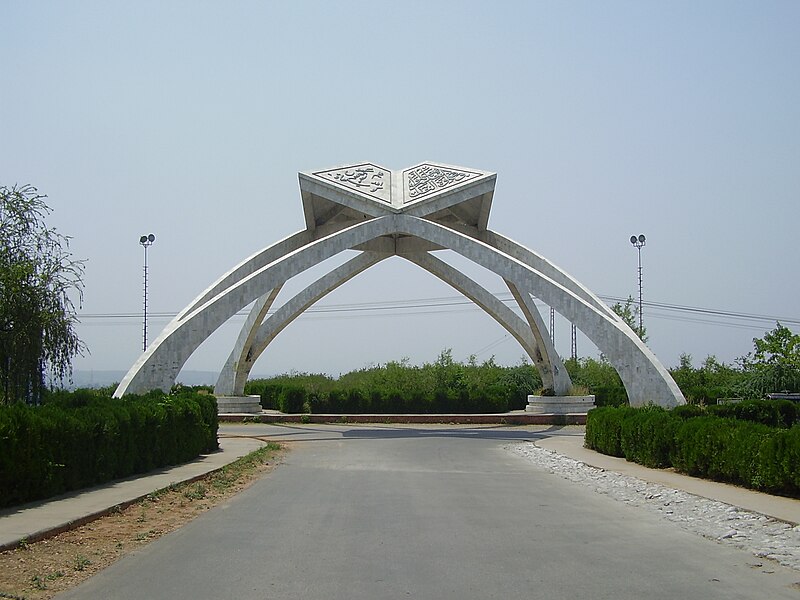
ISLAMABAD, Sep 27 (APP):The School of Politics and International Relations (SPIR) at Quaid-i-Azam University (QAU), in collaboration with the Hanns Seidel Foundation (HSF), hosted yesterday a one-day conference titled “Democracy, Devolution, and Plural Structures of Governance in Pakistan and South Asia”.
This conference brought together leading academics from across South Asia to explore the processes of democratization and devolution in the region.
The event began with an inaugural address by Dr. Zafar Nawaz Jaspal, Dean of Social Sciences at QAU, who emphasized the significance of democratization in Pakistan.
He noted that the conference was particularly meaningful as it featured the participation of four generations of professors and students.
Dr. Muhammad Waseem, a renowned political scientist, former Chairman of SPIR, and current professor at Lahore University of Management Sciences (LUMS), delivered the keynote address.
He focused on the impacts of the 18th Amendment and the challenges facing federalism in Pakistan.
Dr. Waseem stated that despite some devolution of power, Pakistan’s federal structure remains centralized, creating an imbalanced federation.
He stressed the importance of pluralism and provincial representation, cautioning that separating issues of ethnicity from territoriality often fuels political tensions.
The first panel, titled “Conceptual and Theoretical Foundations of Democracy, Devolution, and Diversity Accommodation,” was moderated by Prof. Dr. Zafar Nawaz Jaspal.
Dr. Ejaz Hussain, Associate Professor at the Lahore School of Economics, presented data-driven insights on democratization and autocratization in the Global North and South.
He noted that the world is witnessing a global democratic backsliding, with an increasing number of states exhibiting autocratic tendencies. Dr. Asma Faiz, Associate Professor at LUMS, discussed centripetalism and consociationalism as governance methods for accommodating diversity.
She explained that while consociationalism rewards maintaining ethnic identity, centripetalism fosters interdependence between multi-ethnic parties, shaping democratic systems in diverse societies.
In his talk, Professor Dr. Syed Riffaat Hussain from the National University of Sciences and Technology (NUST) addressed the destabilizing impact of emerging technologies on the global order. He warned that the decay of the rule-based international system, especially in the West, is leading to a growing sense of disorder and anarchy.
The second panel, led by Dr. Farhan Hanif Siddiqi, Associate Professor at SPIR, focused on “Democratization in Post-Colonial States,” particularly in South Asia. Dr. Muhammad Mujeeb Afzal, Assistant Professor at SPIR, QAU, analyzed the complexities of democratization and party politics in South Asia.
He noted that the region includes both well-organized and poorly functioning democracies, where client-patron relationships dominate politics, economies are weak, and most countries remain dependent, with India being a partial exception.
Dr. Jehan Perera, Executive Director of the National Peace Council of Sri Lanka, discussed the challenges of majoritarianism and ethnic minority accommodation in Sri Lanka, emphasizing the need for inclusive political spaces for ethnic minorities.
He highlighted how strong group affiliations continue to shape Sri Lanka’s political landscape.
Mr. Shoaib’s presentation on “Elite Competition and Democracy in Nepal” underscored the country’s ongoing political instability, with frequent changes in government—three interim governments in just three years.
He argued that intense elite competition undermines democratic progress, keeping Nepal in a state of political flux.
Dr. Hussain Shaheed Soherwordi, Professor at the University of Peshawar, discussed state formation and nation-building in Afghanistan.
He expressed concerns about the centralized governance structure under the Taliban and previous regimes, noting that such centralization hinders effective political and institutional development in the country.
The third panel, moderated by Dr. Muhammad Nadeem Mirza, Associate Professor at SPIR, QAU, examined “Democracy, Devolution, and Diversity Accommodation in Pakistan.”
Dr. Aisha Younus, Assistant Professor at SPIR, QAU, used a poststructuralist lens to explore the interplay of culture, identity, and democracy in Pakistan.
She emphasized how the national identity discourse is shaped by dominant forces, particularly Islam, which serves as a central element in the country’s political framework.
Dr. Younus called for new narratives that resonate with Pakistan’s diverse population to foster democratic change.
Mr. Zafarullah Khan, a parliamentary expert, discussed the Council of Common Interests (CCI) and the National Finance Commission Award (NFC).
He highlighted the controversies and challenges of decentralization in Pakistan. He argued that central governance has lost legitimacy in public service delivery and advocated for greater resource devolution to local governments.
He proposed increasing the number of provinces and shifting fiscal responsibility directly to local governments to improve governance and conflict management.
Dr. Manzoor Ahmed, Pro-Vice Chancellor of the University of Gwadar, focused on the political economy of provincial and local governments in Pakistan.
He emphasized that while devolution is constitutionally mandated, it remains incomplete, and a truly ‘functional federal structure’ is needed to sustain the federation.
Dr. Ahmed highlighted the imbalanced distribution of resources, with the federal government collecting the majority of revenue and controlling a significant portion of expenditures, leaving little for provincial and local governments.
The conference concluded with remarks from the Dr. Summar Iqbal Baber, who thanked the participants and panelists for their insightful contributions to the discussions.
Overall, the conference provided a valuable platform for addressing the challenges and opportunities of democratization, devolution, and governance in Pakistan and South Asia.