
Mohalla Sethian: A home to Mughal-era architectural jewels emerge magnet for tourists
Mohalla Sethian: A home to Mughal-era architectural jewels emerge magnet for tourists
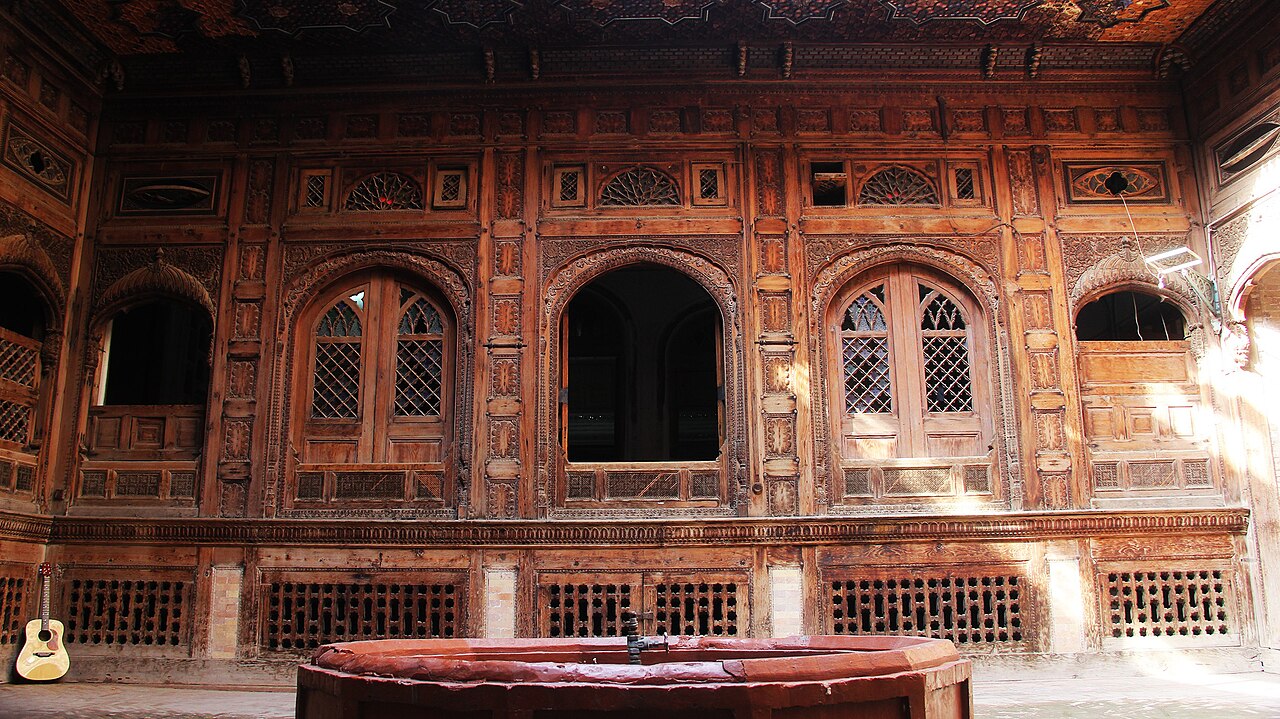
PESHAWAR, Jan 04 (APP): Despite a blanket of winter fog hovering over Peshawar’s historic walled city, young tourist Malaika Bibi could barely contain her excitement after visiting the historic Mohalla Sethian.
The seventh-grade student, who nurtures a deep love for architecture and archaeology, was finally standing in Mohalla Sethian, a home to some of the finest surviving Mughal-era residential architecture in the region.
Recently renovated under Peshawar heritage conservation initiative, Mohalla Sethian boasts dozens of historic houses famed for their intricate woodwork, colorful glass panels, and exquisite craftsmanship.
The neighborhood has rapidly emerged as a magnet for tourists, students, and heritage enthusiasts amid enjoying the mouthwatering cuisines of Chappli Kabab, Seth Kabab, Grilled Fish and Chicken Nehari with Qehwa.
Among its architectural gems, the iconic Sethi House stands out is a home to architecture masterpieces. Visiting the site with her parents, Malaika was visibly awed by the house’s rare design, elegant courtyards, and fine wooden carvings that reflect a blend of Mughal and Central Asian architectural traditions.
Upon entering the mohalla, visitors pass through a five-foot-high wooden gate that opens into a spacious courtyard, complete with a central water fountain being an evocative reminder of an era when the residence welcomed traders, dignitaries, and guests from far-off lands.
Built by Sethi Karim Bakhash on 33 marlas of land, construction of the house began in 1835 and took nearly half a century to complete, finally reaching completion in 1886 during the colonial period. The structure comprises three levels includes a basement, a central courtyard, and an upper floor.
“Seeing this architectural marvel of Peshawar was my childhood dream that has come true today. A big thank you to my papa,” said Anaya, another young visitor at Sethi House as her enthusiasm evident as she admired the ornate gate and wood craftsmanship.
She said that the Sethi House, inspired by Islamic and vernacular architecture of Bukhara, Uzbekistan, has immense potential to attract foreign tourists if promoted effectively through digital media.
The Sethi family, originally traders who migrated from Jhelum in the early 19th century, established themselves in Peshawar and constructed around seven havelis in Mohalla Sethian.
Their extensive trade links with Central Asia influenced the architectural style of their homes, reflecting both affluence and refined aesthetic taste.
Associated with the wood and furniture trade, the family introduced innovative architectural concepts that remain evident in the Sethi House which is an enduring symbol of their love for Islamic architecture and design.
However, the family’s fortunes declined in the early 20th century following the Bolshevik Revolution, which disrupted trade routes and introduced new currencies in the Soviet Union.
“The Sethis faced severe economic setbacks and were eventually compelled to sell their houses,” explained Bakhtzada Khan, Assistant Director at the Archaeology and Museums Department.
Inside the house, visitors marvel at the mehrabs adorned with small glass shelves once used to place candles, creating a star-like glow at night.
The ceilings, crafted in pure Islamic style, captivate viewers, often holding their gaze for long stretches.
“Buildings like the Sethi House are built once in centuries. They represent the true identity of Peshawar and deserve international recognition,” said tourist Riaz Khan from Nowshera.
Four spacious rooms surround the central courtyard, connected through passageways and opening onto windows fitted with vibrant red and green glass imported from Belgium. The glasswork, reminiscent of post-Renaissance European churches, adds a unique artistic dimension.
The floral patterns carved into doors, arches, and windows reflect the unmatched skill of artisans of that era. “These details are a testament to the extraordinary craftsmanship and patience of the workers,” Bakhtzada added.
From the first-floor balconies, visitors enjoy cool breezes and panoramic views of Peshawar which is one of South Asia’s oldest living cities, with over 3,000 years of recorded history.
The basement features well-ventilated living spaces, with angled wooden ventilators designed to allow natural light throughout the day.
“Sethi House is a model of early green architecture,” said Gaffar Ali, Senior Architect at the Communication and Works Department. “Its ventilation and design principles remain relevant even today.”
Despite being over a century old, the structure remains remarkably intact, underscoring the durability and quality of its construction.
Purchased by the Khyber Pakhtunkhwa government in 2006, the Sethi House was restored and converted into a museum in 2010. Its conservation was carried out under the Cultural Heritage Trail Project (CHTP), which revitalized a 500-meter stretch from Ghanta Ghar to Gor Gathri.
The trail passes through Bazaar-e-Kalan and Mohalla Sethian, restoring nearly 85 heritage buildings from the Mughal, Sikh, and British eras, and reviving Peshawar’s historic grandeur.
As young visitors like Malaika and Anaya walk through these corridors of history, Mohalla Sethian stands not merely as a collection of old houses but as a living classroom, inspiring future generations to value and preserve Pakistan’s architectural heritage.