
PESHAWAR, Jan 26 (APP):Another positive chapter in the conservation and sustainable management of wildlife in the scenic Arkari Valley has been written, as local hunter Zeeshan Nasir from Lower Chitral successfully trophy-hunted a Himalayan Ibex. According to the Spokesman Department of Climate Change, Forest, Environment and Wildlife, Latifur Rehamn, the hunt is carried out under the rules, strict supervision, and transparent procedures set by the Khyber Pakhtunkhwa Wildlife Department during …
Local hunter hunts Himalayan Ibex at scenic Arkari valley of Chitral
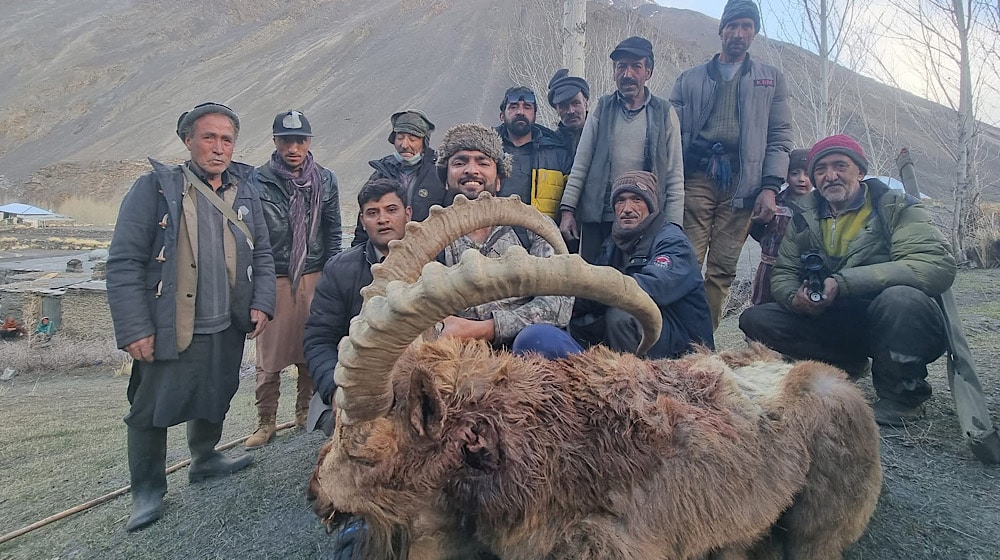
PESHAWAR, Jan 26 (APP):Another positive chapter in the conservation and sustainable management of wildlife in the scenic Arkari Valley has been written, as local hunter Zeeshan Nasir from Lower Chitral successfully trophy-hunted a Himalayan Ibex.
According to the Spokesman Department of Climate Change, Forest, Environment and Wildlife, Latifur Rehamn, the hunt is carried out under the rules, strict supervision, and transparent procedures set by the Khyber Pakhtunkhwa Wildlife Department during the ongoing trophy hunting season.
The license fee for this hunt was Rs 25,000 while the trophy hunting permit fee was set at US $ 550, the spokesman added.
The age of the hunted Himalayan Ibex was about 10 years old, while its horns were recorded at 43.5 inches, which is considered a significant and remarkable size by international standards.
The hunting of this type is limited to only old and relatively out-of-breed animals, so that the natural balance of the population and genetic continuity can be maintained, he added.
The spokesperson further said that effective conservation measures, continuous monitoring, the activity of anti-poaching squads, and the partnership of the local community have resulted in a clear increase in the population of Himalayan ibex in the Arkari Valley. This progress is a testament to the fact that conservation and partnership go hand in hand.
Under the provincial trophy hunting policy, 80 percent of the revenue generated from hunting is directly transferred to the local village conservation committees.
This money is spent on projects at the local level, such as education, health, clean water, road improvement, employment opportunities, and other basic amenities, which not only enhances public welfare but also make the local people the practical guardians of wildlife conservation.
Environmentalists and local elders have described the trophy hunting program as a successful and replicable model of sustainable tourism, rural development, and biodiversity conservation.
They say this model is a manifestation of the fact that when the value of nature is linked to economic stability, forests, mountains, and wildlife are all protected, and a new narrative of harmony between humans and the environment is born.