
ISLAMABAD, Nov 20 (APP):Journalists have been urged to highlight country's population challenges through evidence-based reporting to strengthen public awareness, promote accountability and support the population stabilisation objective. The call was made during a meeting of the Media Coalition on Population, organised by the Population Council in collaboration with the United Nations Population Fund (UNFPA) under the theme, “From Commitment to Compliance: Media Accountability for Pakistan’s Population Stabilisation Agenda.” The meeting …
Journalists urged to highlight population challenges through evidence-based reporting
ISLAMABAD, Nov 20 (APP):Journalists have been urged to highlight country’s population challenges through evidence-based reporting to strengthen public awareness, promote accountability and support the population stabilisation objective.
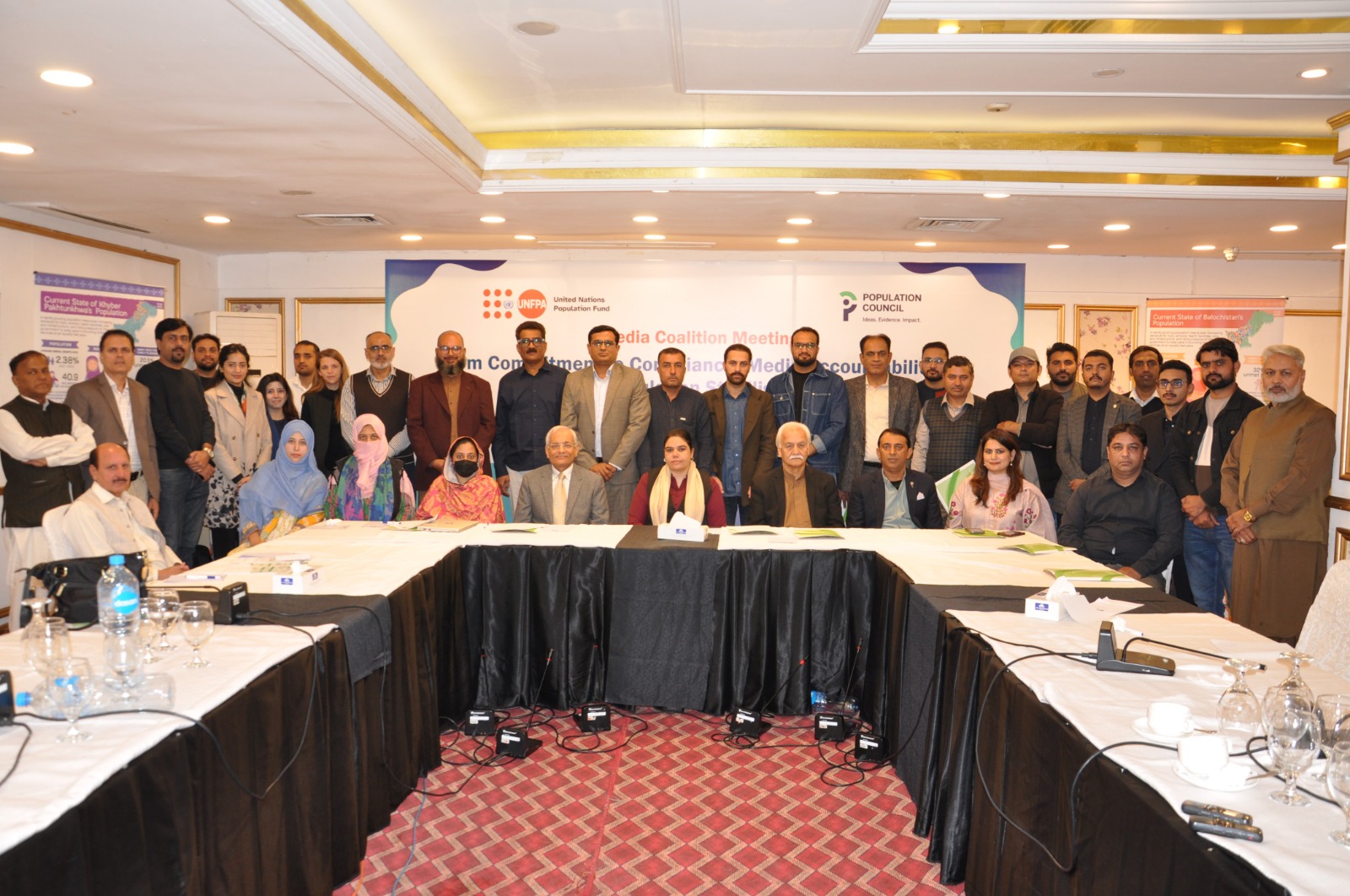
The call was made during a meeting of the Media Coalition on Population, organised by the Population Council in collaboration with the United Nations Population Fund (UNFPA) under the theme, “From Commitment to Compliance: Media Accountability for Pakistan’s Population Stabilisation Agenda.”
The meeting brought together journalists from national, provincial and regional media to discuss the role of responsible journalism in highlighting population-related challenges and translating national commitments into practical action.
Welcoming the participants, Dr. Ali Mir, Country Director, Population Council, said that Population stabilisation must be viewed through the lens of human development.
“Journalists can help elevate issues such as maternal and child health, unmet need for family planning, mortality, education and women’s empowerment by bringing evidence and lived experiences into public discourse,” he added.
He also highlighted the importance of literacy, women’s education, skills development and economic participation in improving family wellbeing and enabling informed reproductive choices.
Speaking as guest of honour, Senator Jan Muhammad Buledi, member of the Senate Standing Committees on Information and Broadcasting, Poverty Alleviation and Social Security, and Devolution, underscored the need for sustained public engagement and investment in human development.
He said access to healthcare, education and livelihood opportunities was essential to creating an enabling environment for informed family planning decisions and improving the wellbeing of families and communities.
The participants noted that with 67 per cent of Pakistan’s population under the age of 30, the country had a significant opportunity to turn its youth bulge into a demographic dividend through sustained investment in education, skills development, healthcare, women’s empowerment and employment.
The meeting also highlighted the need to monitor progress towards national population targets, including reducing population growth and fertility levels by 2035, while addressing financing gaps in the implementation of population commitments, particularly limited releases from the Population Fund.
The Population Council shared innovative approaches to expanding access to family planning services, including public-private partnerships and the Karain Zindagi Asaan voucher initiative, implemented in collaboration with the Benazir Income Support Programme in Rahim Yar Khan, which had demonstrated positive results in increasing contraceptive uptake among low-income families.
To support informed reporting, the Council identified key areas requiring greater media attention, including unmet need for family planning, short birth intervals, contraceptive discontinuation, low contraceptive prevalence and persistently high fertility rates.
Journalists also discussed barriers to accessing services, community engagement, the role of Lady Health Workers and the potential of mass media to inform and empower families.
The meeting concluded with a commitment to strengthen collaboration between researchers and journalists, with the Population Council offering data, research and technical support to facilitate informed public discourse on population and development.

