From remote to reachable: Motorways open markets for KP’s entrepreneurs
From remote to reachable: Motorways open markets for KP’s entrepreneurs
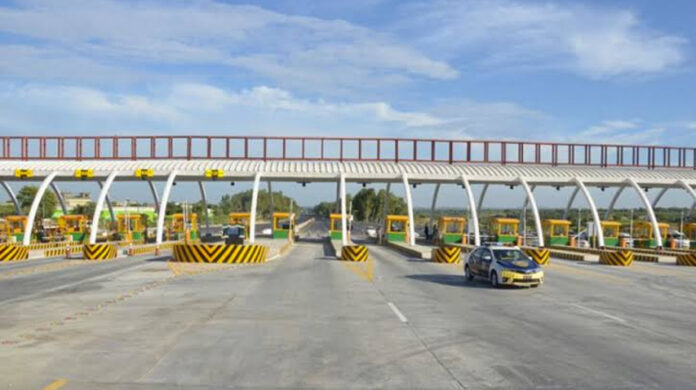
PESHAWAR, Jan 11 (APP): As dawn breaks over Amankot town in Nowshera district, Ibrahim Shah turns the ignition of his pickup truck and heads toward Mansehra via Peshawar Motorway.
For the poultry trader, Saturdays have become synonymous with opportunity made possible by the smooth ribbon of asphalt stretching across northern Khyber Pakhtunkhwa.
“Earlier, the journey used to take long hours on broken GT roads,” Ibrahim says, adjusting his Chitrali woollen cap before setting off. “Now, with the Hazara Motorway and Peshawar Motorway, I reach Mansehra quickly, save fuel, and bring back fresh stock at lower cost by Saturday evening.”
The travelling and cost difference has been transformative. Faster travel and reduced transportation expenses have allowed Ibrahim to expand his business. Encouraged by steady profits, he is now planning to open a second office at Pabbi Bazaar.
Ibrahim’s story mirrors a broader transformation underway in Khyber Pakhtunkhwa (KP), where modern motorways and connectivity projects are reshaping lives, livelihoods, and local economies under the China-Pakistan Economic Corridor (CPEC).
Strategically located at the crossroads of South and Central Asia, KP stands to gain immensely from large-scale infrastructure development.
One of the most significant upcoming initiatives is a 42.3-kilometre link road connecting the Bannu Link Road (N-55) with the Hakla–Yarik–Dera Ismail Khan Motorway (M-14), a flagship project under CPEC’s western alignment.
According to a spokesperson of the Pakhtunkhwa Highways Authority (PkHA), the project being developed under a Public-Private Partnership (PPP) model will provide faster and safer access to the national motorway network for residents of Bannu, Karak, Lakki Marwat and adjoining areas.
“This road will integrate southern KP with major routes leading to Islamabad and Punjab,” the spokesperson told APP. “It will boost mobility, trade, and investment while offering the same modern connectivity enjoyed by other parts of the country.”
Under the PPP arrangement, the private partner will finance, construct, and operate the road, while the government may provide viability-gap funding and regulatory support. Once completed, travel across the region is expected to become smoother, significantly reducing journey times and transportation costs.
The impact of modern highways is already visible. The 285-kilometre M-14 motorway has slashed travel time between Islamabad and southern KP from more than five hours to nearly three.
“This kind of connectivity changes everything,” says Professor Dr Zialakat Malik, former Chairman of the Economics Department at the University of Peshawar. “CPEC is truly a game-changer, especially for Khyber Pakhtunkhwa.”
He notes that southern districts of KP are rich in mineral resources, fertile agricultural land, and fruit orchards.
“With better roads like the N-55 Bannu link, these resources can finally reach national and international markets efficiently,” he adds.
Dr Malik points to a major milestone achieved on September 26, when the 14th meeting of the CPEC Joint Cooperation Committee (JCC) was held in Beijing.
The meeting, he says, marked a shift in CPEC’s trajectory from an infrastructure-led programme to a comprehensive, productivity-driven development partnership.
“CPEC is no longer just about roads and power plants,” he explains. “It now connects infrastructure with competitiveness, industrial modernisation with human development, and growth with climate resilience.”
With Phase-I addressing Pakistan’s energy shortages and building core infrastructure, Phase-II—often referred to as CPEC 2.0—focuses on high-quality development. This phase aligns with President Xi Jinping’s vision and Pakistan’s national transformation roadmap, URAAN Pakistan, anchored in the 5Es Framework: Exports, E-Pakistan & Innovation, Energy & Infrastructure Efficiency, Environment & Climate Resilience, and Equity & Empowerment.
Under CPEC 2.0, five interconnected corridors—growth, livelihood, innovation, green, and openness—are guiding development. Special Economic Zones (SEZs) such as Rashakai, Dhabeji, Bostan and Allama Iqbal Industrial City are being positioned to attract investment in textiles, electronics, engineering goods, automobiles and agro-processing.
“These zones can help Pakistan move from low-value production to export-oriented growth,” Dr Malik says, noting Pakistan’s ambition of becoming a $1 trillion economy by 2035.
The initiative also extends into the digital and innovation space, with cooperation in artificial intelligence, cloud computing, fintech, 5G connectivity, and university–industry partnerships. For Pakistan, this presents an opportunity to leapfrog into the Fourth Industrial Revolution.
Equally important is the focus on green development. Renewable energy projects, climate-resilient agriculture, electric mobility, and water management systems form the backbone of CPEC’s Green Corridor. “For a climate-vulnerable country like Pakistan, clean energy is not a luxury—it’s a survival imperative,” Dr Malik emphasizes.
At its core, CPEC 2.0 places people at the centre. Livelihood initiatives include vocational training for youth, improved healthcare access, clean drinking water, women-focused skills programmes, and modernised agriculture aimed at increasing farmer incomes.
“These efforts reduce regional disparities and strengthen human security,” Dr Malik says. “Every training centre, farm project, or upgraded school adds a human dimension to economic growth.”
As Pakistan and China approach the 75th anniversary of diplomatic relations in 2026, CPEC’s evolution reflects a deepening partnership—one that seeks to turn connectivity into competitiveness and growth into shared prosperity.
Back in Nowshera, Ibrahim Shah’s pickup ruturns back on motorway by Saturday evening, carrying crates of poultry and the promise of a better future. For him and for many poultry dealers across KP, the road ahead has looked more hopeful courtesy to motorways network.