
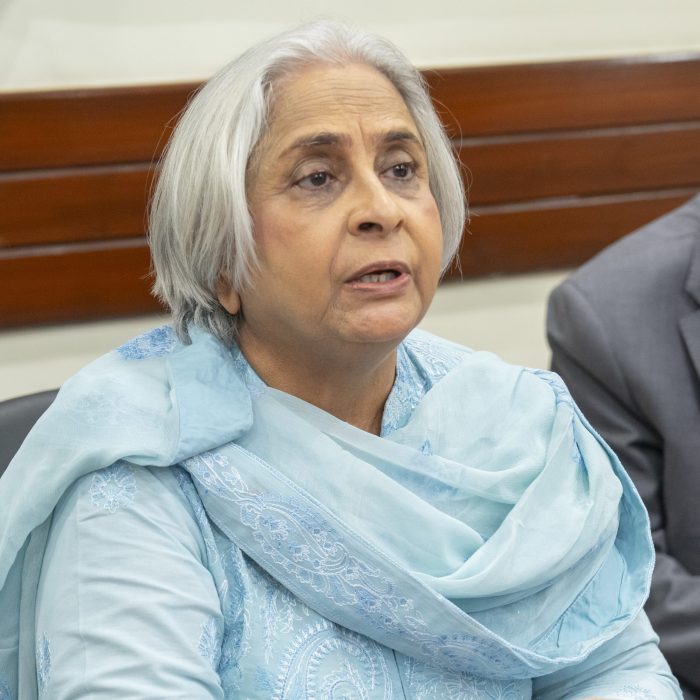

KARACHI, Dec 15 (APP): Sindh Minister for Health Dr Azra Fazal Pechuho on Monday formally inaugurated a Robotic Telesurgery Center of Excellence and Training Institute at the Lyari General Hospital.
The center is equipped with the Toumai Robotic Telesurgery System by MicroPort and being termed as a historic milestone in Pakistan’s public healthcare sector, a communique said.
Secretary Health Sindh Rehan Baloch, Principal Lyari General Hospital Dr Anjum Rehman, medical experts, faculty members, surgeons, and media representatives were present on the occasion.
A team of doctors successfully performed a live robotic telesurgery directly from Jaber Al-Ahmad Hospital, Kuwait, using the Toumai Robotic Telesurgery System (MicroPort).
This achievement presented a practical example of global surgical expertise, advanced technology, and strong international connectivity.
While talking to the media, Dr Azra Fazal Pechuho, Secretary Health Rehan Baloch, and medical experts said that advanced initiatives such as robotic telesurgery demonstrated the Sindh Government’s strong commitment to introducing modern medical facilities in public hospitals, ensuring that even underprivileged populations had access to high-quality healthcare.
They emphasized that certain negative external perceptions about Lyari no longer reflect reality. Today’s Lyari was emerging as a center of education, medical research, treatment, and humanitarian service.
There was no place for violence in Lyari but only treatment, knowledge, and compassion. They highlighted the key role of Principal and Chairperson Dr. Professor Anjum Rehman, who, as an institutional leader and active clinician, has made outstanding contributions in surgical expertise, medical education, and patient care.
During the ceremony, the services of physicians such as Dr Sehar Fatima were also appreciated for their daily dedication to serving humanity.
Talking to the media, Chief Executive Officer of Popular International Iqbal Bilo explained the benefits of robotic telesurgery, stating that it was not merely a technology but a revolutionary transformation in the public healthcare system.
Through this system, expert surgeons can treat patients across borders, saving patients from long travel, high costs, and delays. He added that the Toumai Robotic Telesurgery System provides treatment with extreme precision, minimal incisions, and enhanced safety, while also serving as a strong training platform for local surgeons and medical staff.
Director of Popular International Abdul Rehman stated that providing the Toumai Robotic System on a placement basis reflects their commitment to strengthening public sector healthcare. The Sindh Government’s procurement of equipment and consumables made the project sustainable and long-term, while ensuring patient access to advanced treatment.
He added that Lyari General Hospital was being promoted not only as a treatment facility but also as a center for training and medical education.
Adnan Aleem, Regional Director of MicroPort, highlighted the future of telesurgery, stating, “Telesurgery is the future of global collaboration in healthcare. By eliminating geographical barriers, it delivers world-class surgical expertise directly to patients. The Toumai Robotic Tele-Surgery System has been developed with advanced safety mechanisms, stable connectivity, and high surgical precision for this very purpose.”
He further stated that MicroPort’s goal is not only to provide advanced technology but also to promote sustainable healthcare systems through training, education, and long-term collaboration. The successful implementation of Tomai telesurgery at Lyari General Hospital was a practical example of this vision.
The establishment of the Robotic Telesurgery Center of Excellence and Training Institute positioned Lyari General Hospital as a regional hub for treatment, education, and advanced surgical training, reflecting the commitment to delivering healthcare services “from Lyari to the world.”
Lyari General Hospital reaffirmed its dedication to strengthening Pakistan’s healthcare system through modern technology, education, and responsible national and international collaboration.