
Coordination between stakeholders, dedicated leadership & workforce crucial for DRR: Ahmed Kamal
Coordination between stakeholders, dedicated leadership & workforce crucial for DRR: Ahmed Kamal
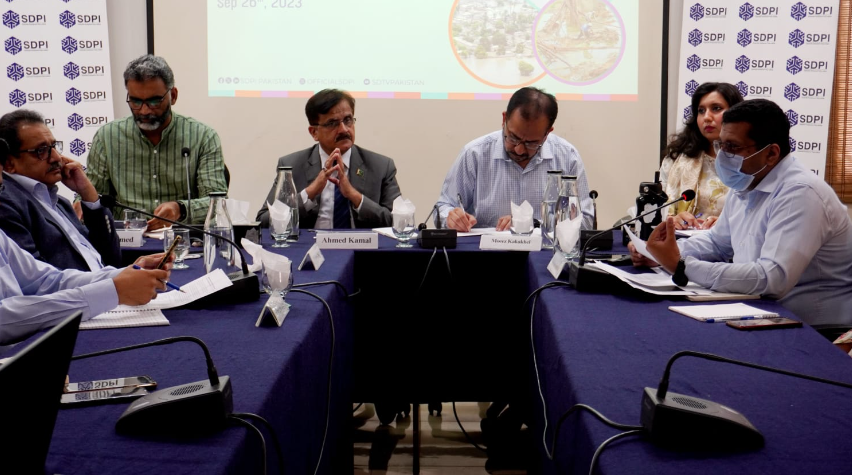
ISLAMABAD, Sep 26 (APP): Chairman, Federal Flood Commission (FFC), Ahmed Kamal on Tuesday stressed the need to enhance coordination among relevant departments and stakholders alongwith delicated leadership in institutions to ensure effective disaster risk reduction (DRR) in the country which was most impacted due to climate change.
He was speaking at a seminar titled “Disaster Risk Reduction (DRR) Policy Implementation in Pakistan in line with the Sendai Framework” jointly organized by Sustainable Development Policy Institute, Oxfam and partners here.
Ahmed Kamal said the National Disaster Management Authority (NDMA) played its major role in the 2010 floods whereas DRR was on top of the list till 2017 for policy endeavours.
He added that the Authority completed important legislation and policy initiatives like regulations on fire emergencies in buildings but no implementation of those rules has been made so far.
He noted that there was a need to probe the link missing between the NDMA and provincial disaster management authorities (PDMAs) from the province to district level as the latter was the most important in DRR.
He commented that the lack of dedicated and committed bureaucracy at the district level was resulting in local communities’ poor resilience towards disaster.
Ahmad Kamal said the experts and stakeholders were discussing pre-disaster situation and our policy endeavours mainly focussed on it. However, no allocated funding from the Public Sector Development Programme (PSDP) has been provided for DRR so far, and that funding was used for post-disaster relief activities at present.
“For a paradigm shift, there needs to be a step taken from the private sector if not by the public sector. Moreover, in order to ensure strong service delivery there needs to have permanent workforce and leadership in disaster management institutions,” the FFC Chairman said.
He pointed out that institutional encroachments on the mandate of professional bodies need to be discouraged as it was undermining the potential and capacities of the expert and trained professionals.
He mentioned that the temperature variations were rapidly occurring in the North which were impacting inflows and outflows in rivers in the country and impacting it’s topography.
He regretted that no focus was made on this situation and studies were not made in terms of DRR perspective.
SDPI, Research Associate, Salman Danish presented his policy paper titled “Disaster Risk Reduction (DRR) Policy Implementation in Pakistan in line with the Sendai Framework on DRR”.
Program Development Manager, SPO, Fahim Ahmed said Pakistan has evolved a lot in DRR and DRM legislation and policy implementation. He added that the important issue was of practical steps and implementation of strategies.
Pakistan, he said had excellent guiding documents that define the paradigm of DRR whereas Pakistan’s DRR policy and Sendai Framework focussed on vulnerability risk analysis. However, DRR policy must be revised to incorporate international targets and qualitative targets in line with global goals whereas early warning systems need to be given importance whereas international cooperation should be enhanced and more global climate finance streams should be explored.
Alishba Khan, UNDP said decision-making in DRR was an important component of Sendai Framework whereas Qualitative and Quantitative analysis should be done in some economic model which should also look forward financial sustainability of the project, project life and other components.
Moeez Kakar, HelpAge International said the focus on community-level build-up was important but the focus was more at the national level in DRR policy.
The strengthening of first responders the local or grassroots level communities was important along with the inclusion of vulnerable groups in DRR could effectively help address the needs at the community level, he added.
He suggested that a course like NCC (National Cadet Corps) should be introduced to train youth to respond to climate emergencies.
Deputy Executive Director, SDPI, Shafqat Munir said disasters were a complete system driving the change in the environment and it would continue. However, it was necessary to end adhocism and come up with proactive approaches.