
Gilgit, Dec 27 (APP): An important seminar on climate change has warned about the accelerating environmental crisis gripping Gilgit-Baltistan, where rapidly melting glaciers, increasingly erratic and intense rainfall and repeating flash floods have already claimed lives, destroyed socioeconomic infrastructures and severely damaged local agriculture. Organized jointly by the Ismaili Council for Pakistan, World Wide Fund for Nature (WWF), Pakistan and the Aga Khan Foundation Pakistan, the seminar titled 'Climate Change: …
Gilgit, Dec 27 (APP): An important seminar on climate change has warned about the accelerating environmental crisis gripping Gilgit-Baltistan, where rapidly melting glaciers, increasingly erratic and intense rainfall and repeating flash floods have already claimed lives, destroyed socioeconomic infrastructures and severely damaged local agriculture.
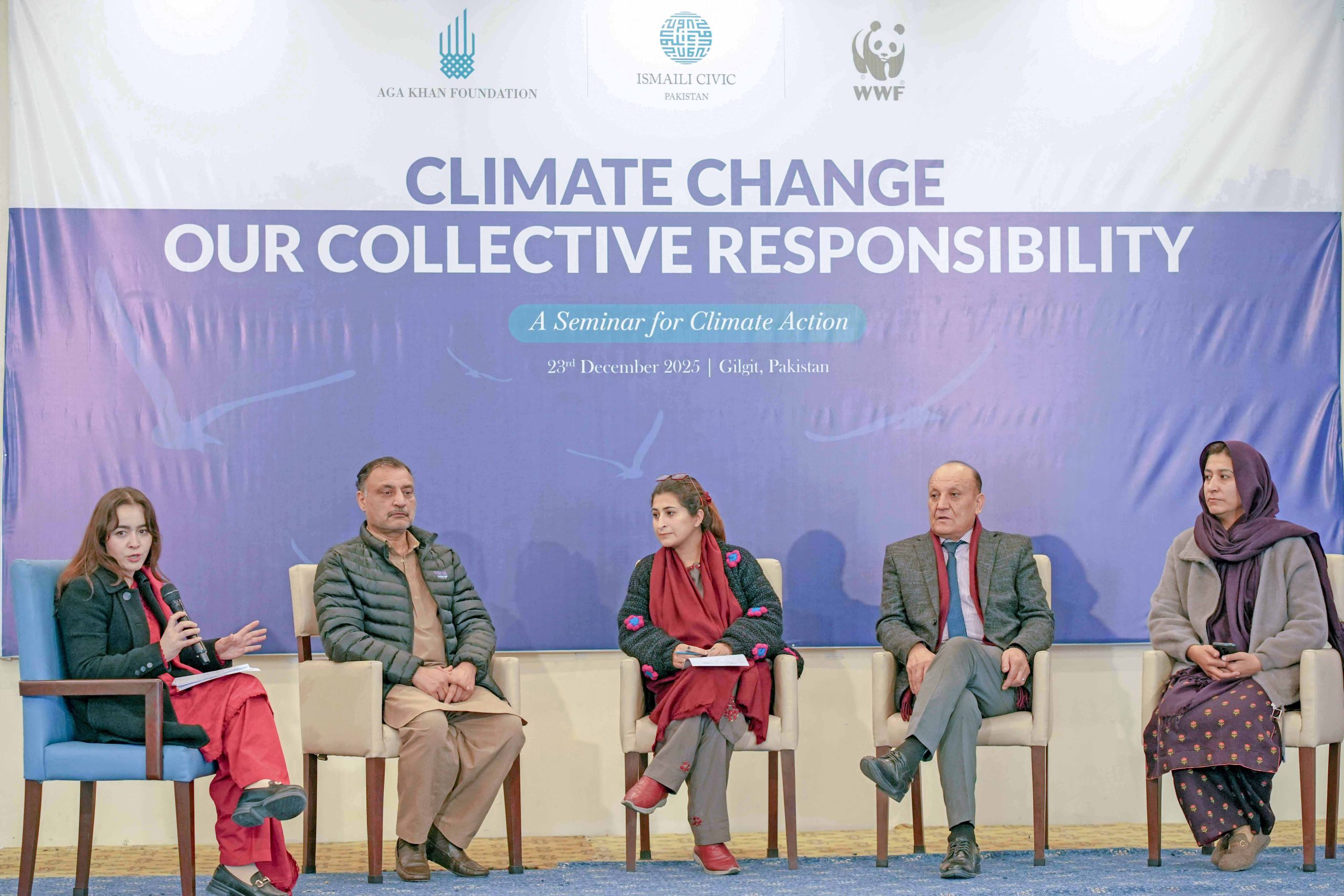
Organized jointly by the Ismaili Council for Pakistan, World Wide Fund for Nature (WWF), Pakistan and the Aga Khan Foundation Pakistan, the seminar titled ‘Climate Change: Our Collective Responsibility’ brought together senior government officials, environmental scientists, civil society leaders, development experts and journalists to devise practical strategies and a common action plan.
Participants stressed that Pakistan, despite being among the lowest global pollution contributor remains one of the world’s most climate-vulnerable nations, with Gilgit-Baltistan’s high-mountain communities facing some of the severest consequences.
“Recent devastating floods in Gilgit-Baltistan are not isolated incidents but part of a clear and intensifying pattern driven by climate change,” said Afzal Shahab ud Din, member at the Ismaili Council for Pakistan. He stressed urgent need for citizen-led action to build genuine, long-lasting resilience.
The gathering featured a high-profile panel discussion moderated by environmental communicator Alia Jabeen. Panellists included Haider Raza, Director North for WWF-Pakistan; Sobiya Mustafa of the Environmental Protection Agency; Muhammad Zaman from the Aga Khan Rural Support Programme (AKRSP) and media professional Kiran Qasim.
The session underlined the need for long-term planning, cross-sectoral partnerships and the systematic integration of indigenous knowledge into formal climate adaptation measures.
In a recorded message read to the participants, Nizar Mewawalla, President of the Ismaili Council for Pakistan, reaffirmed that environmental protection and climate resilience have been central priorities of the Ismaili Imamat and the broader Aga Khan Development Network (AKDN) for decades. Highlighting ongoing flood relief and recovery work across the region, he announced that future AKDN programmes would place even greater emphasis on strengthening community-based early warning systems and building durable adaptive infrastructure.
Haider Raza, representing WWF-Pakistan told the audience that effective climate response in mountain areas depends heavily on raising local awareness and respectfully incorporating traditional ecological knowledge into scientific and policy frameworks. “Communities here have survived harsh environments for generations; their wisdom must be at the heart of any serious adaptation strategy,” he said.
The seminar also spotlighted the AKDN’s wider environmental commitment including active alignment with the Paris Agreement and a firm organisational target of achieving net-zero carbon emissions across its operations by 2030.
By convening such a broad cross-section of stakeholders, the organizers said the Gilgit seminar aimed to deepen mutual understanding, reinforce existing partnerships and spark fresh and inclusive initiatives that could sizeably strengthen
climate resilience and support sustainable livelihoods across Pakistan’s northern highlands, particularly in Gilgit-Baltistan.