
Chappli Kabab: A culinary delight drawing food lovers in droves on weekend
Chappli Kabab: A culinary delight drawing food lovers in droves on weekend
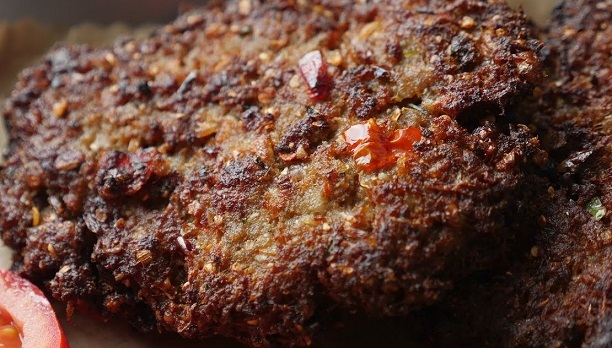
PESHAWAR, Aug 25 (APP): Renowned for its distinctive aromas and mouthwatering taste, Peshawar’s culinary landscape is graced by a standout dish: Chappli Kabab.
This delectable treat, celebrated for its robust spiciness and rich flavour, draws food enthusiasts not only from across Pakistan but also from neighbouring Afghanistan and the Gulf region, particularly on the weekends at Peshawar, home to mouthwatering cuisines.
Chappli Kabab holds a cherished place in Peshawar’s local food cuisine, admired for both its irresistible taste and affordability. Its popularity among visitors and locals alike makes it a staple offering at numerous eateries throughout the city.
In Peshawar’s bustling bazaars and food streets especially at historic Qissa Khwani, the enticing aroma of Chappli Kabab fills the air, emanating from large, black frying pans and beckoning curious diners.
The dish is prepared in a distinctive large frying pan, where minced beef or buffalo meat is combined with corn flour, chopped onions, spices, and salt, creating a unique and tantalizing flavour.
Arif Ahmad, a prominent Chappli Kabab vendor at Firdus Bazaar, sits composed in his high armchair amidst the hustle of shoppers. Arif inherited his craft from his father, Jalil Khan, and his grandfather, Jumma Khan, who established their Chappli Kabab business in 1950.
Arif’s shop, located in front of Kanumgam Park, features a large black frying pan and a tray of 50 kilograms of marinated meat. He notes, “These days, most Chappli Kabab lovers prefer to take parcels ranging from one to five kilograms for home parties rather than dining out.”
Reflecting on his family’s legacy, Arif adds, “After my father’s passing, all six of his sons have continued the business with hopes of passing it on to the next generation. What began with a single frying pan 74 years ago has now expanded to six locations, including one at Melody Food Street in Islamabad.”
The preparation of Chappli Kabab involves mincing meat, which is then mixed with tomatoes, red chilli powder, onions, dry coriander leaves, eggs, ginger, lemon juice, salt, and pomegranate seeds. This mixture is carefully marinated before being cooked for just 10 minutes, yielding a delicious kabab served with chutney, ketchup, salad, yogurt, and naan.
Eminent writer and traveler Qari Javed Iqbal, in his book *Saqafat Sarhad Tarikh K Ayeene Me* (Frontier Culture in the Mirror of History), traces the origins of Chappli Kabab to the Mughal dynasty. He noted that the dish evolved as a result of the carnivorous diets of invading kings and warriors, who introduced new meat preparation methods to India.
Chappli Kabab’s fame spread beyond Peshawar to Karachi, Lahore, Quetta, and other cities in Pakistan, as well as to Jalalabad, Kabul, Amritsar, Lucknow, and Delhi.
In Peshawar alone, over 3,000 Chappli Kabab outlets, large and small, thrive in areas like Firdus, Bakhshu Bridge, Warsak Road, and Ring Road, among others.
Local resident Zeshan Qaiser, enjoying the dish at Qissa Khwani Bazaar, expresses his passion: “Chappli Kabab is my favorite dish, and no meal feels complete without its aromatic bites.”
Despite its popularity, the price of Chappli Kabab has risen, with one kilogram now selling for Rs650 to Rs700, compared to Rs550 to Rs600 last year. This price increase has prompted calls for regulatory measures.
Arif also highlighted the demand for Chappli Kabab in countries like the UAE and Saudi Arabia, where it is sent for special occasions such as weddings and celebrations.
In response to concerns about food safety, a Food Services and Halal Authority spokesman emphasized the challenge of combating adulteration in spices used in traditional dishes.
To address this, seven mobile testing laboratories have been set up across KP, with plans for ten more in major cities. The establishment of food training schools and the implementation of stringent food safety regulations are also underway to ensure the integrity of traditional cuisines.
As Chappli Kabab continues to captivate taste buds, its rich history and evolving presence stand as a testament to Peshawar’s vibrant culinary heritage.