
KARACHI, Dec 21 (APP): Chief Secretary (CS) Sindh Asif Hyder Shah chaired a high-level meeting on the Rabies Control Program Sindh (RCPS), attended by all Divisional Commissioners, representatives of Health, the Local Government Department, Indus Hospital and other key stakeholders. The Chief Secretary said that the Government of Sindh has adopted a comprehensive and proactive approach to address the challenge of rabies across the province. Through sustained policy focus and …
250 rabies centres functional, more being set up for rabies prevention: CS
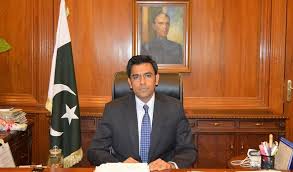
KARACHI, Dec 21 (APP): Chief Secretary (CS) Sindh Asif Hyder Shah chaired a high-level meeting on the Rabies Control Program Sindh (RCPS), attended by all Divisional Commissioners, representatives of Health, the Local Government Department, Indus Hospital and other key stakeholders.
The Chief Secretary said that the Government of Sindh has adopted a comprehensive and proactive approach to address the challenge of rabies across the province.
Through sustained policy focus and strong administrative oversight, rabies prevention has been prioritized as a key public health objective.
A province-wide network of treatment and prevention facilities has been developed to ensure a timely medical response for bite victims. Preventive strategies, including mass dog vaccination and sterilization, are being implemented to control the spread of the disease at its source.
Officials informed the meeting that the Government of Sindh has established 250 rabies treatment and prevention centers across the province, providing immediate post-exposure prophylaxis and emergency response services to bite victims. In addition, 20 more rabies centres are currently in the process of being established, which will further strengthen access to life-saving treatment at the district and sub-district levels. It was further shared that these centres will be upscaled in a phased manner, with enhanced facilities, standardized protocols and improved service delivery.
The meeting was further informed that the manpower of Rabies Control Program Sindh (RCPS) units will undergo structured training in collaboration with Indus Hospital ARU. This initiative aims to enhance the technical skills and clinical capacity of RCPS staff, ensuring standardized treatment protocols, improved case management and effective response to rabies-related incidents. The collaboration with Indus Hospital ARU will also support knowledge sharing and alignment with best medical practices, thereby strengthening the overall effectiveness of rabies prevention and control efforts across the province. Briefing the forum on preventive measures, officials stated that under the Rabies Control Program Sindh, 20 dedicated RCPS centres are being established for mass dog vaccination, sterilization, surveillance and population management.
Six centres are fully functional in Karachi’s districts of South, Central, East, West, Korangi and Keamari, while one centre is operational in district Matiari of Hyderabad Division. The RCPS centre in District Malir is under construction and expected to be completed shortly, while repair and maintenance work for the Dadu centre is scheduled for completion by December 2025. Tendering processes for centres in Badin, Tando Allahyar, Hyderabad and Jamshoro are also underway.
The meeting was informed that by October 2025, 19,449 stray dogs have been spayed and neutered, while 30,729 dogs have been vaccinated across various districts of Sindh. Vaccinated dogs are being tagged and geo-tagged for effective monitoring. A dedicated helpline 1093 is operational, along with Android and iOS mobile applications, enabling citizens to lodge complaints related to stray dogs. A live online dashboard is also under development to integrate operational data and strengthen oversight.
On the financial front, officials stated that the total cost of the project stands at Rs. 963.316 million, out of which Rs. 302.988 million (31.4 percent) has been utilized as of October 31, 2025. For the current financial year 2025–26, an allocation of Rs. 265.02 million has been made, with Rs. 66.255 million already released. The project timeline has been extended until June 2026.
Addressing the meeting, Chief Secretary Sindh Asif Hyder Shah emphasized that protecting human lives from rabies remains a top priority of the Government of Sindh. He directed all concerned departments to accelerate vaccination and sterilization drives, ensure effective functioning and upscaling of rabies centers, strengthen public awareness campaigns and enhance inter-departmental coordination. He further stressed the importance of timely fund releases and removal of administrative bottlenecks to improve the overall efficiency of the program.