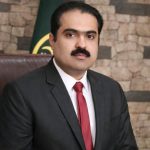
Federal Minister for Planning, Development and Special Initiatives Prof Ahsan Iqbal on Wednesday said Pakistan had moved from crisis stabilisation to a new phase of economic ambition, declaring the country’s youth the “decisive force” to drive its next chapter of growth and global relevance.
Youth ‘decisive force’ as Pakistan shifts focus from economic stability to growth: Ahsan

ISLAMABAD, Jul 1 (APP): Federal Minister for Planning, Development and Special Initiatives Prof Ahsan Iqbal on Wednesday said Pakistan had moved from crisis stabilisation to a new phase of economic ambition, declaring the country’s youth the “decisive force” to drive its next chapter of growth and global relevance.
Addressing the inaugural ceremony of the URAAN Pakistan “Mitti Ki Pukar” Overseas Pakistanis Summer Scholars Programme-2026, he said Pakistan’s recent journey from averting default to gaining diplomatic prominence reflected its untapped potential, which now had to be translated into sustained economic progress.
The minister said nearly 2,000 applications were received from 54 countries for this year’s programme. Following a transparent, merit-based selection process, 45 outstanding Overseas Pakistani students representing around 150 leading universities worldwide were selected.
He said the programme would provide participants with hands-on exposure to the public sector, policymaking and national development, while three international scholars had also joined this year’s cohort, reflecting its growing global recognition.
During the coming weeks, he said, the scholars would work closely with the Ministry of Planning’s leadership, contributing ideas and global perspectives to the implementation of URAAN Pakistan’s 5Es framework – Exports, E-Pakistan, Energy, Environment, and Equity & Empowerment.
Ahsan Iqbal said Pakistan had earlier demonstrated its potential by overcoming the energy crisis, curbing terrorism and attracting around $25 billion in investment under the first phase of the China-Pakistan Economic Corridor (CPEC), before its growth momentum was disrupted.
“We had reached a take-off point, but that journey was derailed. When we returned in 2022, Pakistan was facing the risk of default. We chose to save the state over short-term politics,” he said, adding that difficult reforms had restored macroeconomic stability by significantly reducing inflation and the policy rate.
Recalling Pakistan’s development trajectory, he said the country had been projected among the world’s top 20 economies if reforms had continued uninterrupted, but political instability and policy discontinuity had reversed that momentum.
Highlighting recent milestones, the minister said 2025 marked a peak in Pakistan’s strategic confidence, while the country’s diplomatic outreach helped facilitate dialogue between rival states and prevent a wider conflict that could have caused global economic disruption.
“Pakistan today is being recognized as a constructive and responsible player on the global stage,” he said, adding that after achievements in security and diplomacy, the country must now secure success on the economic front.
He stressed that no nation had achieved sustainable development without peace, political stability, policy continuity and long-term reforms.
“Development is not an event; it is a continuous process supported by a strong ecosystem,” he added. Describing youth as Pakistan’s greatest comparative advantage, Ahsan Iqbal said the country’s real strength lay not merely in its natural resources but in its human capital.
“Our real power is our youth. If we equip them with skills, direction and opportunity, they can transform Pakistan into a leading economy,” he remarked.
He said nearly 60 per cent of Pakistan’s population comprised young people, making it imperative to provide them with quality education, healthcare, market-oriented skills and equal employment opportunities.
Calling youth the country’s “most valuable capital,” he said initiatives such as the Young Development Fellows Programme and the Overseas Pakistan Summer Scholars Programme were designed to expose young people to governance, public policy and development challenges, enabling them to contribute meaningfully to national progress.
“These platforms are creating a generation that understands Pakistan’s challenges and is ready to turn them into opportunities,” he added.
The minister also said the Ministry of Planning had submitted recommendations to the Higher Education Commission (HEC) for modernising university curricula in line with emerging technologies, global industry requirements and future workforce needs.
Welcoming the participation of international students, he said the programme was evolving into a global platform for collaboration, knowledge-sharing and innovation.
Describing the scholars as ambassadors of Pakistan, he urged them to make the most of the opportunity, remain connected with the country’s development journey and contribute to its progress through their knowledge, skills and commitment.